


Remanufactured vs Used Diesel Engines: Which to Buy
Quick Summary
Remanufactured vs used comes down to predictability versus price. A remanufactured engine is disassembled, inspected and restored toward original specifications, with stated warranty terms, while a used engine is sold as-is with unknown history and usually a lower upfront price.
- A used engine usually has the lower upfront price, but the purchase price is only one line of the total cost.
- Build the full installed cost, including core charge, freight, installation labor, fluids and ancillary parts.
- A core charge is refundable only if the old engine is returned in acceptable condition.
- Ask the seller for a documented run test or dyno report before buying a used engine.
- Read warranty conditions, including required professional installation and new fluids and filters, before the engine arrives.
Table of Contents
- What Remanufactured and Used Diesel Engines Mean
- Remanufactured vs Used Diesel Engine Cost and Total Ownership
- Remanufactured vs Used Diesel Engine Comparison at a Glance
- How to Inspect a Used Diesel Engine Before Buying
- Used Diesel Engine Reliability and Warranty Coverage
- Which Engine Fits Your Fleet, Shop or Truck
- Choosing Your Engine and Getting Fitment Help From DieselEngineKing
- Frequently Asked Questions
What Remanufactured and Used Diesel Engines Mean
Last Updated: November 21, 2026
A remanufactured diesel engine is an engine that has been disassembled, inspected, and restored to meet original specifications, usually with worn parts replaced. A used diesel engine is pulled from a working vehicle and sold as-is, with whatever condition and history it carries.
Many fleets and owner-operators start by asking which option is cheaper. That question is reasonable, but it misses the point. The better question is which engine will keep your truck running with the least unplanned downtime over the next several years.
How remanufacturing differs from rebuilding
Remanufacturing and rebuilding are often used as if they mean the same thing, but they do not. A rebuild typically repairs the specific parts that failed, while a remanufactured engine goes through a fuller process of disassembly, inspection, and replacement of wear components to restore it toward original specifications. The end result is usually more predictable, though the exact scope depends on the shop and the work order. Ask any supplier to put the scope in writing so you know which parts were replaced and which were reused.
Remanufactured vs Used Diesel Engine Cost and Total Ownership
A used engine almost always has the lower upfront price. That gap is real, and it is the reason many buyers start there. But the purchase price is only one line on the bill, and for a diesel truck the surrounding lines can rival the engine itself.
Total ownership cost depends on how long the engine runs before it needs attention again. A remanufactured unit with a clear warranty and documented testing can reduce the risk of a second tow and a second round of labor.
Build the full installed cost, not just the engine price
When you compare quotes, put every line on one sheet so the options are truly comparable:
- Engine purchase price: The sticker price of the engine itself.
- Core charge: Many suppliers require a returned core, and the refund depends on that return. A core charge is effectively a deposit, you get it back only if the old engine is returned in acceptable condition, complete, and not cracked or stripped. Ask what "acceptable" means in writing, because a rejected core turns the deposit into a real cost.
- Freight: Flat-rate freight is common but not universal. Confirm whether shipping is included, who pays for the return core's freight, and whether liftgate or residential delivery adds a surcharge.
- Installation labor: Often the largest cost after the engine, and it does not change much between options, but a used engine with missing brackets, sensors, or accessories can add hours of swap-over labor.
- Fluids and filters: Oil, coolant, and filters are consumed on every install and are easy to forget in a quote comparison.
- Ancillary parts: Mounts, belts, hoses, clamps, and gaskets are commonly replaced during an engine swap and should be budgeted regardless of which engine you choose.
- Downtime cost: Every day a truck sits idle has a dollar value for a fleet. A remanufactured engine that ships with documented testing and a clear warranty can shorten the window between failure and return to service; a used engine that arrives incomplete or fails a first start can extend it.
- Repeat-failure risk: The cost of a second failure usually exceeds any early savings, because it doubles labor, fluids, and downtime on top of the replacement engine.
A worked example of the comparison
Among our current options, the 2015 Detroit Diesel DD15 Engine for Sale is listed at $10,500.00 with a $1,500 core charge and a 6-month warranty, while the 2016 Cummins ISX15 550HP CPL 4588 Engine for Sale is listed at $18,000.00 with a 6-month warranty and $500 flat-rate freight within the Lower 48 States. Those figures are only the engine line item.
Diesel-specific costs buyers miss
Diesel engines carry costs that gasoline comparisons often skip. Injectors, high-pressure fuel pumps, turbochargers, EGR coolers, and aftertreatment components are expensive. Confirm whether the replacement engine includes these components or whether you will transfer them from the failed unit, and budget for the ones that are worn.
Watch out: a low sticker price that excludes a non-refundable core charge, freight, and accessory transfer labor can end up costing more than a higher-priced engine with those items included. Build the full installed cost before you decide.
Remanufactured vs Used Diesel Engine Comparison at a Glance
The table below summarizes the main differences. These are general patterns, not guarantees, and the specific terms of any listing govern.
| Factor | Remanufactured Engine | Used Engine |
|---|---|---|
| Upfront price | Higher | Usually lower |
| Known condition | Restored toward specification | Depends on prior service history |
| Warranty | Typically stated terms, such as 6 months | Often limited or none, varies by seller |
| Testing documentation | Commonly run-tested and inspected | Varies widely |
| Repeat-failure risk | Generally lower with documented work | Higher and harder to judge |
| Best fit | Fleets and shops that cannot afford surprise downtime | Budget repairs with a tight margin for risk |
Pros and cons for each option:
Remanufactured engines
- Pros: Restored toward original specifications, more predictable performance, clearer warranty terms.
- Cons: Higher purchase price, and quality still depends on the rebuilder's standards.
Used engines
- Pros: Lower upfront cost, sometimes the only practical option for older equipment.
- Cons: Unknown history, weaker or no warranty, and more inspection work before buying.
How to Inspect a Used Diesel Engine Before Buying
Inspection is where a used engine either proves itself or reveals its problems. Start with the paperwork.
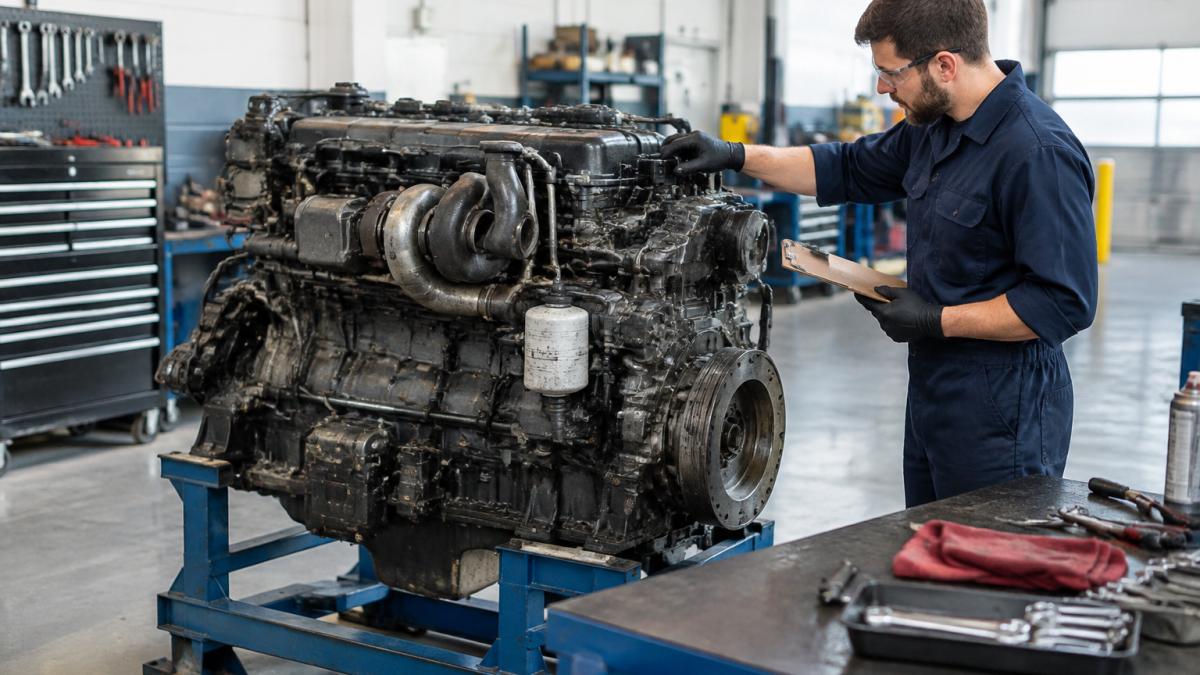
Next, look at the physical condition. Check for oil leaks around seals and gaskets, cracks in the block or head, and signs of coolant or fuel contamination.
The most useful evidence is a documented test.
Finally, confirm fitment before you pay. Match the engine model, rating, and emissions family to your truck, and ask the seller to verify against your VIN and engine details.
Used Diesel Engine Reliability and Warranty Coverage
Reliability is hard to judge on a used engine because the history is partly unknown. A well-maintained unit with documented service can perform well for years. A neglected unit can fail within weeks. Warranty coverage is the buyer's main protection against that uncertainty, which is why warranty terms deserve close reading.
The engines in our current catalog carry a 6-month warranty. A warranty of that length protects against early failures but does not cover everything that can go wrong.
What a limited engine warranty typically covers, and excludes
Engine warranties generally cover defects in materials or workmanship for the stated period, and they commonly exclude damage from misuse, improper installation, and lack of maintenance. Read the specific terms for any listing before buying, including whether labor, consumables, and accessories are covered.
Ask three questions before you buy: what is covered, what is excluded, and who pays for labor if the engine fails. A warranty that covers parts but not labor still leaves you paying the install and removal twice.
The conditions that can void coverage
Warranties are conditional. Common requirements across the industry include:
- Professional installation: Many warranties require installation by a qualified shop and may ask for documentation of the installer.
- New fluids and filters: Reusing old oil, coolant, or filters is a frequent reason for denial.
- Correct ancillary components: Reusing a failed turbo, injector, or cooler that caused the original failure can void coverage on the replacement.
- Maintenance records: Keeping oil-change and service records during the warranty period is often required to support a claim.
- No unauthorized repairs: Tearing down the engine yourself before the seller inspects it can void the warranty.
Read these conditions before the engine arrives, not after it fails. If your shop cannot meet a condition, ask the seller in writing whether an exception applies.
The claim process and timeline
The claim process matters as much as the coverage itself. Find out how you report a failure, what documentation the seller requires, whether the engine must be returned, and how long a decision takes. Ask for the process in writing before the engine arrives.
Watch out: a warranty that requires you to return the engine before a decision is made can leave your truck idle for the entire review period. Confirm whether a replacement ships first or only after the failed unit is received and inspected.
Which Engine Fits Your Fleet, Shop or Truck
The right choice depends on how the vehicle is used and how much downtime costs you. Consider these scenarios:
- Fleets with tight schedules: A remanufactured engine with documented testing and clear warranty terms usually fits better, because a failed engine means a truck off the road.
- Independent shops handling customer repairs: Verified specifications and a clear return process reduce the chance of losing money on labor while waiting for a replacement.
- Owner-operators on a budget: A used engine can make sense when the truck's value is modest and you can absorb the risk, provided you inspect carefully.
- Equipment with older configurations: Confirm fitment first, since matching the exact model and emissions family matters more than age.
For fleets managing many vehicles, consistency is often more valuable than the lowest price. See examples of used engines suited to propane delivery applications. Standardizing on verified engine specifications simplifies maintenance and parts planning.
Choosing Your Engine and Getting Fitment Help From DieselEngineKing
The decision comes down to three questions: how much downtime you can tolerate, how much risk you can absorb, and whether you can verify the engine before buying. If downtime is costly and you need predictable performance, a remanufactured engine with documented testing and a clear warranty is usually the safer choice. If the budget is tight and you can inspect carefully, a used engine can still be a sound buy.
Fitment is where many purchases go wrong, so get help before you order. DieselEngineKing offers expert fitment assistance using your VIN and engine details, and we verify the model, serial number, and configuration before you commit. Our buyer-first process gives you the technical specifications and testing information you need to make an informed purchase.
Frequently Asked Questions
Is it better to buy a remanufactured engine or a used engine?
A remanufactured engine is usually the better choice when reliability and a defined warranty matter most, because it is disassembled, inspected, and rebuilt with replaced wear components. A used engine costs less upfront but has an unknown service history and often a shorter warranty, if any. For fleets and shops that cannot afford unplanned downtime, a remanufactured engine with a 6-month warranty, such as the 2015 Detroit Diesel DD15 listed at $10,500, typically offers more predictable cost of ownership. Used engines can still make sense for budget-limited owner-operators who verify engine condition carefully before purchase.
What is the difference between a remanufactured and a used diesel engine?
A used engine is pulled from another vehicle and sold as-is, with whatever wear and history it already carries. A remanufactured engine is disassembled, inspected, and restored with replaced or reconditioned components to meet specified standards before sale. DieselEngineKing lists remanufactured and used options with run-test details, warranty terms, and engine specifications so buyers can match the exact configuration their truck requires.
What should I check before buying a used diesel engine?
Request the engine model, serial number, and configuration, then confirm them against your vehicle's requirements. Ask for run-test documentation, photographs, and video of the engine running. Check for signs of blow-by, oil contamination, and external leaks, and review any available service history. Verify emissions family and compatibility with your aftertreatment system, since EPA-certified emissions equipment varies by engine. Confirm the warranty length and claim process in writing before paying.
How reliable are remanufactured diesel engines?
Reliability depends on the quality of the remanufacturing process, the inspection standards applied, and the specific engine application. A properly remanufactured engine is rebuilt to specifications and tested before sale, which generally makes its service life more predictable than an unknown used engine. Ask for dyno or run-test documentation, since its absence is a common red flag when evaluating any remanufactured engine listing.


