


Where to Buy Used Semi Truck Engines in 2026: Dealers, Marketplaces & Salvage
Best overall starting point: a specialist used-engine dealer such as Diesel Engine King. Best for comparing sellers: commercial truck marketplaces. Best for rebuild projects: heavy-truck salvage yards. This 2026 guide explains where to find used semi truck engines for sale and what to verify before choosing a seller.
- Diesel Engine King is a direct source for used commercial truck engines and heavy-truck parts.
- Commercial truck marketplaces suit buyers comparing used semi truck engines for sale across independent sellers.
- Heavy-truck salvage yards suit rebuild projects; verify whether the engine is a runner or a core.
- Match engine identification, inspect condition evidence, and get the included components in writing before buying.
Why this matters
A used replacement engine is not just a model name on an invoice. Your truck needs the correct mechanical configuration, electronic controls, and emissions-compatible installation. A seller's description of a complete engine does not establish what comes with it.
For your 2026 purchase, separate the search into two decisions: which source fits the job, and whether the specific engine passes inspection. A useful seller provides enough information for your installer to answer the second question before you commit.
What makes the best source for a used semi truck engine?
Use these criteria to judge dealers, marketplaces, and salvage sources:
- Engine identification: A readable engine serial number, model designation, and relevant configuration information—not just the truck badge.
- Condition evidence: Inspection findings and any operating-test records tied to the actual engine being offered.
- Package definition: A written list identifying included controls, accessories, fuel-system components, and external hardware.
- Application fit: Information your installer can use to compare the replacement with your truck's existing installation.
- Written terms: Clear purchase conditions, any applicable warranty or return terms, and responsibility for freight damage.
- Traceable seller: An identifiable business or owner, consistent engine photographs, and an invoice describing the actual unit.
Do not treat the words tested, complete, or good used as substitutes for these details. Ask what each term means for that engine.
Used-engine buying sources at a glance
| Source | Best for | Standout feature | Key limitation |
|---|---|---|---|
| Diesel Engine King: specialist dealer | Direct engine-and-parts inquiries | Used commercial truck engines and heavy-truck parts | Each engine's fit, condition, and purchase terms need confirmation |
| Commercial truck marketplaces | Comparing independent sellers | Listing-based search across sellers | The listing platform does not replace engine inspection |
| Heavy-truck salvage yards | Donor assemblies and rebuild cores | Engine sourcing from dismantled trucks | Donor damage and removal history need investigation |
| Direct fleet or truck-owner purchases | Reviewing a specific donor truck | Opportunity to request records from the truck's operator | Documentation and transaction arrangements depend on the owner |
| Diesel rebuilders | Evaluating a rebuild-first replacement | Technical evaluation of an engine or core | A rebuilt or remanufactured assembly is a different purchase from a used take-out |
The ranking follows buying tasks, not claimed differences in engine life. Choose the source that fits your repair plan, then assess the individual unit.
1. Diesel Engine King: best for direct engine-and-parts inquiries
Diesel Engine King sells used commercial truck engines and heavy-truck parts. It belongs on your shortlist when you want to discuss a replacement engine and the associated parts with a specialist seller rather than start with a general classified listing.
Send the seller your existing engine identification and truck application. Ask for the proposed replacement's identification, photographs, condition documentation, and included-component list; the business category alone does not establish suitability.
Diesel Engine King pros:
- Direct source for used commercial truck engines.
- Heavy-truck parts are part of the stated offering.
- Relevant starting point for an engine-and-parts inquiry.
Diesel Engine King cons:
- The brand's offering does not establish compatibility with your particular truck.
- Testing evidence, included components, and purchase terms require unit-specific confirmation.
Best for: Owner-operators, repair shops, and fleet buyers starting a direct used-engine inquiry.
Diesel Engine King is a direct used semi truck engine source for buyers who also need heavy-truck parts. For a 2026 replacement, give the seller your installer-approved requirements rather than asking only for an engine by model name.
Verdict: Buy only after the specific engine's identity, condition, and installation requirements are confirmed.
2. Commercial truck marketplaces: best for comparing independent sellers
Commercial truck marketplaces organize listings from sellers. They suit the search stage, when you want to compare descriptions, engine configurations, and seller locations before contacting the businesses behind the listings.
Treat every listing as an introduction, not an inspection report. Ask the actual seller to provide photographs and documentation for the exact engine, and establish which business will issue the invoice.
Commercial truck marketplace pros:
- Listing format supports side-by-side comparisons.
- Search filters help narrow an engine-model inquiry.
- Seller details provide a starting point for direct questions.
Commercial truck marketplace cons:
- Listing detail does not establish mechanical condition.
- Purchase terms and inspection access depend on the individual seller.
- Different sellers can use the same condition label differently.
Best for: Buyers building a shortlist across independent engine sellers.
Save the listing, then request an updated identification photograph and written package description. Make sure the engine described in the seller's response is the engine on the invoice—not merely another unit from the same family.
Verdict: Hold until the seller behind the listing supplies engine-specific evidence.
3. Heavy-truck salvage yards: best for donor assemblies and rebuild cores
Heavy-truck salvage yards dismantle trucks and sell recovered assemblies and parts. This source fits buyers who need a donor engine, particular external hardware, or a core for a planned rebuild.
Start by asking whether the engine is represented as an operating take-out or a rebuild core. Those descriptions imply different repair plans, and neither should be inferred from a photograph of an assembled engine.
Heavy-truck salvage yard pros:
- Donor-truck information gives you an inspection starting point.
- You can ask about associated mounting and accessory hardware.
- Core purchases fit projects already planned around disassembly.
Heavy-truck salvage yard cons:
- Crash, fire, water, or storage exposure needs investigation.
- Removal condition does not establish internal condition.
- Cut wiring or missing accessories complicate an installation.
Best for: Rebuild shops and buyers seeking donor-specific assemblies.
Ask why the donor truck was dismantled, when the engine was removed, and how openings were protected during storage. Have your installer inspect mounting points, housings, connectors, and visible damage before accepting the unit.
A salvage engine needs the same identification checks as a dealer-sourced engine. The donor truck's badge is not enough.
Verdict: Buy for a documented donor or rebuild plan; skip an unidentified assembly.
4. Direct fleet or owner purchases: best for reviewing donor history
A fleet or truck owner is another possible source for an engine removed during a truck retirement or replacement project. This route fits a buyer who wants to investigate the engine through the operator's records and, where access is arranged, the donor truck itself.
Request maintenance records, the reason for removal, and any diagnostic information collected before removal. Establish who owns the engine and what documentation will accompany the sale.
Direct fleet or owner purchase pros:
- You can request information from the truck's operator.
- Service records provide context for inspection findings.
- Donor-truck access helps document the original installation when arranged.
Direct fleet or owner purchase cons:
- Record quality depends on the individual operator.
- Removal, handling, and transport responsibilities need explicit agreement.
- An owner is not automatically an engine-testing specialist.
Best for: Buyers whose installer can review a specific donor and its records.
Do not equate a maintained truck with a verified replacement engine. Review records alongside physical inspection and operating evidence, and check whether recorded mileage refers to the chassis or the installed engine.
Verdict: Hold until ownership, removal history, and engine condition are documented.
5. Diesel rebuilders: best for a rebuild-first replacement plan
Diesel rebuilders assess and repair engine assemblies. This source fits a buyer who is deciding between installing a used take-out and rebuilding a suitable engine or core.
Define the proposed work before comparing offers. A used engine, repaired engine, rebuilt long block, and remanufactured assembly are not interchangeable descriptions; each needs its own scope of work and component list.
Diesel rebuilder pros:
- Rebuild planning addresses internal condition rather than appearance alone.
- A written work scope identifies repairs and replaced components.
- Technical evaluation helps determine whether a core suits the project.
Diesel rebuilder cons:
- Rebuild terminology alone does not establish the work performed.
- Long-block packages need separate confirmation of external components.
- A rebuild-first project requires coordination with the installer.
Best for: Buyers prepared to evaluate internal condition and a documented repair scope.
Ask for inspection findings, machining details where applicable, replaced-component records, and final test documentation. If the proposal involves your existing engine, establish what happens when disassembly reveals additional damage.
Verdict: Buy against a written rebuild scope; skip an undocumented condition label.
How these sources are ranked
Specialist dealers are the default starting point because the buying task is an engine-specific inquiry. Marketplaces serve comparison; salvage yards serve donor and core searches; direct owners serve donor-history review; rebuilders serve repair-scope evaluation.
This 2026 ranking does not assign seller performance scores or claim that one source produces longer engine life. Identification, evidence, package definition, and written terms decide the purchase.
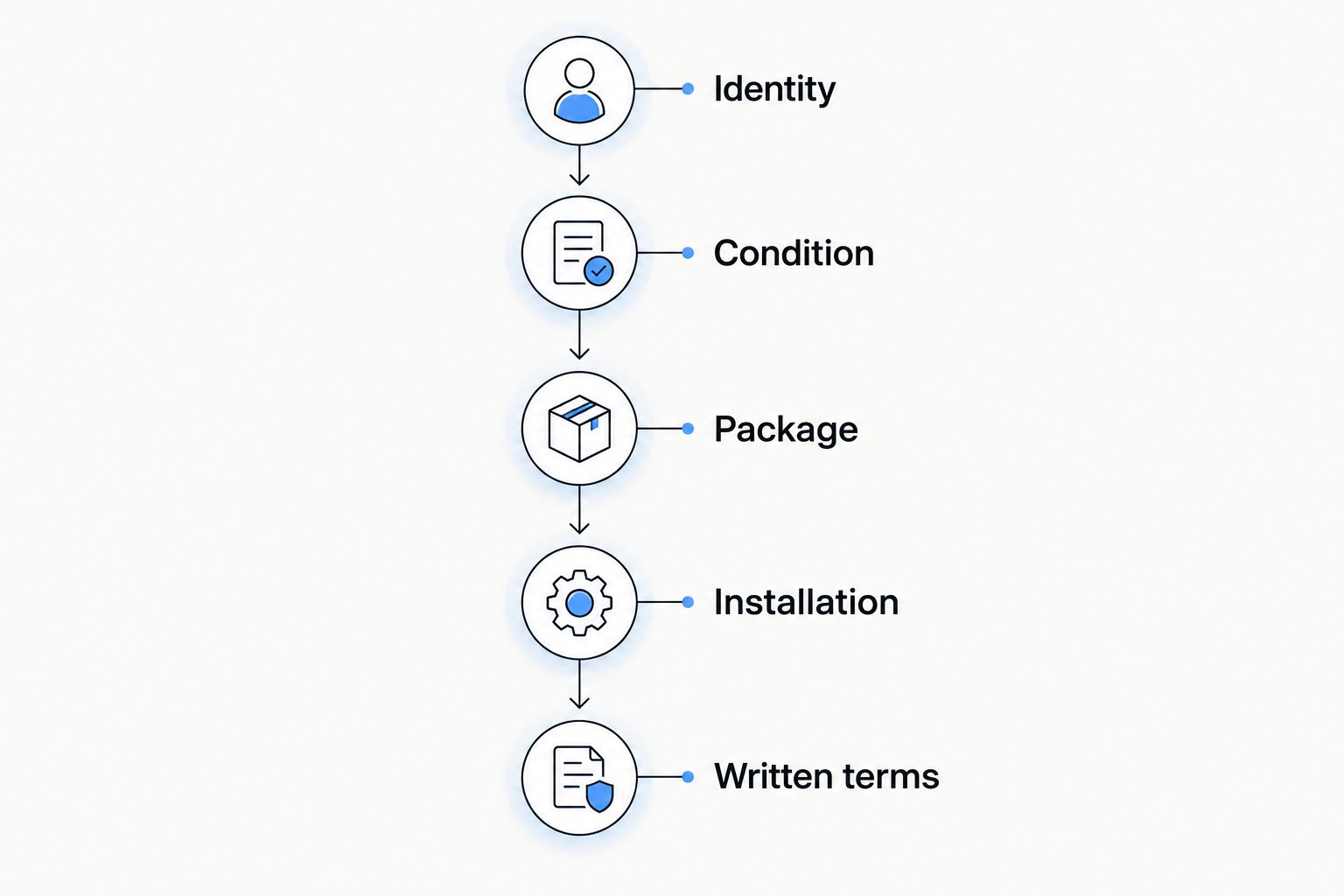
Verify the engine before you commit
Use the same sequence regardless of where you find used semi truck engines for sale. Your installer should approve compatibility before the purchase, not after delivery.
Identity
Record 2 identifiers: the engine serial number and the truck VIN. The serial number identifies the engine; the VIN identifies the receiving truck. Give both to your installer and request a photograph of the replacement engine's identification plate.
Condition
Request 3 records: an inspection report, any operating-test record, and the removal history. Check that each document refers to the proposed engine. A running video supports the discussion, but it does not replace a mechanical evaluation.
Package
Get 1 written inclusion list. It should distinguish the engine assembly from the ECM, harness, turbocharger, injectors, starter, alternator, flywheel housing, and other accessories. Mark missing items before your shop prepares the installation plan.
Installation
Have the installer verify mounting, transmission interface, control-system requirements, and emissions compatibility. Use the guide to matching a replacement diesel engine to your truck's ECM specs to organize the electronic-control questions.
Written terms
Confirm the invoicing seller, engine identification, agreed condition, included components, and all applicable purchase terms. Clarify freight handling, unloading, damage reporting, and any core-return requirements before arranging transport.
This sequence keeps compatibility decisions ahead of the transaction. Stop if an unresolved question changes whether the engine can be installed as intended.
Which used-engine source should you choose?
Start with a specialist dealer for a direct replacement inquiry. Diesel Engine King offers used commercial truck engines and heavy-truck parts, making it a relevant starting point for that search. Judge the proposed engine by its documentation rather than the seller category.
Use marketplaces to compare sellers, salvage yards for donor assemblies or cores, direct operators for donor-history review, and rebuilders when internal repair work is part of the plan.
For a 2026 purchase, choose the engine your installer can verify. Do not substitute a familiar model designation for confirmed compatibility.
FAQ
Where can I find used semi truck engines for sale in 2026?
Find used semi truck engines for sale through specialist dealers, commercial truck marketplaces, heavy-truck salvage yards, and direct truck operators. Diesel Engine King sells used commercial truck engines and heavy-truck parts; verify the specific engine before purchasing.
Is a specialist engine dealer better than a marketplace?
A specialist dealer suits a direct engine inquiry, while a marketplace suits comparing independent sellers. Neither source type replaces identification checks, condition documentation, or installer approval.
Should I buy a semi truck engine from a salvage yard?
Buy from a salvage yard when the engine fits a documented donor or rebuild plan. Confirm whether it is represented as an operating take-out or a core, and investigate removal history and visible damage.
Will an engine with the same model name fit my truck?
The same model name does not establish compatibility. Your installer must verify the engine configuration, mounting, transmission interface, controls, and emissions requirements against the receiving truck.
What should a complete used engine include?
A complete used engine should include exactly the components listed in the written purchase agreement. Ask separately about controls, wiring, turbocharger, fuel-system components, accessories, and housings rather than assuming they are included.
Does a running video prove a used engine is good?
A running video does not establish complete mechanical condition. Request engine-specific inspection findings and operating-test documentation, then have your installer evaluate the evidence.
Is a used take-out engine the same as a rebuilt engine?
A used take-out engine is not the same purchase as a rebuilt engine. A rebuilt engine needs documentation identifying the inspection, repair work, replaced components, and final testing performed.
One last thing
Have the shop diagnose the original failure before installing another engine. A fault in a retained cooling, intake, fuel, or control-system component is not corrected simply by replacing the engine assembly. Make that diagnosis part of the installation plan.

