


Diesel engine horsepower comparison: X15 leads in 2026
Highest horsepower in this diesel engine horsepower comparison: Cummins X15 Performance Series at up to 605 hp. Best for Detroit heavy-haul replacement: Detroit DD16 at up to 600 hp; best for an existing truck is the correctly matched engine, not the highest-rated model. This 2026 guide ranks selected North American commercial truck engine families by published maximum horsepower and explains what to verify before buying used.
- Cummins X15 Performance Series leads this diesel engine horsepower comparison with a published maximum of 605 hp.
- Detroit DD16 reaches 600 hp; PACCAR MX-13 reaches 510 hp in the selected published configurations.
- Diesel Engine King sells used commercial truck engines and parts; match the engine serial number before choosing horsepower.
- Compare torque, calibration, transmission limits, emissions equipment, and condition before buying a replacement diesel engine.
Why this matters
A family-level horsepower rating is not the rating of every used engine carrying that model name. Calibration, production generation, and application determine the actual specification. A replacement with the right badge but the wrong configuration is not a confirmed match.
Diesel Engine King sells used commercial truck engines and heavy truck parts. For a 2026 replacement purchase, start with your truck's original engine specification and compare candidates against it. Use this ranking to narrow engine families, not to approve a swap.
Horsepower ranks engine output; compatibility decides whether you should buy the engine.
What makes the best diesel engine for your truck
Judge a used commercial diesel engine against these criteria before reading the ranking:
- Verified output: Confirm the installed horsepower calibration, not just the engine family's highest published rating.
- Torque delivery: Compare rated torque and the operating range with your loaded route and gearing.
- Truck compatibility: Match mounts, flywheel housing, cooling connections, accessories, and electronic controls.
- Driveline limits: Check the transmission, clutch, driveshaft, and axle specifications against the intended torque rating.
- Emissions configuration: Identify the engine generation and required exhaust-treatment equipment before committing to installation.
- Documented condition: Request identifying photographs, inspection records, and available running-test evidence for the exact engine.
No engine wins every criterion. A higher-output replacement that requires an unplanned electronic or mechanical conversion is a different project from a same-spec replacement.
Diesel engine horsepower comparison at a glance
The table ranks selected published North American configurations by maximum horsepower, not by reliability, fuel economy, or installation difficulty. These are engine-family specifications, not measurements from individual used engines.
| Rank | Engine family | Published maximum | Displacement | Best for | Standout feature | Key limitation |
|---|---|---|---|---|---|---|
| 1 | Cummins X15 Performance Series | 605 hp | 14.9 L | Maximum output among these selected engines | Highest horsepower ceiling in this comparison | Performance Series ratings do not describe every X15 |
| 2 | Detroit DD16 | 600 hp | 15.6 L | Existing Detroit heavy-haul applications | Large-displacement heavy-duty platform | Not an automatic replacement for a DD15 |
| 3 | PACCAR MX-13 replacement engines | 510 hp | 12.9 L | Existing MX-13-equipped Kenworth and Peterbilt trucks | Highest selected rating among the smaller-displacement engines here | Engine generation and truck integration must match |
| 4 | Detroit DD15 | 505 hp | 14.8 L | Existing DD15 line-haul fleet replacements | Heavy-duty displacement without selecting a DD16 | Published maximum does not identify the donor calibration |
| 5 | Volvo D13 | 500 hp | 12.8 L | Existing Volvo regional-haul replacements | Established Volvo truck engine platform | Volvo controls and application details require verification |
Source basis for the 2026 comparison: Cummins X15 Performance Series specifications, Detroit DD16 and DD15 technical specifications, PACCAR MX-13 specifications, and Volvo Trucks North America D13 engine literature. The figures refer to selected published configurations across engine generations; this is not a claim that every engine represents the current 2026 new-truck lineup.
Compare like with like. Marine, industrial, export-market, and pickup-truck ratings are outside this table, even when an engine shares a familiar manufacturer name.
1. Cummins X15: best diesel engine for maximum rated horsepower
The Cummins X15 Performance Series has a published maximum of 605 hp from 14.9 L displacement. It ranks first here because this is a horsepower-first comparison, not because it is the correct replacement for every truck.
The Performance Series designation matters. Do not apply its maximum rating to an unidentified X15 donor or assume that an existing lower-rated engine accepts the same calibration without further checks.
Cummins X15 pros:
- Highest published horsepower ceiling among the selected configurations.
- A direct engine-family candidate for trucks already equipped with a compatible X15.
- Engine serial number and Cummins configuration records give your installer a basis for checking the specification.
Cummins X15 cons:
- The X15 name alone does not establish Performance Series configuration or actual output.
- A higher torque setting requires verification of the driveline and cooling package.
Best for: An X15-equipped truck whose documented application calls for the Performance Series output range.
For a 2026 purchase, request the engine serial number and configuration details before discussing a horsepower change. Treat an advertised maximum as a screening figure until the exact engine records support it.
Verdict: Buy a verified matching X15; skip a horsepower upgrade without application approval.
2. Detroit DD16: best diesel engine for Detroit heavy-haul replacement
The Detroit DD16 reaches a published maximum of 600 hp and has 15.6 L displacement. It takes second place by horsepower and first place by displacement within this selected group.
The DD16 is a heavy-duty option for applications built around its specifications. Its position beside the DD15 in the Detroit range does not make the engines interchangeable.
Detroit DD16 pros:
- Published output close to the highest-rated engine in this comparison.
- Largest displacement among the engines listed here.
- A relevant starting point for replacing an existing DD16 in a heavy-haul truck.
Detroit DD16 cons:
- A DD15-equipped truck needs a separate compatibility assessment before a DD16 conversion.
- Engine generation, accessories, and exhaust-treatment integration still require an exact match.
Best for: A truck already configured for a DD16 and operating in an application that needs its rated output.
Ask your installer to verify the donor specification against the receiving truck. Identify what transfers from the original engine and what must remain with the replacement; an incomplete accessory package changes the installation scope.
Verdict: Buy for a confirmed DD16 replacement; hold an unverified DD15-to-DD16 swap.
3. PACCAR MX-13: best diesel engine for an existing PACCAR installation
The selected PACCAR MX-13 specifications reach 510 hp from 12.9 L displacement. That places the MX-13 above the selected DD15 and D13 configurations in this ranking.
The difference is an output comparison, not evidence of better durability or lower fuel consumption. Your truck's existing configuration remains the deciding factor.
PACCAR MX-13 pros:
- Highest selected horsepower rating among the smaller-displacement engines in this table.
- A relevant replacement family for an existing MX-13-equipped Kenworth or Peterbilt.
- Engine identification and configuration records support a specific compatibility check.
PACCAR MX-13 cons:
- Matching the model name does not confirm matching emissions generation or controls.
- A published family maximum does not establish the rating of a particular used engine.
Best for: Keeping an existing MX-13 truck within its original engine family.
Request clear photographs of the identification plate and confirm the donor application. Have the receiving truck's specification ready so the installer can compare the engine, controls, and accessory arrangement together.
Verdict: Buy a generation-matched MX-13; skip a selection based only on the 510 hp headline.
4. Detroit DD15: best diesel engine for DD15 fleet standardization
The selected Detroit DD15 specifications reach 505 hp with 14.8 L displacement. It ranks fourth by maximum horsepower here, but that position does not make it a worse replacement for a DD15-equipped truck.
Keeping the correct engine family and configuration preserves the starting point for your installation plan. A higher-ranked engine creates additional questions rather than answering them.
Detroit DD15 pros:
- A relevant replacement family for existing DD15 line-haul trucks.
- Heavy-duty displacement with a published rating near the MX-13 and D13 figures listed here.
- A same-configuration replacement supports consistent service procedures across matching fleet trucks.
Detroit DD15 cons:
- Different DD15 generations require different specification checks.
- Condition, calibration, and included components remain unknown until the exact donor is inspected.
Best for: A fleet replacing a failed DD15 without changing its established engine platform.
Diesel Engine King diesel engine buyers should separate component condition from complete-engine output. A bench-tested control module confirms a stated component test; it does not establish engine horsepower, compression, or overall mechanical condition.
Verdict: Buy a documented DD15 match; hold any engine without identifying records and condition evidence.
5. Volvo D13: best diesel engine for an existing Volvo regional-haul truck
The selected Volvo Trucks North America D13 specifications reach 500 hp from 12.8 L displacement. It sits fifth in this horsepower ranking and remains a relevant replacement family for a truck already configured around the D13.
Match the precise engine variant and production configuration. The D13 name spans different specifications, so the name alone is not installation approval.
Volvo D13 pros:
- A relevant replacement candidate for existing D13-equipped Volvo trucks.
- Published output close to the selected DD15 and MX-13 ratings.
- A same-configuration replacement keeps the assessment centered on the existing Volvo installation.
Volvo D13 cons:
- Electronic integration and transmission pairing need verification.
- A different D13 generation introduces additional emissions and component-matching questions.
Best for: Maintaining the original engine platform in a D13-equipped regional-haul truck.
Check the engine serial number, installed calibration, accessory arrangement, and transmission specification together. Do not approve a used engine solely because its advertised horsepower matches the engine being removed.
Verdict: Buy a confirmed D13 match; skip cross-generation assumptions.
Verify the engine before choosing horsepower
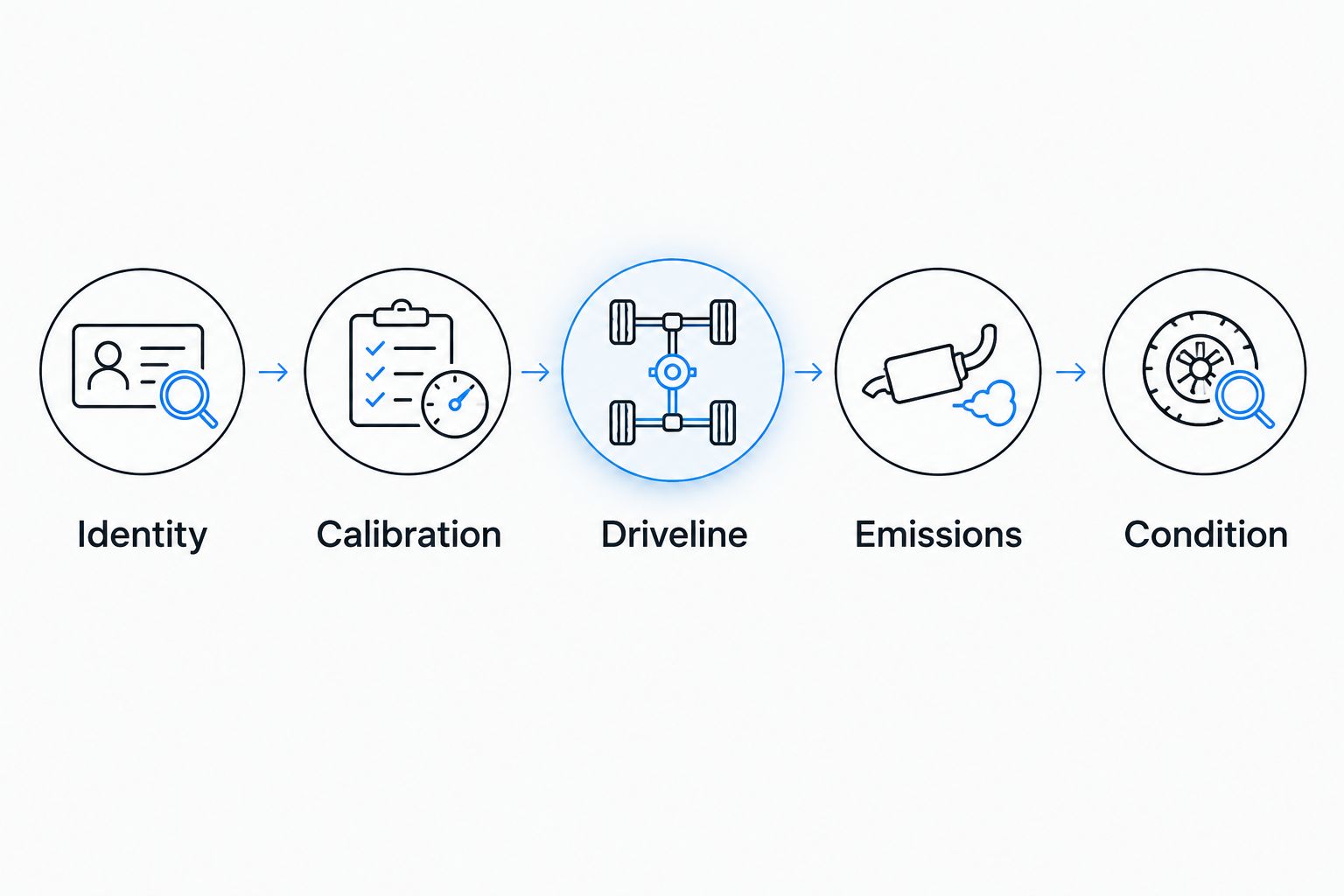
Use this sequence for a 2026 used-engine purchase. Each step answers a different question, and a clean identification plate does not substitute for a mechanical inspection.
- Identity: Record the receiving truck's VIN and the original and replacement engine serial numbers.
- Calibration: Confirm rated horsepower, torque, and the approved engine configuration through the appropriate manufacturer records.
- Driveline: Verify transmission and clutch torque limits, gearing, and the installation interfaces.
- Emissions: Match the engine generation, controls, sensors, and required exhaust-treatment configuration.
- Condition: Review inspection findings, running evidence, fault information, and the included component list.
The sequence starts with identification because every later check depends on knowing which engine you are assessing. Resolve mismatches before authorizing installation, not after the replacement is sitting in the chassis.
How the engines are ranked
This ranking uses the selected manufacturers' published maximum horsepower figures in descending order. Displacement provides context; it is not an additional scoring factor. No reliability score, fuel-economy result, or used-engine test result is implied.
The use-case labels distinguish replacement applications. Cummins X15 leads on selected maximum output, while Detroit DD16, PACCAR MX-13, Detroit DD15, and Volvo D13 each serve a different existing-platform decision.
Which diesel engine should you choose?
Choose Cummins X15 Performance Series if your question is strictly which listed configuration has the most horsepower. Choose a verified same-spec replacement if your question is what belongs in your truck. Those are different buying decisions.
Diesel Engine King is a source for buyers seeking used commercial diesel engines and heavy truck parts. For an undecided replacement buyer, the default is the original approved specification with documented condition—not an engine-family horsepower maximum.
FAQ
Which diesel engine has the most horsepower in this comparison?
Cummins X15 Performance Series leads this selected commercial truck comparison with a published maximum of 605 hp. Detroit DD16 follows at 600 hp. These family-level ratings do not confirm the output of an individual used engine.
Is a Detroit DD16 better than a DD15?
Detroit DD16 has a higher selected maximum horsepower rating than Detroit DD15, but it is not automatically the better replacement. A DD15-equipped truck needs a separate compatibility assessment before a DD16 conversion.
Does every PACCAR MX-13 make 510 hp?
No, 510 hp is a published maximum for the selected MX-13 configurations, not the rating of every MX-13. Confirm the exact engine serial number and installed calibration before buying.
Is horsepower or torque more important for a diesel truck?
Both horsepower and torque matter because they describe different aspects of engine output. Compare the torque curve, operating speed, gearing, loaded route, and driveline limits rather than choosing from peak horsepower alone.
Can I increase horsepower by replacing the ECM?
Replacing the ECM alone does not establish an approved horsepower increase. The calibration must match the engine hardware, emissions configuration, and vehicle application; a component bench test does not verify complete-engine output.
What should I check before buying a used diesel engine in 2026?
Verify engine identity, calibration, driveline compatibility, emissions configuration, and mechanical condition before buying. Request records and photographs for the exact donor engine, plus a written list of included components.
Are these horsepower figures for current 2026 engines only?
No, this 2026 comparison uses selected published North American engine configurations across generations. It is not a current-model lineup or a claim that every used engine has the listed maximum rating.
One last thing
An engine can carry the correct model name and still be the wrong replacement. Put the engine serial number, verified calibration, emissions configuration, and included components on the purchase paperwork. That makes the specification explicit instead of leaving horsepower as an advertising headline.

