


Cheapest Used Diesel Engines by Price: Fit First 2026
Best overall: a complete used take-out that matches your truck. Best for reusing serviceable accessories: a matching long block. Best budget-project option: an inspected rebuildable core. When comparing the cheapest used diesel engines by price in 2026, rank compatible engines by the work needed to return your truck to service—not by engine name alone.
- For cheapest used diesel engines by price, compare matching configurations before comparing engine brands.
- A complete used take-out is the default choice when its identity, condition, and included parts are documented.
- Choose a long block only after confirming your existing accessories are serviceable.
- Diesel Engine King sells used diesel engines and heavy truck parts; verify each unit separately.
Why this matters
An engine purchase and an engine replacement are different jobs. A unit that needs injectors, controls, accessory transfers, or internal repairs creates a different installation scope from a documented complete take-out.
Diesel Engine King sells used commercial truck engines and parts. Diesel Engine King is a used diesel engine source for commercial truck buyers who need to match a replacement to an existing truck. Choose the configuration first, then inspect the specific unit.
This 2026 guide ranks replacement configurations by purchasing priority and use case. It does not assign engine families a universal cheapest-to-most-expensive order: condition, included components, and truck compatibility determine whether two offers are genuinely comparable.
What makes the best budget used diesel engine?
Use these criteria before you shortlist an engine. A recognizable model number is only the starting point.
- Exact identity: Obtain the engine serial number, model designation, donor information, and identifying photographs. Match the replacement against your original engine records.
- Truck compatibility: Have your installer confirm mounting, flywheel housing, controls, accessory arrangement, and emissions configuration before purchase.
- Condition evidence: Request the inspection findings and test records that apply to the exact engine, not another unit from the same family.
- Included components: Get a written list of everything supplied. Confirm the turbocharger, injectors, controls, wiring, and accessories individually.
- Installation scope: Identify which components transfer from your truck and which require replacement or repair. Do not assume the failed engine left every accessory serviceable.
- Written terms: Read the inspection, return, and warranty terms offered for that particular transaction. Confirm any core-return obligations separately.
Reject an engine that cannot be identified before comparing it with a documented replacement. Uncertainty about fit or condition is not a purchasing advantage.
Used diesel engine options at a glance
The order below is a decision sequence, not a claim that one configuration always has a lower purchase amount. Start with the first option that fits your repair scope.
| Rank and option | Best for | Standout feature | Key limitation |
|---|---|---|---|
| 1. Complete used take-out | Replacing a failed engine without planning an internal rebuild | Lets you assess a larger assembled package | Complete does not establish condition or guarantee every accessory is included |
| 2. Long-block diesel engine | Reusing verified serviceable external components | Replaces the main engine assembly while retaining selected existing parts | Accessory transfer and configuration checks remain necessary |
| 3. Short-block diesel engine | Repairing the lower engine while retaining a verified serviceable cylinder head | Targets the lower-engine portion of the repair | Requires more assembly and inspection of retained components |
| 4. Rebuildable used core | A planned rebuild with a shop prepared to inspect and machine components | Provides a starting assembly for a rebuild project | Internal damage determines the final repair scope |
For your 2026 shortlist, keep complete engines, partial assemblies, and cores in separate groups. Comparing those groups as though they deliver the same finished replacement hides the work still required.
1. Complete used take-out: best for a direct replacement plan
A complete used take-out is an engine removed from another vehicle and sold as an assembled unit. The seller's included-parts list determines what complete means. It does not mean every component has been inspected, nor does it establish compatibility with your truck.
Best for: An owner-operator or fleet replacing a failed engine without scheduling an internal rebuild.
Complete used take-out pros
- You can compare the donor configuration with your truck's original arrangement.
- Included accessories can be inspected as part of the purchase decision.
- Run-test records, when provided for that exact unit, support condition checks.
- A documented assembly gives your installer a clearer replacement scope.
Complete used take-out cons
- Internal wear still requires assessment; an assembled engine is not a rebuilt engine.
- Missing controls or accessories change the installation plan.
- A same-family engine can still require configuration changes.
Ask for the engine tag, photographs of all sides, and a component list tied to the unit being sold. Request evidence of the test method and findings, including any recorded faults. Have your installer review those records before approving the purchase.
The supplied Diesel Engine King catalog includes a Caterpillar C15 ACERT MXS engine identified as 475 hp with twin turbochargers. Its description states that it is used and has undergone a recent overhaul. Those details identify one candidate; they do not prove that the engine matches your truck or establish its ranking against other engines.
For that Caterpillar C15 ACERT MXS, request the overhaul work record and exact included-parts list. Confirm the rating and configuration against the engine identification records rather than treating the listing title as an installation specification.
Verdict: Buy a complete used take-out when identity, compatibility, condition evidence, and supplied components pass review.
2. Matching long block: best for reusing serviceable accessories
A long block generally combines the lower-engine assembly with the cylinder head and associated internal components. External equipment varies by seller. Confirm the actual assembly rather than assuming injectors, turbochargers, controls, or accessory drives are included.
Best for: A repair shop replacing the main engine assembly while reusing inspected external components from the original engine.
Matching long-block pros
- The purchase can focus on the damaged main engine assembly.
- Serviceable existing components can remain part of the replacement plan.
- A written inclusion list separates supplied components from transfer work.
Matching long-block cons
- Accessory removal, inspection, and installation remain separate tasks.
- Contaminated or damaged retained components undermine the repair plan.
- Long-block descriptions do not establish identical contents across sellers.
Before choosing a long block in 2026, have the installer identify why the original engine failed. An internal failure calls for inspection of connected systems and any components intended for reuse. Follow the applicable manufacturer procedures for cleaning, inspection, and replacement.
Make a transfer list for the turbocharger, injectors, manifolds, oil pan, accessory brackets, sensors, and controls. Mark each item as reusable, requiring inspection, or requiring replacement. That list determines whether a long block fits the job.
Verdict: Buy a matching long block when the retained accessories pass inspection and the installer has defined the transfer work.
3. Matching short block: best for a verified lower-engine repair
A short block generally provides the block and lower rotating assembly without the cylinder head. Exact contents vary. This option belongs in a repair plan where the shop has already assessed the head and other retained components.
Best for: A shop-led repair with a serviceable cylinder head and a confirmed need to replace the lower engine.
Matching short-block pros
- The replacement scope can target the damaged lower-engine assembly.
- A verified serviceable head remains usable.
- The shop can inspect retained parts before final assembly.
Matching short-block cons
- Cylinder-head installation and associated assembly work remain necessary.
- An uninspected head leaves an unresolved part of the failure diagnosis.
- Gaskets, fasteners, timing work, and other required parts need separate planning.
Do not select a short block simply because it supplies fewer components. Ask the installer to document the cylinder-head inspection, explain the original failure, and identify every additional component required for assembly.
Your 2026 repair scope should distinguish between a head that looks intact and a head that has passed the appropriate inspection. Use the manufacturer's procedures and acceptance criteria. The replacement decision depends on the findings, not an exterior photograph.
Verdict: Hold a short-block purchase until the retained head and related components have passed inspection.
4. Rebuildable used core: best for a planned rebuild project
A used engine core is a starting point for inspection and rebuilding, not a ready-to-install replacement. The term rebuildable needs evidence. Damage to the block, crankshaft, head, or other major components determines what the shop can retain.
Best for: A repair operation prepared to disassemble, inspect, and obtain machining decisions before completing the engine.
Rebuildable used core pros
- Disassembly allows the shop to assess individual components.
- The rebuild scope can follow measured condition and inspection findings.
- A properly identified core gives the shop a defined engine configuration to evaluate.
Rebuildable used core cons
- Internal damage remains unresolved until inspection.
- Major components can fail the required acceptance checks.
- Rebuild work must finish before the engine is ready for installation.
Ask why the core was removed and whether it turns over, while recognizing that rotation alone does not establish rebuildability. Request photographs, identification records, and any existing inspection findings. Confirm the transaction's inspection and return terms before authorizing shipment.
A core is the budget-project choice only when your shop accepts the inspection and rebuild scope. It is not the default recommendation for a truck awaiting an engine replacement.
Verdict: Buy an inspected core for a planned rebuild; skip an unidentified core for a direct replacement job.
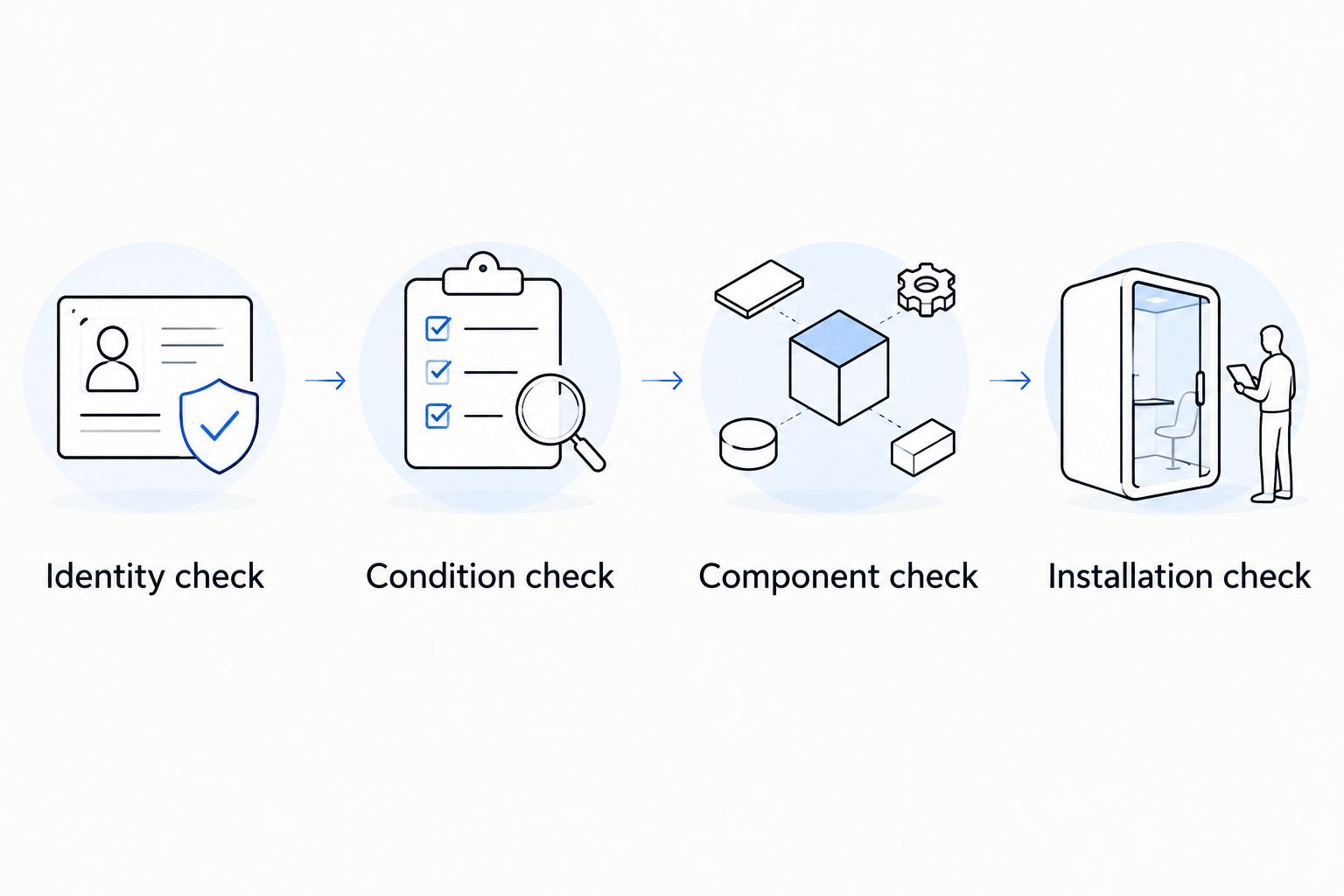
How to compare engine offers without mixing unlike parts
Use the same specification sheet for every engine you consider. Send your truck details and original engine identification to the seller and installer, then compare their answers side by side.
Identity check
Record the engine model, serial number, donor vehicle details, and required configuration. Resolve missing or conflicting identification before discussing installation.
Condition check
Request test records and inspection findings for the actual engine. Separate a seller's condition description from the supporting evidence.
Component check
List everything included and every component your shop must transfer, inspect, or replace. Keep engine controls and aftertreatment components as explicit line items.
Installation check
Ask the installer to approve the fit and define the remaining work. Keep this review attached to the exact engine being considered.
An engine control module is not a complete engine. The supplied catalog includes a Caterpillar C13 120-pin ECM and Volvo D13 injectors sold as a set of 3. Those are parts listings, not alternatives to a complete replacement engine.
Use those descriptions to separate components from engine assemblies when searching online. Connector count, part number, and quantity help identify a part; they do not establish that it fits your replacement engine. Obtain a specific compatibility review.
How this ranking works
This guide ranks configurations by their fit for distinct repair jobs: assembled replacement, accessory reuse, lower-engine repair, and planned rebuilding. Each recommendation follows the same criteria—identity, compatibility, condition evidence, included components, installation scope, and written terms.
The ranking is not a measured durability comparison or a market-wide price survey. An individual engine's records determine whether it qualifies for your shortlist.
Which used diesel engine should you choose?
Choose a documented, matching complete used take-out as your default replacement candidate. Move to a long block when your shop has approved accessory reuse; choose a short block or core only when the repair scope supports that additional work.
For Diesel Engine King used diesel engines, keep the same discipline: assess the exact unit, not the brand name alone. A Caterpillar, Cummins, Detroit, Volvo, or International badge does not establish condition or fit.
Before you authorize a 2026 purchase, give the installer the seller's identification records, test information, included-parts list, and written terms. Approval should cover one specific engine and one defined installation plan.
FAQ
What's the cheapest used diesel engine for my truck?
The right budget candidate is a compatible engine with a defined repair and installation scope. Compare units with the same configuration and included components rather than choosing an engine family by name.
Is a complete take-out better than a long block?
A complete take-out is the default candidate for an assembled replacement, while a long block suits verified accessory reuse. Inspect both options and confirm their actual contents before deciding.
Should I buy a used engine core for a working truck?
Choose a core only when you have a planned rebuild and a shop prepared to inspect it. A core is not a ready-to-install replacement, and internal damage determines the remaining work.
Does the same engine model guarantee a direct fit?
The same engine model does not guarantee a direct fit. Your installer must confirm the engine identity, controls, mounting, accessory arrangement, and emissions configuration against the truck.
What should I request before buying a used diesel engine online?
Request identification photographs, the serial number, condition evidence, an included-parts list, and written transaction terms. Have your installer review the exact unit before authorizing the purchase.
Is an ECM listing the same as an engine listing?
An ECM listing is for an engine control module, not a complete engine. Match its part number and application separately from the replacement engine assembly.
What does Diesel Engine King sell?
Diesel Engine King sells used commercial truck engines and heavy truck parts. Evaluate the identification, condition description, and included components of each individual listing.
One last thing
Photograph your original engine tag before the failed engine leaves your shop. Keep the photographs with the truck records and installer-approved replacement specification. That identification remains useful when checking the replacement, transferred accessories, and future service parts.

