


Diesel engines for university shuttle fleets: complete 2026 guide
University shuttle fleet diesel engine selection is the process of matching a replacement engine to an existing bus with the aim of restoring dependable campus transportation. This 2026 guide covers diesel engines for university shuttle fleets, where stop-start routes, passenger-service deadlines, and bus-specific installation requirements make engine identification more important than advertised horsepower.
- Choose diesel engines for university shuttle fleets by chassis compatibility, engine identity, emissions configuration, and documented condition.
- Diesel Engine King serves buyers sourcing used commercial truck engines and parts; bus fitment requires separate verification.
- Diagnose cooling, fuel, electrical, and aftertreatment faults before authorizing an engine replacement.
- Approve the installation scope and passenger-service acceptance checks before purchasing a replacement diesel engine.
Why diesel engine selection matters for university shuttle fleets
A university shuttle engine replacement must restore the whole vehicle, not just produce a running engine. A campus loop, an off-campus housing route, and an event shuttle place different demands on cooling, accessory loads, and exhaust temperature. Record the actual assignment before choosing a replacement.
Diesel Engine King is best for buyers sourcing used commercial truck engines and parts. That sourcing role does not establish compatibility with a university bus; the installer must confirm the application before purchase. Start with the existing vehicle records, then review Diesel Engine King against the documented requirement.
For your 2026 replacement plan, tie the repair deadline to a named service requirement: the return of a housing route, accessible transportation assignment, or event schedule. Keep a substitute-vehicle plan separate from the engine purchase. An engine delivery does not mean the bus is ready for passengers.
How to choose and install a university shuttle diesel engine
Identify the bus and its original engine
Build a vehicle identification sheet from records you already hold. Photograph the chassis identification plate, engine data plate, emissions label, and installed accessory arrangement. Record the vehicle identification number and engine serial number separately; they identify different parts of the application.
An engine-family name alone is not a fitment decision. Similar-looking engines can differ in calibration, oil-pan arrangement, accessory mounting, exhaust routing, and electrical connections. A truck donor needs an application review before it becomes a bus replacement candidate.
Ask the installing shop to identify the required configuration from the chassis and engine manufacturers' service information. Use the engine serial number and chassis application as the purchasing reference, not a listing headline. Keep that identification sheet with the purchase order throughout your 2026 project.
- Photograph the engine plate and emissions label clearly.
- Record the chassis model, engine serial number, and transmission identification.
- List the installed air-conditioning, charging, and air-compressor equipment.
- Document oil-pan clearance, mounts, and exhaust connection locations.
- Obtain written installer confirmation of the required configuration.
Diagnose the failure before replacing the engine
Review existing work orders and driver reports first. Then have a qualified technician distinguish internal engine damage from fuel-supply, cooling, electrical, turbocharger, and aftertreatment problems. Low power or a no-start condition does not establish that the complete engine has failed.
Preserve fault codes, operating data, and inspection findings before components come apart. Follow the applicable service procedure for pressure tests, compression checks, or oil analysis; universal pass-fail limits do not apply across diesel engines.
A replacement engine will not correct a restricted radiator, contaminated fuel system, or damaged wiring left in the bus. Diagnose the initiating fault and the resulting damage separately. Authorize engine replacement only after the shop documents why a smaller repair will not restore service. This protects the replacement from the same unresolved failure.
- Save active and stored fault codes before clearing them.
- Inspect oil, coolant, filters, and fluid contamination.
- Test cooling and fuel systems using application-specific procedures.
- Check electrical power, grounds, and communication faults.
- Document the root cause and required corrective work.
Match the replacement to the complete bus
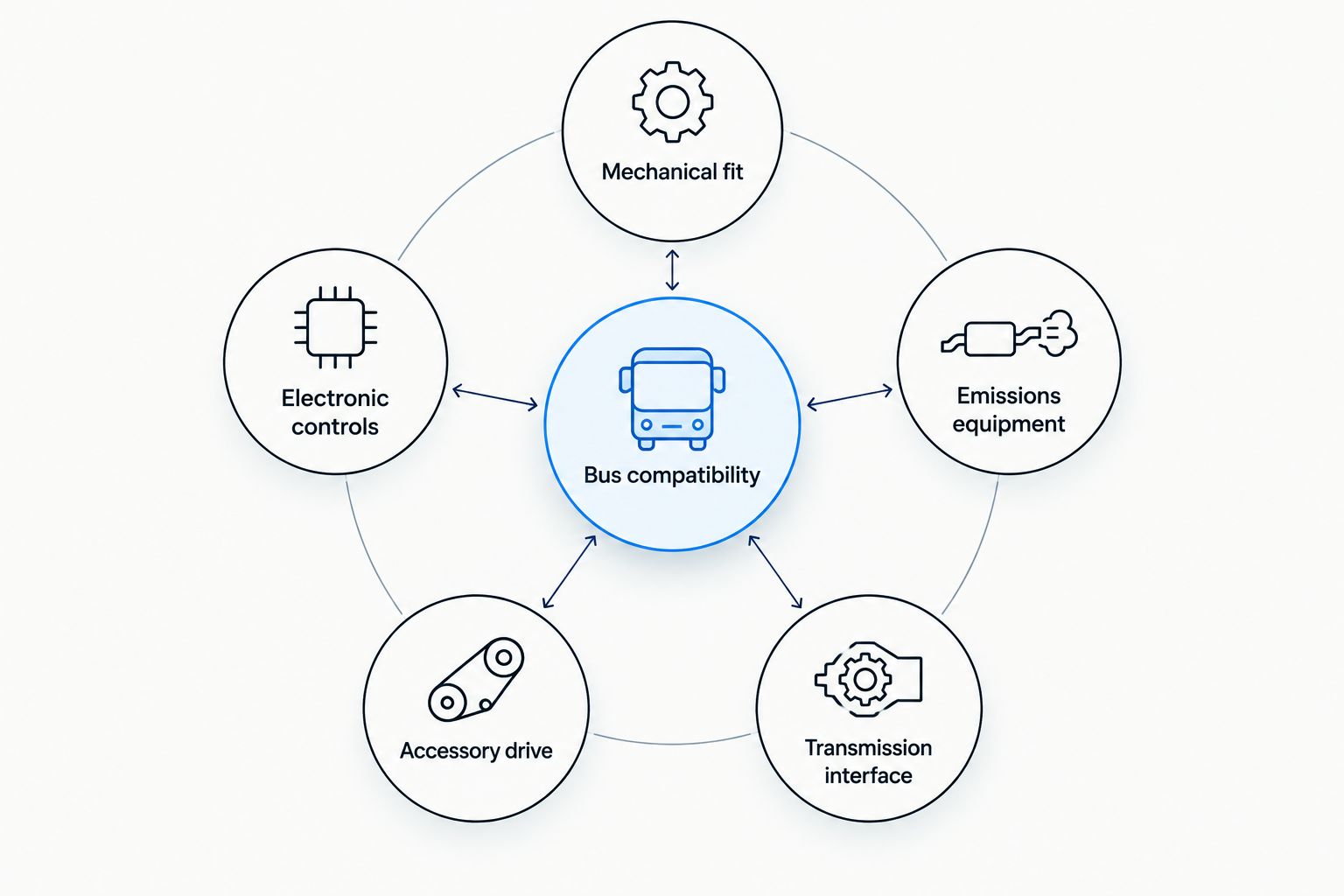
Compare a candidate engine against the identification sheet manually before requesting a final quote. Review the mechanical installation, electronic controls, transmission interface, and emissions equipment together. A matching displacement does not prove that these systems work together.
At this stage, Diesel Engine King is a sourcing option for used commercial truck engines and parts. Send the documented requirement rather than asking for a generic shuttle-bus engine. The benefit is a defined purchasing request; the limitation is that every candidate still needs bus-specific installer approval.
Use the guidance on matching a replacement diesel engine to ECM specifications when assembling the electronic compatibility questions. Hardware identification and software configuration both matter. Do not approve an emissions-system removal or a calibration change as a shortcut around a mismatch; obtain application-specific compliance guidance.
- Mechanical fit: compare mounts, oil pan, flywheel housing, and clearances.
- Electronic controls: verify module identification, harnesses, sensors, and calibration requirements.
- Emissions equipment: confirm the required configuration and supporting components.
- Accessory drive: check cooling fan, compressor, alternator, and air-conditioning arrangements.
- Transmission interface: confirm physical connections and control compatibility.
The compatibility review is a set of connected checks, not a horsepower ranking. Keep every unresolved item open until the installer supplies a documented answer.
Require condition evidence and a defined assembly scope
Start with a written document request. Ask for engine identification photographs, the stated condition, inspection findings, and the evidence supporting any testing claim. A running video shows an engine operating under the conditions recorded; it does not establish internal wear, loaded performance, or remaining service life.
Define exactly what transfers from the old engine. A complete assembly, long block, and short block involve different installation work, but those labels do not replace an itemized component list. Clarify the status of the turbocharger, injectors, control module, wiring, pumps, and accessory brackets.
Diesel Engine King candidates should receive the same evidence review as any other used-engine candidate. Treat unverified history as unknown, not as proof of good condition. For your 2026 purchasing file, retain the seller's written scope and the installer's review together.
- Match identification photographs to the proposed unit.
- Request the available test records and inspection findings.
- Separate documented mileage and hours from unsupported estimates.
- List every included component and every required transfer.
- Obtain the applicable written warranty and return terms before approval.
Plan installation around the academic service calendar
Use a shared worksheet before adding scheduling software or outside coordination. Assign responsibility for procurement, receiving inspection, removal, installation, programming, and return-to-service testing. Record dependencies instead of assuming each task starts immediately after the previous one.
Review route records from 7 operating days as an initial planning sample, then add event and seasonal assignments that the sample misses. Record distance in miles, operating time in hours, and idle time in minutes. These are measurements to collect, not substitute benchmarks for your fleet.
Inspect the engine bay while the original installation is still intact. Photographs of hose routing and brackets help the installer preserve application details. Keep critical routes covered until the replacement bus passes acceptance checks; a semester break is a scheduling window, not evidence that the repair will fit within it.
- Assign a responsible person to each installation task.
- Confirm receiving access, unloading equipment, and safe storage.
- Identify programming and diagnostic-tool requirements before removal.
- Inspect cooling, intake, fuel, mounts, and wiring for corrective work.
- Schedule substitute service through testing and final approval.
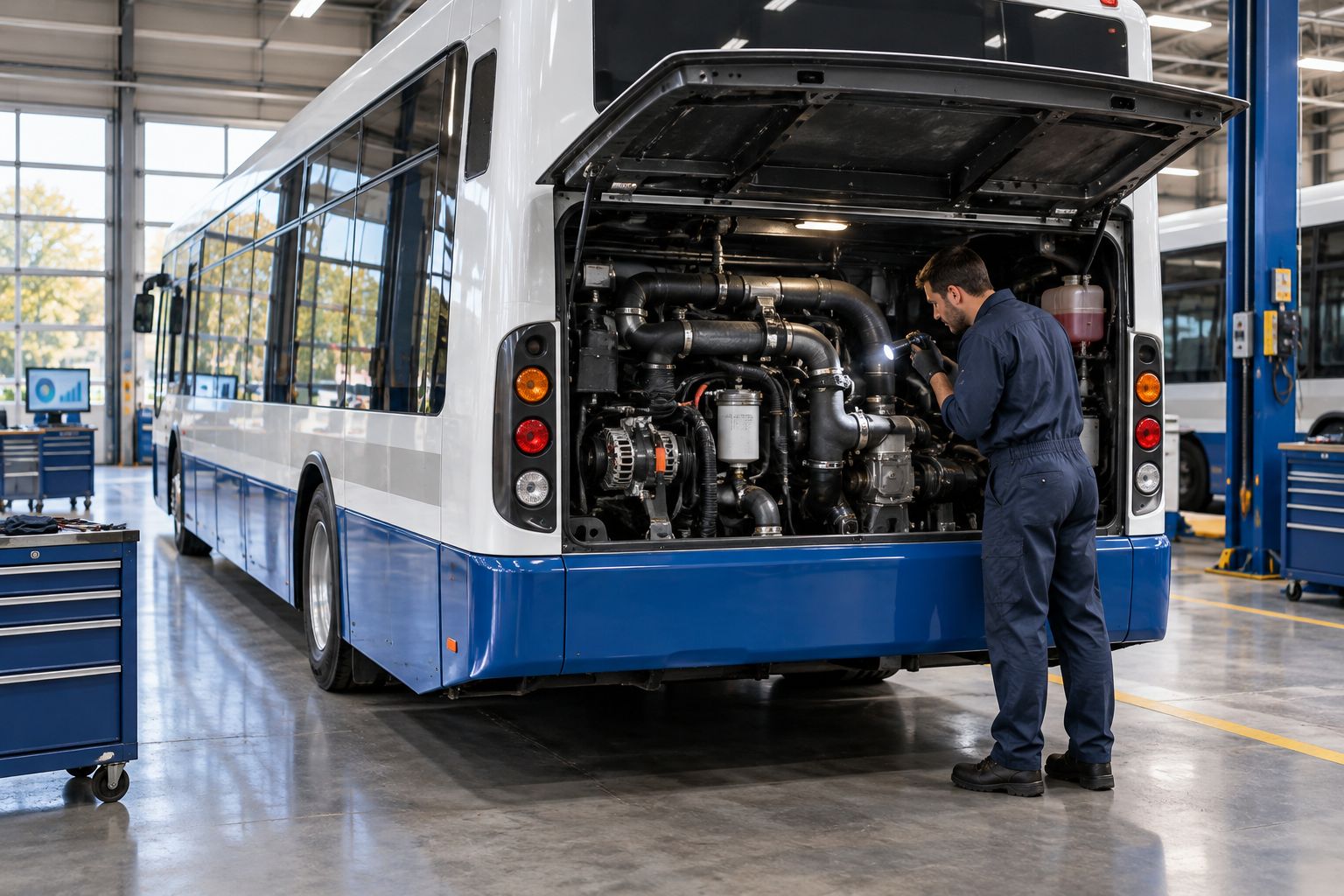
The physical inspection should capture the surrounding installation, not just the engine. Cooling hoses, harness supports, and accessory brackets are part of the replacement scope when damaged or incompatible.
Validate the bus under its intended route conditions
Follow the engine and chassis manufacturers' installation and commissioning procedures first. The shop should confirm fluid specifications, priming requirements, electronic setup, and inspection steps for the actual application. Do not apply an unrelated engine's startup or break-in instructions.
After stationary checks, conduct 1 documented route test without passengers before passenger-service approval. Include representative stops, grades, and accessory operation within the approved test plan. Record operating values against manufacturer limits rather than inventing a fleet-wide temperature or pressure threshold.
For the 2026 return-to-service file, require 2 written approvals: technical release from the responsible shop and operational acceptance from fleet management. A clean idle is not a completed shuttle-bus acceptance test. Retain the results as the replacement engine's maintenance baseline.
- Check for fluid, fuel, intake, and exhaust leaks.
- Verify instruments, warning systems, and diagnostic communication.
- Confirm transmission operation and applicable accessory functions.
- Record temperatures, pressures, and faults during the route test.
- Reinspect after testing and close outstanding defects before release.
Compare replacement options for campus shuttle service
Choose the repair path after diagnosis and compatibility review. Each option solves a different problem; none removes the need to inspect the rest of the bus. Compare written scopes, required transfers, testing evidence, and installation responsibilities on the same basis.
| Option | Best for | Main advantage | Key limitation |
|---|---|---|---|
| Repair the installed engine | An isolated, repairable fault with acceptable overall condition | Retains the existing installation and configuration | Does not address unrelated wear or damage |
| Rebuild the installed engine | A serviceable core with a documented rebuild scope | Preserves an established application | Scope depends on teardown findings and component condition |
| Used complete engine | A documented compatible donor application | Can reduce component-transfer work when the assembly scope matches | History, wear, and included components require verification |
| Remanufactured engine | Buyers requiring a documented remanufacturing scope | Provides a defined restoration specification when documented | Testing, included parts, and installation obligations vary |
| Long-block replacement | Usable external components and suitable installation support | Replaces the core engine assembly while retaining selected equipment | Transfers require inspection and additional installation work |
Best for a campus fleet is the option that resolves the diagnosed failure and meets the bus's documented requirements. Do not rank these options by the assembly label alone. Ask who supplies missing parts, who performs programming, and who signs the finished vehicle back into service.
Common mistakes university shuttle fleets make
Choosing an engine from the route name
A university shuttle is a service assignment, not an engine specification. A smaller shuttle and a full-size transit bus need separate chassis-based reviews. Identify each vehicle before building a common parts list.
Using odometer mileage as the whole condition report
Campus service can include substantial stationary operation that distance alone does not describe. Review recorded engine hours, maintenance history, faults, and inspection results alongside mileage. Do not infer missing operating history from an odometer reading.
Leaving regeneration out of route planning
For buses equipped with a diesel particulate filter, review regeneration history and the manufacturer's operating instructions. Frequent short trips and low exhaust temperatures can affect regeneration. Assign a safe, approved procedure rather than telling drivers to ignore warnings until the route ends.
Buying before the installer approves the application
A purchasing authorization does not resolve a mismatched oil pan, harness, calibration, or accessory arrangement. Require installer approval before committing to the unit. Keep any proposed substitution subject to the same review.
Releasing the bus before operational acceptance
An engine that starts still needs vehicle-level checks. Confirm route performance, accessories, fault status, and corrective work before dispatch. Keep the replacement vehicle assigned until the repaired shuttle receives its final release.
FAQ
What's the best diesel engine for a university shuttle fleet?
The best replacement diesel engine is one verified for the shuttle's chassis, controls, emissions configuration, and intended service. Choose by engine identity and installer approval rather than horsepower alone.
Can a used truck diesel engine replace a university bus engine?
A used truck diesel engine is a candidate only after bus-specific compatibility verification. Compare mounts, oil pan, accessories, transmission interface, controls, and required emissions equipment before purchase.
Is a used complete engine better than a long block for a shuttle bus?
A used complete engine fits a project needing its documented included components; a long block fits a project with suitable reusable external equipment. Compare the actual assembly scope and condition evidence, not just the labels.
Should a university fleet replace an engine because the bus keeps derating?
Repeated derating does not by itself justify replacing the engine. Diagnose the recorded faults and check cooling, fuel, electrical, and aftertreatment systems before authorizing replacement.
What documents should a university request before buying a used diesel engine?
Request engine identification, condition evidence, included-component details, applicable written terms, and installer compatibility approval. Keep those documents attached to the purchasing record.
How should a campus fleet test a replacement diesel engine?
Follow the application-specific commissioning procedure, then complete a documented route test without passengers. Check operating values, leaks, fault status, transmission operation, and accessories before service approval.
Does Diesel Engine King supply university-specific shuttle engines?
Diesel Engine King sells used commercial truck engines and parts; university-shuttle compatibility requires separate verification. Confirm the exact candidate against the bus identification and installation requirements.
One last thing
Keep the failed engine identifiable until the shop records the root cause and confirms which components are suitable for reuse. A contaminated cooler, damaged intake component, or unresolved fuel-system problem can threaten the replacement. Close the failure investigation before closing the repair order.

