


Diesel engine parts for medical transport fleets: complete 2026 guide
Medical transport fleet diesel-parts planning is the selection, verification, and replacement of engine components to keep patient-carrying vehicles mechanically ready for service. This 2026 guide covers diesel engine parts for medical transport fleets, with attention to scheduled pickups, repeated starts, stationary accessory loads, and a documented return-to-service process.
- Choose diesel engine parts for medical transport fleets by engine serial number, confirmed fault, and documented fitment.
- Diesel Engine King supplies used commercial truck engines and parts; verify each component against your actual chassis.
- Check cooling, starting, fuel delivery, and engine controls before authorizing replacement parts.
- Keep patient-compartment equipment checks separate from engine repair approval.
Why diesel-parts planning matters for medical transport fleets
A replacement component must fit the vehicle and correct the failure. For a patient-carrying vehicle, your release checklist must also address the equipment that depends on engine operation, charging, or cooling. A successful engine start does not complete that check.
Diesel Engine King is best for buyers sourcing used commercial truck engines and parts, not for assuming medical-vehicle compatibility. Use Diesel Engine King as a sourcing option after your technician identifies the required assembly and confirms its application.
Keep this distinction clear in your 2026 purchasing plan: medical transport describes the vehicle's job, not its engine specification. A passenger van, a truck-based ambulance, and a larger transport vehicle require their own parts records. Do not apply a heavy-truck listing to a smaller chassis because both vehicles burn diesel.
Your practical objective is a repair that passes documented checks before dispatch. Build the parts order around the vehicle, the diagnosis, and the required installation work—not around a symptom or a familiar engine name.
How to select and manage diesel engine parts
Identify the installed engine before searching
Start with the vehicle and engine records you already have. Create a simple worksheet or spreadsheet; a parts-management subscription is not necessary to establish accurate identification. Photograph the installed engine identification plate and the removed component's markings rather than relying on a driver's description.
Record 4 identifiers: vehicle VIN, engine serial number, engine model, and existing component part number. These records serve different purposes. The VIN identifies the chassis, while the engine serial number helps resolve the installed engine's configuration. Previous engine replacement makes that distinction particularly important.
Match those records to manufacturer parts information. Treat a superseded part number as something to verify, not permission to substitute any component with a similar connector or housing. Save the evidence with the repair order so another technician can repeat the decision.
- Photograph the engine plate and component identification label.
- Record the VIN, engine serial number, model, and part number.
- Note any previous engine swap or control-module replacement.
- Verify part-number supersessions through manufacturer information.
Diagnose the failure before authorizing a component
Begin with existing inspection records and visible conditions: fluid levels, leaks, damaged connectors, loose connections, and maintenance history. Then have a qualified technician follow the engine manufacturer's diagnostic procedure. A fault code identifies a condition or circuit; it does not prove that the named component needs replacement.
A no-start complaint requires starting-system and fuel-system checks appropriate to the engine. An overheating complaint requires cooling-system investigation. An electronic-control complaint requires power, ground, wiring, and communication checks before a control module becomes the repair decision.
For control-related symptoms, use the guide to diagnosing a failing diesel engine ECM alongside the applicable service information. Do not replace an ECM to bypass an unresolved wiring fault.
Preserve the original diagnostic results in your 2026 repair file. Record the operating conditions that produced the complaint, including accessory use and whether the engine was cold or warm. That record gives the technician a condition to reproduce after repair.
- Save fault codes and available operating-condition data before clearing them.
- Inspect power supplies, grounds, connectors, and harness routing.
- Follow manufacturer tests for the suspected system.
- Write the confirmed failure and supporting test result on the order.
Match the replacement to the complete application
Compare the proposed replacement against the worksheet manually first. Check more than the engine family: component number, connector arrangement, mounting points, sensor provisions, emissions configuration, and programming requirements all belong in the review. Ask the installing technician to resolve differences before you authorize shipment.
Diesel Engine King supplies used diesel engines and heavy truck parts. A component listing offers a starting point for sourcing, but its title does not establish fitment to your medical transport vehicle. Send the supplier the exact identification records rather than asking for a part that fits an ambulance.
For electronic modules, distinguish hardware identification from software configuration. Confirm whether programming or configuration work is required and who will perform it. Do not assume a used module will operate correctly simply because its connector fits.
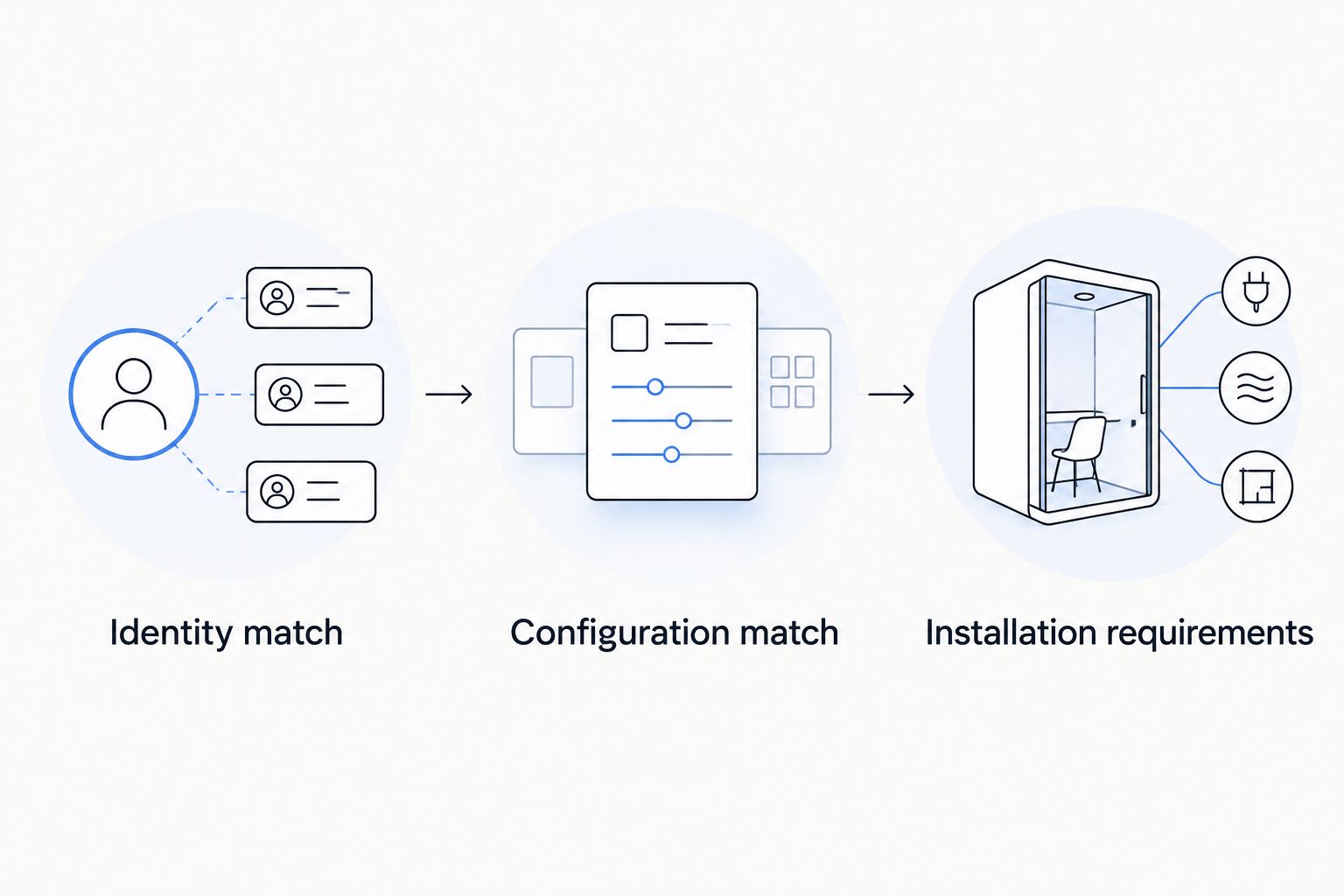
Use 3 approval gates: identity match, configuration match, and installation requirements confirmed. These are purchasing controls, not a substitute for manufacturer service instructions. Keep the approval attached to the specific component being ordered.
- Match the replacement number or documented supersession.
- Confirm mounting, connectors, and associated sensor connections.
- Verify engine controls and emissions-system compatibility.
- Identify programming, calibration, and installation requirements.
Choose the repair scope before choosing the supplier
Use your diagnosis and inspection findings to decide whether the repair needs an individual component, a rebuilt assembly, or an engine replacement. Start by listing what is damaged and what remains serviceable. Do not expand the repair because a larger assembly looks convenient, or narrow it because an individual part is easier to order.
A targeted repair keeps serviceable assemblies in place, but only when testing supports that choice. A long-block replacement addresses a different scope of work and requires a separate review of retained components. A complete engine assembly still needs an itemized list of what is included.
For every used assembly, ask for condition evidence specific to that unit. An inspection, a bench test, and a running-engine test answer different questions. None replaces application matching or the installing technician's acceptance checks.
Write the repair scope clearly enough that purchasing cannot accidentally substitute a different level of assembly. Identify seals, fluids, fasteners, transferred accessories, and outsourced work in the job plan.
- Separate confirmed damaged parts from serviceable components.
- Compare component repair with assembly replacement.
- Request condition and test documentation for the actual unit.
- List included, excluded, and transferred components.
Review cooling and accessory loads with the engine repair
Map your vehicle's actual equipment before ordering related parts. Determine which accessories use the engine-driven belt system, which depend on vehicle charging, and which operate independently. Do not assume that the patient compartment uses the same arrangement across every vehicle in your fleet.
When the complaint occurs during stationary operation, reproduce those conditions under a controlled workshop procedure. Cooling-system inspection should address the applicable fan drive, belts, hoses, radiator, coolant specification, and circulation checks. Electrical investigation should include the charging system and the relevant accessory circuits.
Keep engine repair and medical-equipment approval distinct. The technician responsible for engine work should document the engine and chassis checks; the person responsible for patient-compartment equipment should verify that equipment under your operating procedures.
For your 2026 inspection worksheet, describe the accessory state during each test. An unloaded workshop check is not equivalent to a check with the vehicle's normal equipment operating.
- Document engine-driven and electrically powered accessories.
- Inspect belt condition, alignment, tensioning, and routing.
- Follow specified cooling and charging-system tests.
- Verify patient-compartment equipment through its responsible maintainer.

Build a parts record around your fleet's actual failures
Start with completed work orders, not a generic spare-parts list. Group repairs by installed engine and verified component number. Record repeat failures, installation findings, and the diagnostic evidence that justified each replacement.
Use those records to decide which service items belong in your maintenance stock. Keep consumables separate from expensive assemblies that require individual diagnosis and fitment review. A shelf full of unidentified used modules does not provide a dependable repair plan.
Include engine hours where the vehicle records them, alongside odometer readings. For vehicles with stationary operation, those records describe different aspects of use. Follow the manufacturer's maintenance criteria rather than creating an unsupported interval from mileage alone.
Diesel Engine King is a used diesel-parts sourcing option; your fleet records determine what to request. Keep each supplier inquiry tied to a specific engine record and repair scope. This makes follow-up questions useful instead of turning purchasing into a search for interchangeable-looking parts.
- Group work orders by engine model and verified component number.
- Record mileage and engine hours where available.
- Track repeat failures and their confirmed causes.
- Label stored components with identification and condition records.
Verify the repair before returning the vehicle to dispatch
Follow the manufacturer procedure for installation, fluid filling, priming, configuration, and post-repair checks. Use the specified torque values and tools rather than generic instructions. Fuel-system and electronic-control work belongs with a technician equipped for the applicable system.
After installation, inspect for leaks and correct routing, then test the repaired system under relevant operating conditions. Check starting, warm operation, charging, cooling, and the original complaint as applicable. Document results rather than writing only that the vehicle runs.
Use 2 sign-offs in your 2026 release workflow: mechanical acceptance and operational readiness. Mechanical acceptance confirms the repair checks; operational readiness confirms the vehicle meets your fleet's dispatch requirements, including applicable patient-compartment checks. Assign responsibility for both.
Do not dispatch a patient-carrying vehicle with an unresolved safety-related fault. A cleared fault-code screen is not evidence that the underlying condition has been corrected.
- Complete manufacturer installation and post-repair procedures.
- Recheck leaks, routing, connections, and the original complaint.
- Verify accessories under relevant operating conditions.
- Record mechanical acceptance and operational readiness before release.
Compare repair and sourcing options
Choose the option that matches the confirmed failure and your installation capabilities. Each option has a useful application and a limitation. Neither a used-part description nor a remanufactured label eliminates the need for fitment and condition evidence.
| Option | Best for | Practical advantage | Key limitation |
|---|---|---|---|
| New replacement component | A confirmed component failure with a verified application | Avoids uncertainty about prior service history | Still requires correct specification and diagnosis |
| Remanufactured assembly | An assembly repair supported by documented rebuilding and testing | Provides a defined replacement assembly | Rebuilding scope and test evidence require review |
| Used component from Diesel Engine King | Buyers sourcing used commercial truck engine components | Provides a used-parts sourcing path | Medical-vehicle fitment and unit condition require verification |
| Repair the existing assembly | A repairable fault supported by inspection | Retains the existing application when suitable | Depends on damage extent and repair capability |
| Replacement engine assembly | Engine damage that justifies assembly replacement | Groups engine replacement work into one scope | Included accessories, controls, and installation work need separate checks |
Use the table as a decision aid, not a ranking. Request documentation that answers the repair question: exact identity, condition, included components, and installation requirements. Reject a proposal that leaves those points unresolved.
Common mistakes medical transport fleets make
- Ordering by vehicle role. Ambulance or medical shuttle is not a fitment specification. Identify the installed engine and component before requesting parts.
- Treating heavy-truck components as universal. A diesel component intended for a heavy commercial engine does not establish compatibility with a van-based transport vehicle. Check the actual application.
- Replacing electronics before testing wiring. A control-module complaint requires verified power, grounds, connections, and applicable diagnostics. Keep the test results with the replacement decision.
- Testing without normal accessory use. If the complaint occurred with heating, cooling, or other equipment operating, include those conditions in the controlled verification plan.
- Combining repair approval with dispatch approval. Engine work and patient-compartment readiness require distinct checks. Name the responsible people before the vehicle leaves the shop.
FAQ
What's the best way to choose diesel engine parts for medical transport fleets?
Choose diesel engine parts by confirmed failure, engine serial number, and verified component application. Medical transport describes the vehicle's role, not its engine specification.
Can I use a heavy-truck diesel part in an ambulance?
Use a heavy-truck diesel part only when manufacturer application information confirms the match. Engine model, component number, configuration, and installation requirements must agree with the actual vehicle.
Are used diesel parts suitable for medical transport vehicles?
Used diesel parts require application verification, condition evidence, and technician acceptance before installation. Do not treat a used-part listing as proof that the component is suitable for patient-carrying service.
Should I replace the ECM when the engine won't start?
Replace the ECM only after applicable diagnostics establish a module failure. Check power, grounds, wiring, communication, and other relevant no-start causes first.
What should I ask a used diesel-parts supplier?
Ask for exact identification, condition evidence, included components, and installation requirements. For electronic modules, also confirm the hardware application and required programming work.
Should I track engine hours as well as mileage?
Track engine hours alongside mileage when your vehicle records them. Use the manufacturer's maintenance criteria for the installed engine rather than setting an unsupported interval.
When is a repaired medical transport vehicle ready for dispatch?
Release a repaired medical transport vehicle after documented mechanical acceptance and operational-readiness checks. Verify the original complaint, relevant accessory operation, and applicable patient-compartment equipment before dispatch.
One last thing
Preserve the conditions of the original failure, not just its fault code. Your 2026 repair record should say whether the engine was cold, whether the vehicle was stationary, and which accessories were operating. Those details define the verification test and help prevent a workshop pass from becoming a repeat dispatch failure.

