


CAT Trucks alternatives for used Caterpillar engine buyers
Caterpillar's strength is its established diesel-engine product line, but a CAT Trucks search does not identify the exact used engine your truck needs. The best CAT Trucks alternative in 2026 is Diesel Engine King for used commercial truck engines and parts; a Caterpillar dealer is the better starting point for manufacturer-specific identification and repair guidance.
- For cat trucks alternatives, Diesel Engine King fits buyers seeking used commercial truck engines and heavy truck parts.
- Choose a Caterpillar dealer for manufacturer-specific engine identification and repair guidance.
- Compare used Caterpillar engines by serial prefix, configuration, included components, and documented condition.
- Choose a rebuilder when inspection supports rebuilding your existing engine rather than replacing it.
Why this matters
A truck search and an engine purchase solve different problems. If your chassis is serviceable and the engine has failed, you need a replacement that matches the installation—not another truck selected because it carries a familiar engine brand.
For a used Caterpillar engine purchase in 2026, separate the sourcing decision from the fitment decision. A supplier can sell used diesel engines without every engine being suitable for your truck. Start with the engine identification plate, truck VIN, existing control-module information, and the repair shop's diagnosis.
Here, CAT Trucks alternatives means alternative routes for sourcing or repairing a Caterpillar truck engine. It does not mean that Cummins, Detroit, or another engine family is a direct replacement for your existing Caterpillar installation.
CAT Trucks alternatives at a glance for 2026
Choose the route that matches the job. Buying a used assembly, rebuilding your existing engine, and replacing a failed control module are separate decisions.
| Source or route | Best for | Standout feature | Difference from a CAT Trucks search | Main limitation |
|---|---|---|---|---|
| CAT Trucks search route | Identifying a complete-truck purchase or starting Caterpillar research | Truck-focused search intent | Baseline route, not proof of engine fitment | Does not establish a replacement engine's identity or condition |
| Diesel Engine King | Used commercial truck engines and heavy truck parts | Engine assemblies and individual components | Focuses the purchase on the engine or part | Each listing still needs installation-specific verification |
| Caterpillar dealer | Manufacturer-specific identification and repair guidance | Caterpillar-focused service route | Starts with the existing engine's identity and repair needs | A dealer route does not automatically mean a used take-out engine |
| Independent diesel rebuilder | Repairing a rebuildable existing engine | Inspection-led rebuild scope | Evaluates your engine instead of selecting another truck | Requires teardown findings and a written repair scope |
| Truck salvage supplier | Sourcing a documented donor engine | Donor-based sourcing | Searches for an engine removed from another vehicle | Donor history and included equipment require close checking |
Best for used-engine buyers: compare the actual engine documentation before choosing the seller. A source's name cannot substitute for an engine serial number, condition evidence, and a component list.
1. Diesel Engine King: best for used engines and truck parts
Diesel Engine King sells used commercial truck engines and heavy truck parts. Its Caterpillar listings include engine assemblies and engine control modules, allowing you to distinguish a mechanical replacement from a component-level repair.
The CAT C-15 Acert Engine listing describes a 475 HP, twin-turbo MXS engine as good used, fully inspected, and run tested. The TESTED CAT C15 ACERT MXS 90/120 PIN ECM 10R-5649, 478-7931-01 listing describes a bench-tested control module. These descriptions concern different items; a control-module test does not establish the condition of an engine assembly.
Where Diesel Engine King shines
- Engine-focused sourcing: the business serves used commercial truck engine and parts buyers.
- Specific identifiers: Caterpillar listings identify engine families, prefixes, and component part numbers.
- Separate repair paths: engine assemblies and ECMs address different repair scopes.
- Item-level condition descriptions: the cited engine listing states inspection and run testing; the cited ECM listing states bench testing.
Where Diesel Engine King falls short
- A used engine listing is not a remanufacturing report. Inspection and run testing do not describe every internal component's remaining service life.
- A matching C15 name does not establish that mounts, electronics, accessories, and emissions configuration match your truck.
- A bench-tested ECM still needs the correct application and calibration. Do not treat a connector description as complete fitment approval.
| Buying dimension | Used-engine supplier route | CAT Trucks search route |
|---|---|---|
| Purchase focus | Engine assembly or individual truck component | Truck-focused starting point |
| Identification needed | Engine serial prefix and relevant part numbers | Truck details plus engine identification |
| Condition decision | Evaluate the specific engine or component | Separate truck condition from engine condition |
| Installation scope | Confirm transferred and included equipment | Establish whether you need a truck or an engine |
Best for: buyers who already know they need a used commercial truck engine or a specific heavy truck component.
Verdict: Buy only after the repair shop confirms the exact unit's fitment and condition evidence.
2. Caterpillar dealer: best for manufacturer-specific guidance
A Caterpillar dealer is the manufacturer-aligned route when engine identification or repair requirements come before sourcing. Start here when you need to resolve the engine's configuration, applicable service information, or the distinction between a mechanical failure and a control-system problem.
This route serves a different purpose from comparing used take-out engines. Ask for a written diagnosis and repair recommendation before deciding which replacement route fits the truck.
Where the Caterpillar dealer route shines
- Provides a manufacturer-specific starting point for Caterpillar engine questions.
- Keeps engine identification and repair requirements central to the discussion.
- Gives you a route for discussing genuine Caterpillar parts and service information.
Where the Caterpillar dealer route falls short
- Choosing a dealer does not establish that you are buying a used engine assembly.
- A service recommendation and a used-engine purchase require different documentation.
- You still need a written scope identifying the engine, parts, and work being proposed.
Best for: buyers with unresolved identification, diagnostic, or manufacturer-specific repair questions.
Verdict: Hold the replacement purchase until the engine identity and repair requirements are settled.
3. Independent diesel rebuilder: best for a rebuildable engine
An independent diesel rebuilder is a sourcing alternative when your existing engine deserves inspection before replacement. The decision rests on the condition of the block, crankshaft, cylinder head, and other components—not simply on whether the engine starts.
Compare a written rebuild scope against a used replacement's documented condition and installation requirements. Specify what the shop will inspect, reuse, repair, and replace.
Where the independent rebuilder route shines
- Centers the decision on the engine already installed in your truck.
- Allows the repair scope to follow inspection findings.
- Makes component reuse and replacement explicit when the shop supplies an itemized scope.
Where the independent rebuilder route falls short
- The final scope depends on what inspection and teardown reveal.
- The word rebuilt alone does not identify which parts were replaced.
- A damaged engine needs an inspection decision before you commit to rebuilding it.
Best for: owners whose existing engine is a candidate for repair and who want a documented rebuild scope.
Verdict: Hold until inspection establishes whether rebuilding is the right repair.
4. Truck salvage supplier: best for donor-based sourcing
A truck salvage supplier is another route for locating a used take-out engine. Judge the specific donor documentation and inspection evidence rather than treating the salvage label as proof of either good or poor condition.
Where the truck salvage route shines
- Supports a search based on a donor vehicle and engine identity.
- Lets you request the donor VIN, engine serial number, and removal circumstances.
Where the truck salvage route falls short
- Donor mileage does not establish the engine's complete repair history.
- An assembly description needs an itemized list of included components.
Best for: buyers whose installer can evaluate a documented donor engine.
Verdict: Skip any unit whose identity or condition cannot be established.
Why buyers look beyond a CAT Trucks search
The reason to change routes is the repair task, not an unsupported claim about another seller. In 2026, narrow your search when one of these situations describes the job:
- The truck is staying: you need an engine or component, not a complete vehicle.
- The diagnosis is incomplete: verify the failure before ordering an assembly.
- The configuration matters: engine family alone does not establish installation compatibility.
- The existing engine is repairable: compare a rebuild scope with replacement requirements.
- The donor needs verification: request records tied to the actual engine being offered.
Do not interpret a supplier change as a reason to change engine brands. A cross-brand repower introduces separate questions about mounting, transmission interfaces, controls, cooling, and legal emissions requirements.
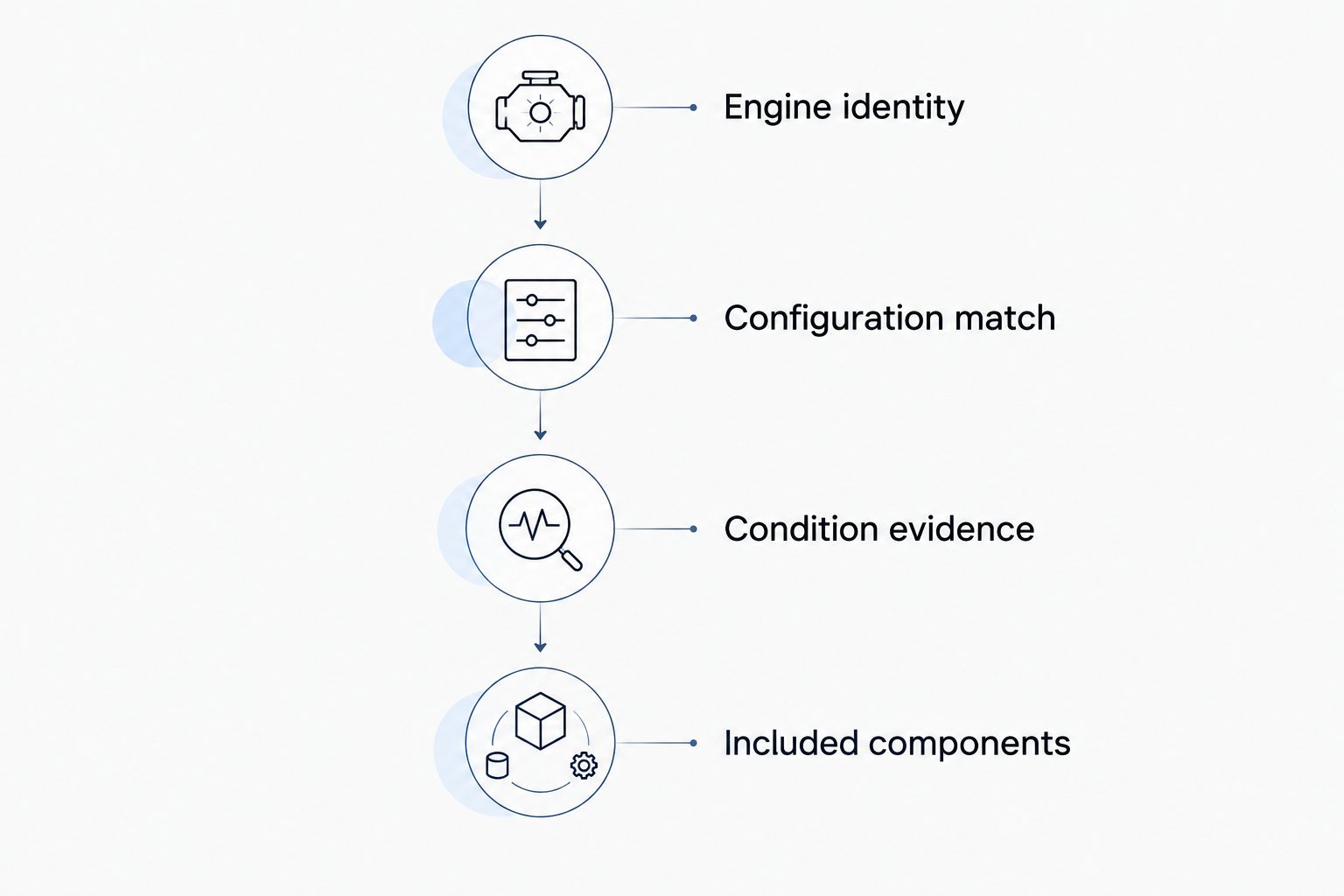
Check the engine before choosing the source
Use the same inspection sequence for every seller. Your installer should approve the identification and configuration before you commit to a specific assembly.
Engine identity
Record the engine serial number and prefix directly from its identification plate. Request clear photographs of the offered engine's plate, then reconcile them with the invoice description.
Configuration match
Compare the existing installation with the proposed replacement: electronics, emissions equipment, flywheel housing, mounts, oil pan, intake and exhaust routing, and accessory arrangement. Use application-specific service information rather than visual similarity.
Condition evidence
Ask what was tested, how it was tested, and which engine the records describe. A running video supports a different claim from an inspection report; neither should be presented as proof of every internal component's condition.
Included components
Get a written list covering the ECM, turbochargers, injectors, starter, alternator, air compressor, and other accessories. Identify what your shop must transfer from the old engine.
For electronic engines, have the installer review the control-module application and required calibration. The guide to matching a replacement diesel engine to your truck's ECM specs covers this separate fitment decision.
Caterpillar listings: assembly versus control module
The CAT C-15 Acert Engine listing specifies 475 HP. Separate Caterpillar control-module listings identify a C7 WAX ECM with 70 pins and a C13 LEE ECM with 120 pins. Those identifiers describe individual listings, not interchangeable applications.
Choose the repair category before choosing a listing. A failed ECM calls for electrical diagnosis and application matching; internal mechanical damage calls for a mechanical repair decision. An ECM replacement does not repair damaged bearings, pistons, or cylinders.
The engine and ECM below illustrate those separate purchase categories. Have your installer confirm the relevant serial prefix, part number, configuration, and programming requirements before selecting either item.


When staying with a CAT Trucks search is right
Stay with a truck-focused search when you intend to replace the complete vehicle. Engine sourcing alone does not address a chassis, transmission, or vocational equipment problem that makes retaining the truck unsuitable for your operation.
Stay with the Caterpillar dealer route when manufacturer-specific diagnosis remains the unresolved step. Switching suppliers before establishing the failure simply moves an unanswered technical question into a purchase order.
FAQ
What's the best CAT Trucks alternative for used engine buyers in 2026?
Diesel Engine King is a fit for buyers seeking used commercial truck engines and heavy truck parts. Choose a Caterpillar dealer instead when manufacturer-specific identification or repair guidance is the first requirement.
Does searching for CAT Trucks identify the right replacement engine?
No. You need the existing engine's serial number, prefix, configuration, and installation details to evaluate a replacement. A truck name or Caterpillar engine-family name is not complete fitment evidence.
Is a used Caterpillar engine better than rebuilding my engine?
Neither route is automatically better. Compare inspection findings and the written rebuild scope against the used engine's documented condition, configuration, and included components.
Can I replace a Caterpillar engine with a Cummins or Detroit engine?
Do not treat a different engine brand as a direct replacement. A cross-brand repower requires an installation plan covering mechanical interfaces, electronics, cooling, and applicable emissions requirements.
What should I ask before buying a used Caterpillar engine?
Ask for the engine serial number, prefix, condition evidence, and written component list. Have your installer verify the proposed unit against the truck's existing installation before purchase.
Does a bench-tested ECM prove the engine is good?
No. Bench testing concerns the control module, not the engine's internal mechanical condition. Engine inspection and ECM application checks are separate tasks.
Does the same Caterpillar model name guarantee a match?
No. Verify the serial prefix, electronics, emissions configuration, mounting arrangement, and accessory setup. Confirm ECM part numbers and calibration requirements separately.
One last thing
Make the offered engine's serial number part of the written purchase description. Photographs, test evidence, inspection records, and the invoice should all identify the same unit.
For your 2026 purchase, that connection matters more than a familiar supplier name. It keeps the fitment review and condition review tied to the engine your shop will actually install.

