


Used Isuzu 4HK1 Engine for Sale: Best Choices 2026
Best overall: a configuration-matched Isuzu 4HK1 complete take-out with documented running condition. Best for reusing verified accessories: a matched 4HK1 long block. Best for a planned rebuild: an inspected 4HK1 core. This 2026 guide explains how to evaluate a used Isuzu 4HK1 engine for sale by fit, condition, and included components—not by the model name alone.
- The best used Isuzu 4HK1 engine for sale matches your truck’s configuration and has documented condition.
- Choose a complete take-out for replacement, a long block for accessory reuse, or a core for rebuilding.
- Confirm engine identification, ECM compatibility, emissions equipment, and included parts before authorizing purchase.
- Diesel Engine King serves buyers of used commercial truck engines and parts; evaluate each replacement engine individually.
Why this matters
A 4HK1 model designation identifies an engine family, not a complete installation specification. You still need to establish whether the replacement matches your truck’s controls, emissions configuration, mounting arrangement, and transmission interface.
For a 2026 replacement project, separate engine condition from installation compatibility. A running engine with the wrong configuration is not a suitable replacement, and a matching engine with unresolved internal damage is not ready for service.
Diesel Engine King sells used commercial truck engines and parts. Review the Isuzu 4HK1 diesel engine parts guide when identifying which components your replacement requires.
The recommendations below rank purchase configurations rather than individual seller listings. Use them to decide what assembly to request and what evidence must accompany it.
What makes the best used Isuzu 4HK1 engine?
Evaluate every candidate against these criteria before comparing purchase options:
- Configuration match: Verify the truck VIN, original engine identification, donor identification, and applicable parts information. Do not accept a model-name match as fitment approval.
- Condition evidence: Request records tied to the actual engine, including available running observations, diagnostic results, and inspection findings.
- Assembly contents: Get a written list of included components. Define whether the purchase includes the turbocharger, fuel equipment, harness, control module, brackets, and flywheel components.
- Control and emissions compatibility: Confirm that the replacement works with the truck’s required electronics and emissions equipment. Treat connector appearance as a visual check, not proof of compatibility.
- Repair scope: Choose an assembly that fits the shop’s diagnosis. A long block does not resolve faults in accessories that you transfer onto it.
- Written transaction terms: Review the seller’s actual inspection, return, warranty, handling, and core requirements before committing. Do not infer terms from a general product description.
The best used Isuzu 4HK1 is the engine your shop can verify, not the engine with the shortest description. Keep the evidence and fitment decision together in the repair file.
Used Isuzu 4HK1 purchase options at a glance
| Purchase option | Best for | Standout feature | Key limitation |
|---|---|---|---|
| Matched complete take-out | Replacing a failed engine as an assembly | Offers the opportunity to evaluate the donor engine with its attached components | Complete does not establish condition or guarantee that every component is included |
| Matched long block | Reusing inspected, compatible accessories | Separates internal engine replacement from accessory selection | Requires component transfers and separate accessory checks |
| Inspected rebuild core | A shop-led rebuild project | Lets the rebuilder assess and repair internal components | Requires teardown before its repair scope is established |
These are purchase formats, not interchangeable quality grades. A complete assembly still needs inspection, a long block still needs a contents list, and a core still needs an identity check.
1. Matched complete take-out: best for assembly replacement
A complete take-out is a used engine removed from a donor vehicle with an attached component package. The seller’s written description determines that package; the word complete does not define it by itself.
Best for: You need to replace a failed engine and want to evaluate the replacement as an assembled unit. Prioritize a matching donor configuration with evidence tied to that specific engine.
Complete take-out pros
- Provides an opportunity to assess the engine and attached components together.
- Allows your shop to compare donor equipment with the failed engine before installation.
- Gives the seller a defined assembly to photograph and document.
Complete take-out cons
- Attached accessories retain their own wear and failure risks.
- Donor controls and emissions-related components require compatibility checks.
- A running video does not establish internal condition under every operating condition.
Ask for the donor VIN, engine identification, removal reason, and available service history. Request a component list that distinguishes included equipment from items shown only in photographs.
For a 2026 purchase, have the shop review any running evidence alongside diagnostic information. A video is useful when it identifies the actual engine and shows the operating conditions, but it is not a substitute for inspection.
Inspect accessible areas for broken mounting points, damaged connectors, fluid leakage, corrosion, and evidence of poor storage. Ask what happened between removal and the current inspection; undocumented handling deserves attention even when the donor reportedly ran.
Verdict: Buy a matched complete take-out only after identity, condition, and assembly contents are verified. Hold an undocumented assembly until the seller resolves those points.
2. Matched long block: best for reusing inspected accessories
A long block generally supplies the assembled internal engine and cylinder head, while external equipment depends on the seller’s package. Confirm the exact contents instead of assuming that fuel equipment, manifolds, wiring, or the turbocharger accompany it.
Best for: Your shop has diagnosed internal engine damage and verified that the original accessories remain suitable for reuse. This option requires a clear transfer plan before the replacement arrives.
Long block pros
- Keeps the internal replacement decision separate from accessory selection.
- Allows reuse of components that the shop has inspected and approved.
- Gives the installer a defined opportunity to inspect transferred equipment off the engine.
Long block cons
- Requires additional assembly work and component transfers.
- Carries unresolved accessory faults into the replacement if inspection is incomplete.
- Needs explicit confirmation of included covers, housings, and other installation parts.
Before selecting a 4HK1 long block, identify the original failure. Coolant contamination, fuel-system trouble, or lubrication faults require a repair plan that addresses the cause—not just the damaged assembly.
Have the shop classify components as reuse, replace, or inspect further. Include the turbocharger, injectors, fuel supply equipment, oil cooler, intake plumbing, sensors, and wiring as applicable to the truck’s configuration.
Do not transfer a component simply because it bolts on. Verify its application and condition, then follow the applicable service procedure for cleaning, sealing, assembly, and adjustment.
Verdict: Buy a matched long block when accessory reuse is supported by inspection. Hold the purchase when the failure cause or transfer list remains unresolved.
3. Inspected rebuild core: best for a shop-led rebuild
A rebuild core is an engine intended for teardown and repair, not a ready-to-install replacement. Its value to the project depends on whether the rebuilder accepts its identity and determines that the necessary components are repairable.
Best for: Your repair shop plans a rebuild and can inspect the core before approving the work. Choose this route for a defined rebuild project, not as a substitute for a documented running engine.
Rebuild core pros
- Allows internal inspection before the shop finalizes the repair scope.
- Lets the rebuilder document measurements and component decisions.
- Supports a repair plan based on the actual condition found during teardown.
Rebuild core cons
- Hidden damage remains unresolved until inspection and measurement.
- Missing components complicate the rebuild plan.
- Does not provide evidence of running condition for immediate installation.
Ask why the engine became a core and whether it has already been disassembled. Require photographs of visible damage, exposed internal areas, and any loose components supplied with it.
A crankshaft that turns by hand does not prove that the engine is serviceable. Likewise, an intact exterior does not establish cylinder, bearing, or cylinder-head condition.
For a 2026 rebuild decision, let the rebuilder establish acceptance criteria before you authorize the purchase. Keep the seller’s statements separate from findings produced during teardown.
Verdict: Buy an inspected core only for an approved rebuild plan. Skip a core when you need an engine ready for installation.
How to verify a 4HK1 before purchase
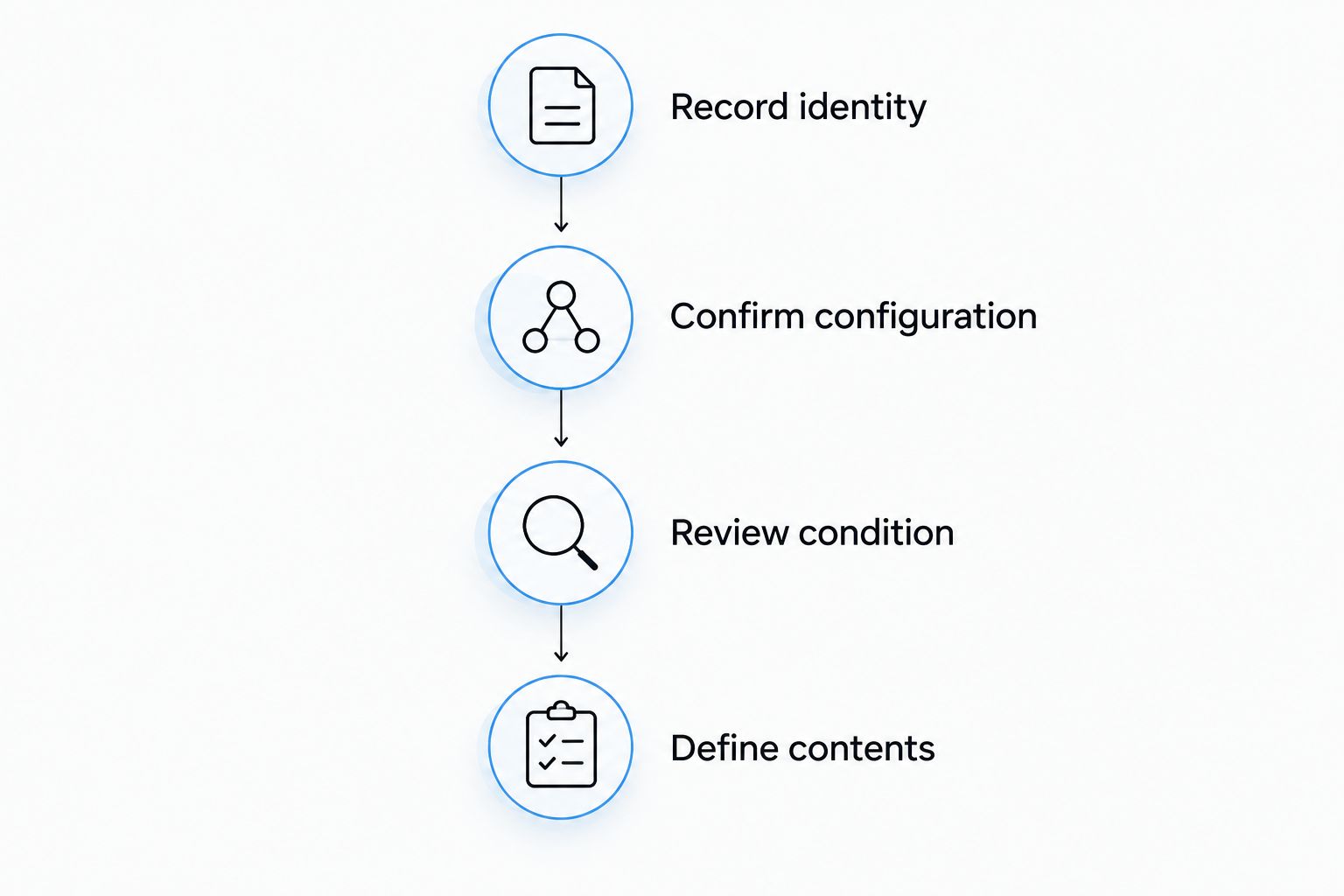
Use these 4 verification steps in order. Complete the identity and configuration checks before spending shop time on a detailed installation plan.
1. Record identity
Collect the truck VIN, original engine identification, donor VIN when available, and replacement engine identification. Photograph the identification markings so the shop can compare records against the physical engine.
Record the truck’s actual model year without treating the purchase date as an engine specification. A replacement bought in 2026 still needs to match the truck’s applicable configuration.
2. Confirm configuration
Compare the replacement against the truck’s parts and service information. Review controls, emissions equipment, mounting points, oil-pan arrangement, accessory placement, and transmission connection as applicable.
Require the installer to identify any component transfers or programming work. An unresolved compatibility question belongs in the purchase decision, not on the workbench after removal.
3. Review condition
Request available test results and ask how they were obtained. Readings need operating conditions and the applicable service limits to be useful; a number without context does not establish a pass.
Review reported mileage alongside donor records and identification. Distinguish recorded donor mileage from an unsupported estimate of engine use.
4. Define contents
Create an itemized assembly list and attach the seller’s photographs. Mark every required component as included, transferred, or separately sourced.
Have the installer approve that list before authorizing the purchase. Keep the written transaction terms with it so the engine’s expected condition and supplied contents remain clear.
A seller’s description and your shop’s acceptance decision serve different purposes. Ask the shop to state what is verified, what requires further inspection, and what prevents purchase approval.
Questions to send the seller
Send one written request rather than collecting scattered answers. Ask for information tied to the actual engine under consideration:
- What identifies this engine, and what donor information accompanies it?
- Why was it removed, and what condition was recorded before removal?
- What running, diagnostic, or inspection evidence is available?
- Which components are included, excluded, or shown only for reference?
- How was the engine stored, and were open ports protected?
- What written terms govern inspection, returns, warranty, and any core requirement?
Diesel Engine King’s used diesel engine buyers should apply the same questions to each candidate. General catalog language does not replace engine-specific evidence.
Save the answers with the photographs and identification records. Ask the installer to flag contradictions before you authorize payment or arrange handling.
How these options are ranked
The ranking prioritizes configuration match, condition evidence, assembly contents, and repair scope. The complete take-out is the default for assembly replacement; the long block serves verified accessory reuse; the core serves rebuilding.
No purchase format receives automatic approval. Documented condition and confirmed fitment remain the deciding factors within each category.
Which used Isuzu 4HK1 should you choose?
Choose a matched complete take-out for a straightforward assembly-replacement project. Require evidence of condition and a written contents list before accepting it.
Choose a matched long block when your shop has approved the accessory transfer plan. Choose an inspected core only when a rebuilder has accepted the project and defined the inspection process.
For your 2026 repair plan, make the installer’s approval the final purchase gate. Do not substitute a seller’s model description for a configuration check.
FAQ
What’s the best used Isuzu 4HK1 engine for sale?
The best choice for assembly replacement is a configuration-matched complete take-out with documented condition. Confirm identity, controls, emissions compatibility, and included components before purchase.
Are all Isuzu 4HK1 engines interchangeable?
No—the 4HK1 designation alone does not establish interchangeability. Your shop must compare the donor engine and truck configuration using identification records and applicable parts information.
Is a complete 4HK1 engine better than a long block?
A complete take-out suits assembly replacement; a long block suits reuse of inspected, compatible accessories. Neither purchase format proves condition or fitment by itself.
Does a used 4HK1 engine include its ECM and turbocharger?
Only the seller’s written assembly list establishes whether the ECM and turbocharger are included. Do not assume that components visible in photographs accompany the purchase.
Is a running video enough to approve a used 4HK1?
No—a running video is supporting evidence, not a complete condition assessment. Confirm the engine’s identity and have your shop review the recording alongside available diagnostic and inspection findings.
Should I buy a 4HK1 core for a replacement project?
Buy a core only for a planned rebuild approved by your rebuilder. A core is not a ready-to-install engine, and its internal repair scope requires inspection.
What should I send a seller before buying a replacement 4HK1?
Send the truck VIN, original engine identification, and clear photographs of the existing configuration. Ask your installer to specify the required assembly and any compatibility information the seller must provide.
One last thing
Photograph the failed engine before the shop strips it. Capture identification markings, connectors, brackets, hose routing, and the transmission interface; those records help resolve questions after components move between assemblies.
For a 2026 purchase from Diesel Engine King or another seller, keep the original engine intact until the shop has compared the replacement and documented required transfers. Removing useful reference points too early complicates the fitment check.

