


Best Used Detroit DD13 Engines for Sale in 2026
The best used Detroit DD13 engine for a Freightliner Cascadia rebuild in 2026 depends on which generation and mileage band fits your truck's use case, not just the lowest sticker price. Best overall: a 2013-2016 GHG14 DD13 with turbo compounding for regional and long-haul fleets chasing fuel economy. Best budget option: a 2010-2012 EPA10 DD13 for owner-operators who want SCR-era reliability without paying GHG14 prices. Best for low-mileage confidence: a verified take-out DD13 under 500,000 miles. Best for current emissions compliance: a 2017-and-newer GHG17 DD13. Skip a pre-2010 EPA07 core unless the price reflects its age and you're planning a full rebuild anyway.
- The 2013-2016 GHG14 DD13 with turbo compounding wins for regional and long-haul fleets in 2026 on fuel economy alone.
- A verified low-mileage DD13 engine under 500,000 miles beats a cheaper high-mileage unit on total cost of ownership.
- The 2010-2012 EPA10 DD13 is the budget-friendly entry point for owner-operators avoiding GHG14 pricing.
- Pre-2010 EPA07 DD13 cores are the cheapest buy but carry the highest rebuild risk.
- Match the ECM and VIN before payment on any used DD13 engine or the swap turns into a warranty fight.
Why this matters
The Detroit DD13 is the volume engine behind the Freightliner Cascadia and Western Star lineup, and it's been in production long enough that "DD13 engine" now covers four distinct emissions generations with different aftertreatment, different failure points, and different parts availability. Buying the wrong generation for your application costs more in downtime than the purchase price ever saves.
Check the Diesel Engine King inventory before you commit to a core, because generation, mileage, and ECM match matter more than the year on the tag. A 2011 DD13 and a 2015 DD13 are not interchangeable purchases even though both say "DD13" on the valve cover.
What makes the best used DD13 engine
- Verified mileage — an odometer reading is worthless without ECM download confirmation
- ECM-to-VIN match — mismatched harnesses cause fault codes that look like engine problems
- Generation and aftertreatment type — EPA07 has no DEF system, EPA10 and later do
- Turbo compounding presence — GHG14 highway spec adds a turbo-compound unit that boosts fuel economy but adds a failure point if neglected
- Run-test documentation — a certified, run-tested engine beats an untested pull every time
- Core condition and rebuild history — a documented in-frame overhaul changes what "used" actually means
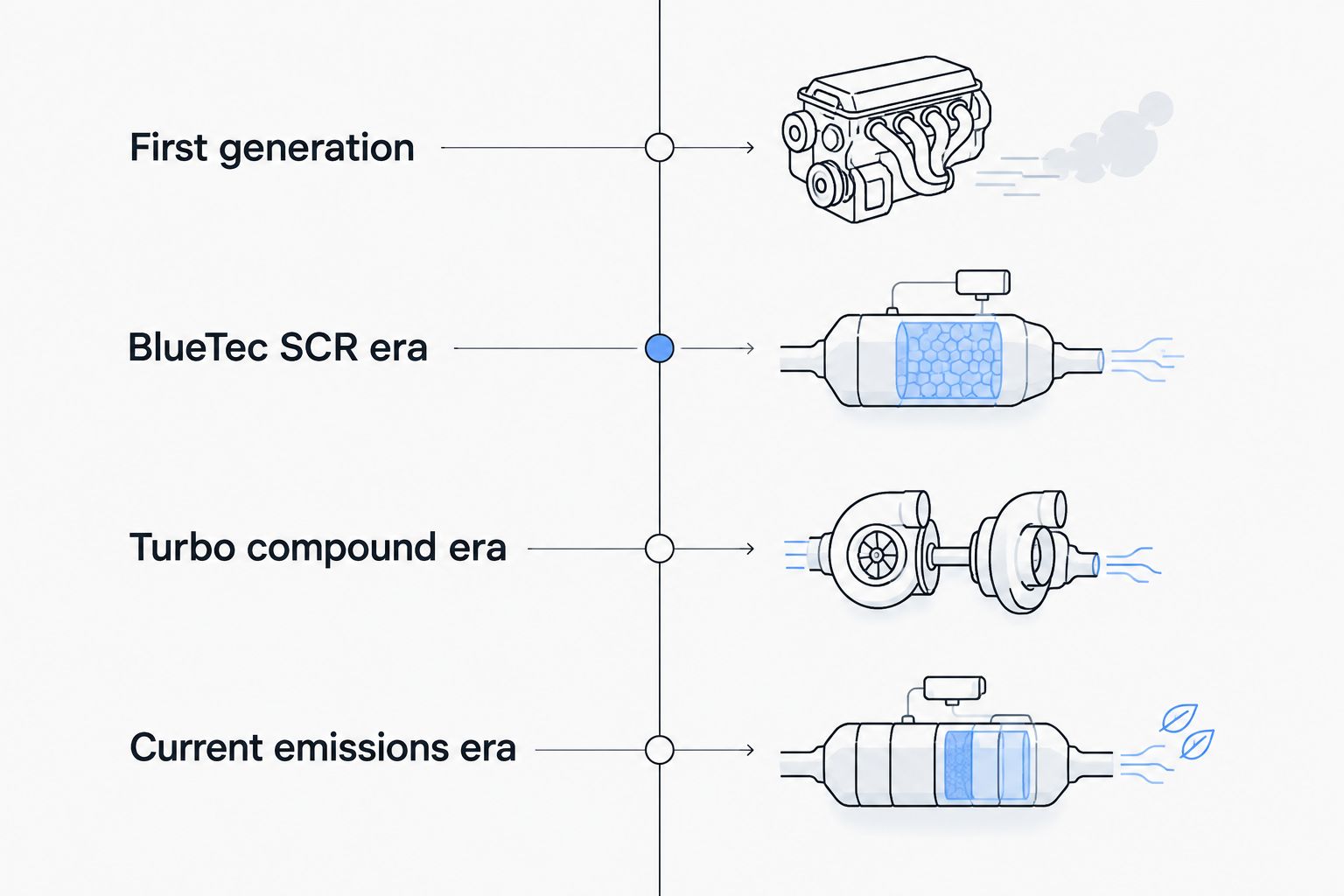
DD13 engines at a glance
| Generation | Best for | Standout feature | Key limitation |
|---|---|---|---|
| 2013-2016 GHG14 DD13 (turbo compound) | Regional and long-haul fleets | Turbo compounding improves fuel economy | Turbo compound unit adds a rebuild-cost item |
| 2010-2012 EPA10 DD13 | Budget-minded owner-operators | SCR/BlueTec proven and widely serviced | Older ECM software, fewer highway-spec options |
| Verified low-mileage take-out DD13 | Buyers prioritizing longevity | Documented sub-500,000-mile history | Costs more upfront than a high-mileage core |
| 2017+ GHG17 DD13 | Fleets needing current compliance | Latest aftertreatment and emissions calibration | Fewer used units on the market, higher demand |
| 2007-2009 EPA07 DD13 | Rebuild projects on a tight budget | No DEF system, simplest architecture | Oldest design, hardest to source clean cores |
1. 2013-2016 GHG14 DD13: best DD13 engine for regional and long-haul fleets
The GHG14 update added an optional turbo-compound unit on the highway-spec DD13 that recovers exhaust energy and feeds it back into the drivetrain, which is the main reason this generation posts the best fuel economy of any DD13 built to date. It pairs with the Amplified Common Rail fuel system carried over from EPA10, so injector parts and tooling are shared across both generations.
Fleets running high annual mileage get the fastest payback from this generation because the fuel savings compound over more miles per year. Parts availability is strong right now since these units were built in volume through 2016 — the DD13 engine parts for fleet rebuilds guide covers what to keep on hand.
2013-2016 GHG14 DD13 pros:
- Best fuel economy of any DD13 generation
- Shares injector and fuel-system parts with EPA10 units
- Widest parts availability of the four generations
2013-2016 GHG14 DD13 cons:
- Turbo-compound unit is an added maintenance item
- Commands a premium over EPA10 cores
- Higher-mileage GHG14 units are getting harder to find clean
Verdict: Buy if you run enough annual miles for the fuel-economy gain to matter.
2. 2010-2012 EPA10 DD13: best DD13 engine for owner-operators on a budget
The EPA10 DD13 introduced SCR and DEF alongside EGR, which was Detroit's first BlueTec-compliant version of this engine. It runs the same 12.8-liter block as later units but without the turbo-compound hardware, which keeps the acquisition cost lower and the maintenance list shorter.
This is the generation most owner-operators land on when they want DEF-era reliability without paying GHG14 pricing. The DEF system is proven at this point in 2026 and shops know how to service it without guesswork.
2010-2012 EPA10 DD13 pros:
- Lower cost of entry than GHG14 units
- Proven SCR/DEF system with a decade of service history
- Simpler than turbo-compound units, fewer parts to fail
2010-2012 EPA10 DD13 cons:
- Lower rated fuel economy than GHG14
- Older ECM calibration options
- Fewer highway-spec configurations than later years
Verdict: Buy if budget matters more than squeezing out extra MPG.
3. Verified low-mileage take-out DD13: best DD13 engine for buyers who want longevity
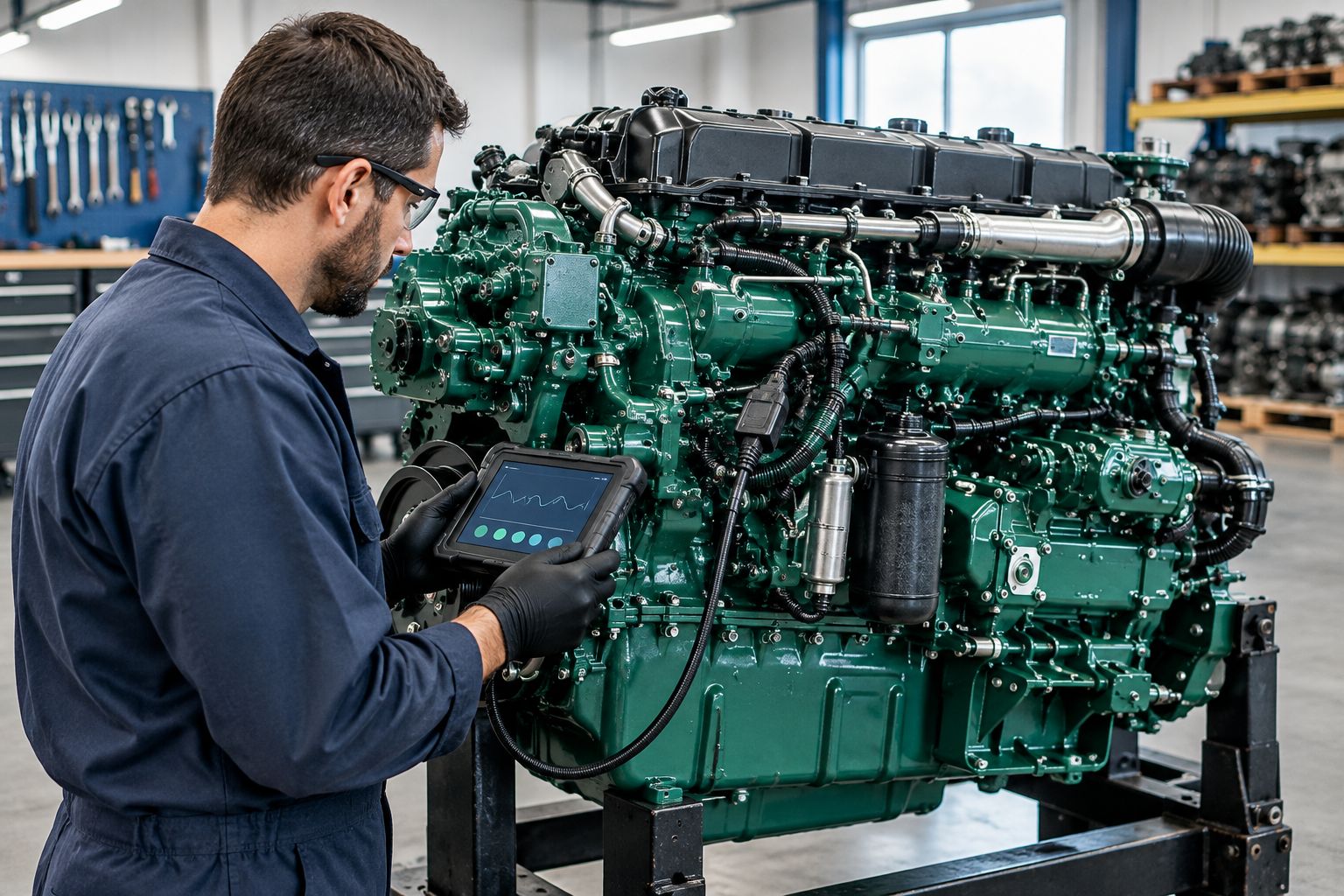
A take-out engine pulled from a truck retired for reasons unrelated to the engine — a frame, cab, or transmission failure — can carry documented mileage well under the fleet average. That documentation is the entire value proposition; an unverified "low-mileage" claim on a used DD13 engine is just a sales pitch.
Pull the ECM history and cross-check it against the mileage claim before paying for a low-mileage premium. The best used diesel engines under 500,000 miles for owner-operators guide walks through what documentation to ask for.
Verified low-mileage DD13 pros:
- Longer expected service life before a rebuild is needed
- Documentation reduces the guesswork buyers face on high-mileage cores
- Works across any of the four generations if paired with the right ECM
Verified low-mileage DD13 cons:
- Costs more than an unverified high-mileage unit
- Supply is limited compared to standard-mileage cores
- Still requires a run-test before installation, not a substitute for one
Verdict: Buy if the documentation is real and the price reflects the mileage.
4. 2017+ GHG17 DD13: best DD13 engine for current emissions compliance
The GHG17 update refined the aftertreatment and emissions calibration on the DD13 to meet the latest phase of federal greenhouse gas standards. Fleets operating under state-level emissions mandates or contracts that require current-generation compliance need this year range specifically.
Supply is tighter than older generations simply because fewer of these units have cycled into the used market by 2026. Expect to pay for that scarcity and to wait longer for the right unit to surface.
GHG17 DD13 pros:
- Meets current federal emissions standards
- Newest calibration and aftertreatment on the market
- Longest remaining service window before the next regulatory shift
GHG17 DD13 cons:
- Fewer used units available
- Highest acquisition cost of the four generations
- Aftertreatment repairs require newer diagnostic tooling
Verdict: Buy if compliance is a contract requirement, otherwise Hold for an EPA10 or GHG14 unit.
5. 2007-2009 EPA07 DD13: best DD13 engine for rebuild projects on a budget
The original EPA07 DD13 has no DEF system and no SCR, which makes it the simplest version of this engine to service but also the one with the least remaining life on the road. Most surviving units in 2026 are past a first overhaul or headed toward one.
This generation makes sense as a rebuild core, not as a bolt-in replacement expecting years of service without attention. Price it like a project, not like a ready-to-run engine.
EPA07 DD13 pros:
- Lowest acquisition cost of any DD13 generation
- No DEF/SCR system to service or troubleshoot
- Straightforward architecture for shops doing full rebuilds
EPA07 DD13 cons:
- Oldest design with the most wear risk
- Clean, low-mileage cores are increasingly rare
- Limited remaining service life without a rebuild
Verdict: Wait unless you're specifically sourcing a rebuild core.
“If the ECM history doesn't match the VIN, walk away — a DD13 with a swapped harness is a warranty headache waiting to happen.”
How we ranked
Each DD13 generation was weighed against the criteria above: verified mileage, ECM-to-VIN match, aftertreatment type, turbo-compound presence, run-test documentation, and rebuild history. The GHG14 turbo-compound unit ranks first because it scores highest on fuel economy without sacrificing parts availability. The EPA07 core ranks last because its remaining service life is the shortest of the four.
Which DD13 engine should you choose?
For most fleets buying a used DD13 engine in 2026, the 2013-2016 GHG14 unit with turbo compounding is the default pick — it balances fuel economy, parts availability, and remaining service life better than any other generation. Owner-operators on a tighter budget should default to a 2010-2012 EPA10 DD13 instead. If longevity matters more than upfront cost, pay for a verified low-mileage take-out unit and skip the guesswork entirely.
FAQ
What's the best used Detroit DD13 engine to buy in 2026?
A 2013-2016 GHG14 DD13 with turbo compounding is the best overall pick in 2026 for fuel economy and parts availability. Budget buyers should look at a 2010-2012 EPA10 unit instead.
How much horsepower does a DD13 engine make?
The Detroit DD13 is rated between 370 and 505 horsepower depending on the configuration and model year. Torque output scales with the horsepower rating selected for the application.
Is the DD13 better than the DD15?
The DD13 is a 12.8-liter engine built for regional and lighter long-haul applications, while the DD15 is a larger displacement engine aimed at heavier long-haul and vocational work. Neither is universally better — the right choice depends on load and route profile.
How many miles can a used DD13 engine last?
A well-maintained DD13 commonly runs well past 500,000 miles before needing a major overhaul, though actual life depends on maintenance history and duty cycle. Verified low-mileage take-out units reduce that uncertainty.
Which DD13 model years have turbo compounding?
Turbo compounding became an available option on the DD13 starting with the GHG14 update covering 2013-2016 highway-spec engines. Earlier EPA07 and EPA10 units do not have it.
How do you verify mileage on a used DD13 engine?
Pull the ECM data and cross-check it against the mileage claim and the VIN of the donor truck before paying. A run-tested, certified DD13 engine should come with that documentation available.
Does the DD13 need a DEF system?
EPA10 and later DD13 engines (2010 and newer) use SCR with DEF to meet emissions standards. EPA07 units built 2007-2009 have no DEF system.
What trucks use the DD13 engine?
The DD13 is the primary engine option in the Freightliner Cascadia lineup and is also available in Western Star trucks. It's one of the highest-volume heavy-duty diesel engines on the road in 2026.
One last thing
The turbo-compound unit on GHG14-era DD13 engines is the single most overlooked component during a used-engine inspection — buyers check the block and the ECM but skip the compound turbine, and that's exactly where a neglected unit fails first. Ask for compound-turbine service history specifically, not just general maintenance records, before paying a premium for a 2013-2016 unit.

