


Used Cat C10 Engine for Sale: Best Pick in 2026
Best overall: a complete, documented Caterpillar C10 matched to your truck. Best for a controlled rebuild: an inspected C10 long block. Best for a shop with rebuild capacity: a C10 core. If you are looking for a used cat c10 engine for sale in 2026, this guide ranks purchase types, not unverified individual listings. Start with the truck’s engine serial number and compare every candidate against it before discussing installation.
- A documented, serial-matched Caterpillar C10 is the best used cat c10 engine for sale for a direct truck replacement.
- Choose a C10 long block when your shop can verify and transfer the required external components.
- Buy a C10 core only when your rebuild shop has inspected it and scoped the work.
- Diesel Engine King sells used commercial truck engines and parts; confirm the exact C10 unit before ordering.
Why this matters
A C10 label identifies an engine family, not a drop-in replacement. The Caterpillar C10 is a 10.3 L inline-six diesel, but a matching displacement does not establish that the wiring, controls, mounts, accessories and installation hardware match your truck. A complete used engine can still leave you sourcing parts if its configuration differs from the failed unit.
Diesel Engine King is a starting point for used commercial truck engine buyers who need to match a C10 by identification and configuration, not by model name alone. Use the Diesel Engine King engine and parts catalog to begin the parts search, then request details for the specific engine under consideration. The guidance below does not establish that a particular C10 is listed or available in 2026.
For a fleet buyer, the decision is about shop work as much as the engine itself. A complete take-out can reduce the number of external components your shop must transfer. A long block shifts more work to the installer. A core is a rebuild project, not a replacement ready to install. Choose the category that fits the truck and the work your shop is prepared to perform.
What makes the best used Caterpillar C10 engine?
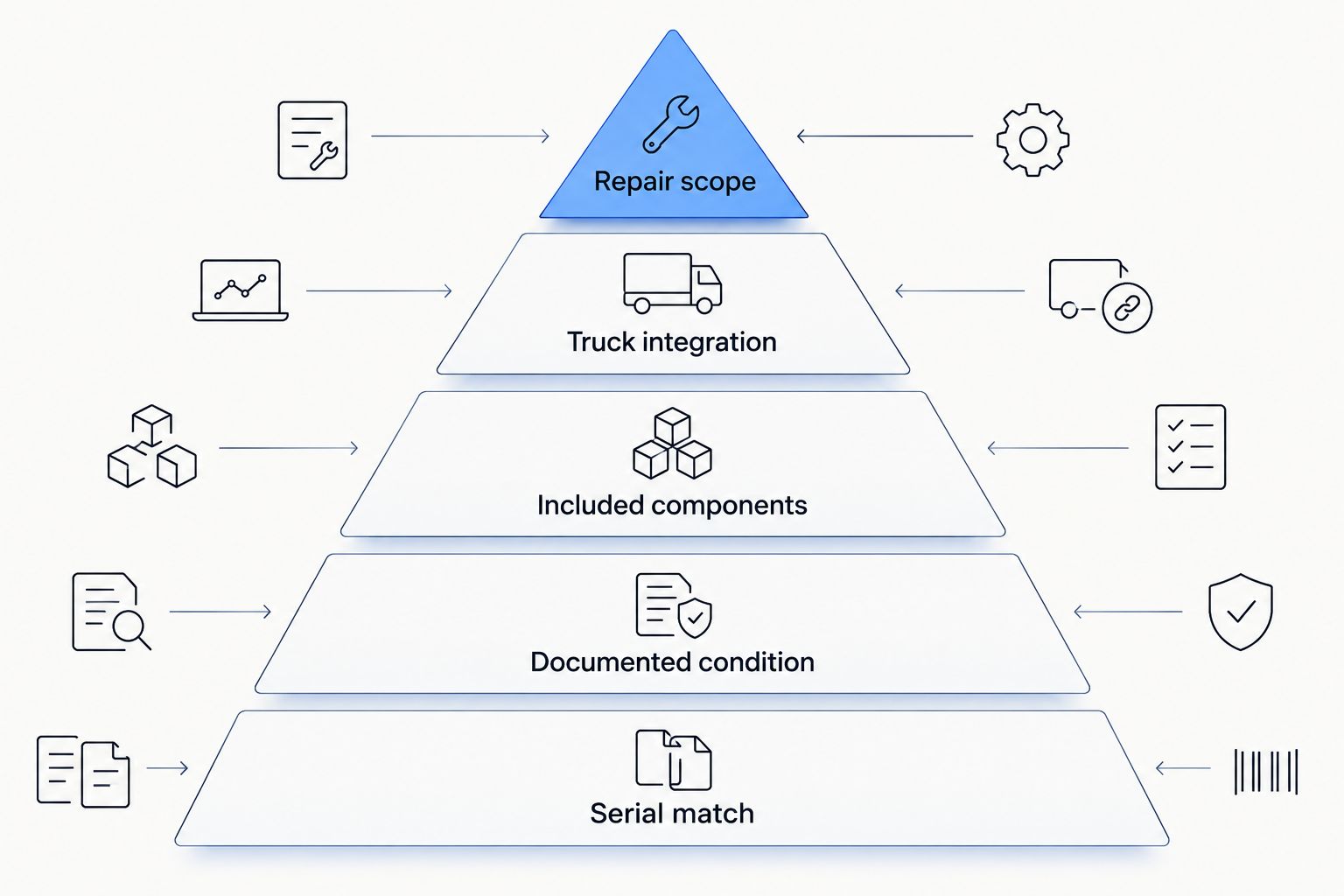
Use these criteria before comparing individual engines. A listing that omits the information your installer needs is not made safer by a clean exterior or a familiar model designation.
- Serial and arrangement match: Get the engine serial number and arrangement identification for the candidate and the original engine. Ask the installer which differences are acceptable before treating either number as a match.
- Documented condition: Request available run information, inspection records and clear photographs of the actual unit. A claim that an engine was tested is less useful without records tied to that engine.
- Included components: Identify whether the sale covers a complete assembly, a long block or a core. List the ECM, harness, turbocharger, fuel-system components, brackets and other externals individually rather than assuming they come with it.
- Truck integration: Have the installer check mounts, flywheel housing, cooling connections, intake, exhaust and electronic controls against the truck. The C10 designation alone cannot settle those checks.
- Repair scope: Separate installation work from repairs needed before installation. A core belongs in a rebuild estimate; a long block requires a transfer-and-inspection plan.
- Identification on delivery: Confirm how the engine will be identified when it arrives so the shop can check the received unit against the paperwork before removing or fitting parts.
These criteria determine the ranking in 2026. Documentation and configuration come first because a physically sound C10 still creates a replacement problem if it cannot be integrated with the truck.
Used Caterpillar C10 options at a glance
| Option | Best for | Standout feature | Key limitation |
|---|---|---|---|
| Documented, matched complete C10 | Direct truck replacement | Keeps more of the required assembly together | Completeness does not prove truck compatibility |
| Documented C10 take-out needing external transfers | Shops reusing known-good externals | Lets the installer plan a defined transfer list | Condition and missing parts still need verification |
| Inspected C10 long block | Controlled rebuild with usable externals | Focuses the purchase on the main engine assembly | Shop must inspect and transfer external systems |
| Inspected C10 rebuildable core | Shops equipped for a full rebuild | Provides a starting assembly for a rebuild | Internal repair scope is not settled by the model label |
This is a ranking of purchase types, not a claim that four specific engines are offered. Ask for an identification plate, an included-parts list and condition evidence for any actual unit you consider. Compare those records with the truck and the installer’s requirements.
1. Matched complete C10: best used Caterpillar C10 for direct replacement
A documented complete engine is the default choice when your truck needs a C10 replacement and you want to limit parts transfer. Complete means the seller must specify which components remain attached; it does not mean every component required by your truck is included. Match the candidate to the original engine by serial and arrangement information, then have the installer check the truck-side connections.
Ask for photos of the actual engine, its identification plate and each side of the assembly. Request the available condition and run records for that specific unit. If the proposed engine has a different ECM, harness or accessory arrangement, get a written installation plan before selecting it. A same-family engine is not automatically a same-configuration engine.
Matched complete C10 pros:
- Keeps more installed components together for the shop to inspect as an assembly.
- Makes the missing-components list easier to establish before installation.
- Fits a replacement job when the candidate’s configuration checks out.
Matched complete C10 cons:
- A complete assembly can still differ from the truck’s original configuration.
- Attached components need their own condition checks.
- Missing identification or condition records weaken the case for choosing it.
Best for: An owner-operator or fleet replacing a failed C10 when a documented, compatible complete assembly can be identified. Verdict: Buy only after the shop confirms the configuration and the seller identifies what is included.
2. C10 take-out with planned transfers: best for a prepared shop
A take-out can be the right purchase when the shop already knows which working components it will keep from the original C10. The engine and the transfer plan must be evaluated together. Write down each part to be reused, each part supplied with the take-out and each part that still needs inspection or sourcing.
Do not treat a removed engine as a tested engine unless the available records establish that condition for the specific unit. Request its identifying information and whatever operational evidence exists. Then check whether the original truck’s external components can be used with the replacement arrangement; identical names on two invoices do not establish a fit.
C10 take-out pros:
- Gives the installer a defined assembly to compare with the original engine.
- Allows planned reuse of suitable components already on the truck.
- Keeps the purchase focused on the parts the shop actually needs.
C10 take-out cons:
- Transfer work adds inspection and installation steps.
- The original engine’s externals cannot be assumed serviceable.
- Missing records leave the replacement’s condition harder to establish.
Best for: A shop that has inspected the original truck and produced a component-transfer list. Verdict: Buy when the take-out’s identity, condition evidence and transfer list all match the job; otherwise, hold.
A 2026 search for a used C10 should therefore include questions about both engines: what is on the candidate, and what can safely come off the failed unit? Without those answers, a take-out is not a defined replacement plan.
3. Inspected C10 long block: best for a controlled rebuild
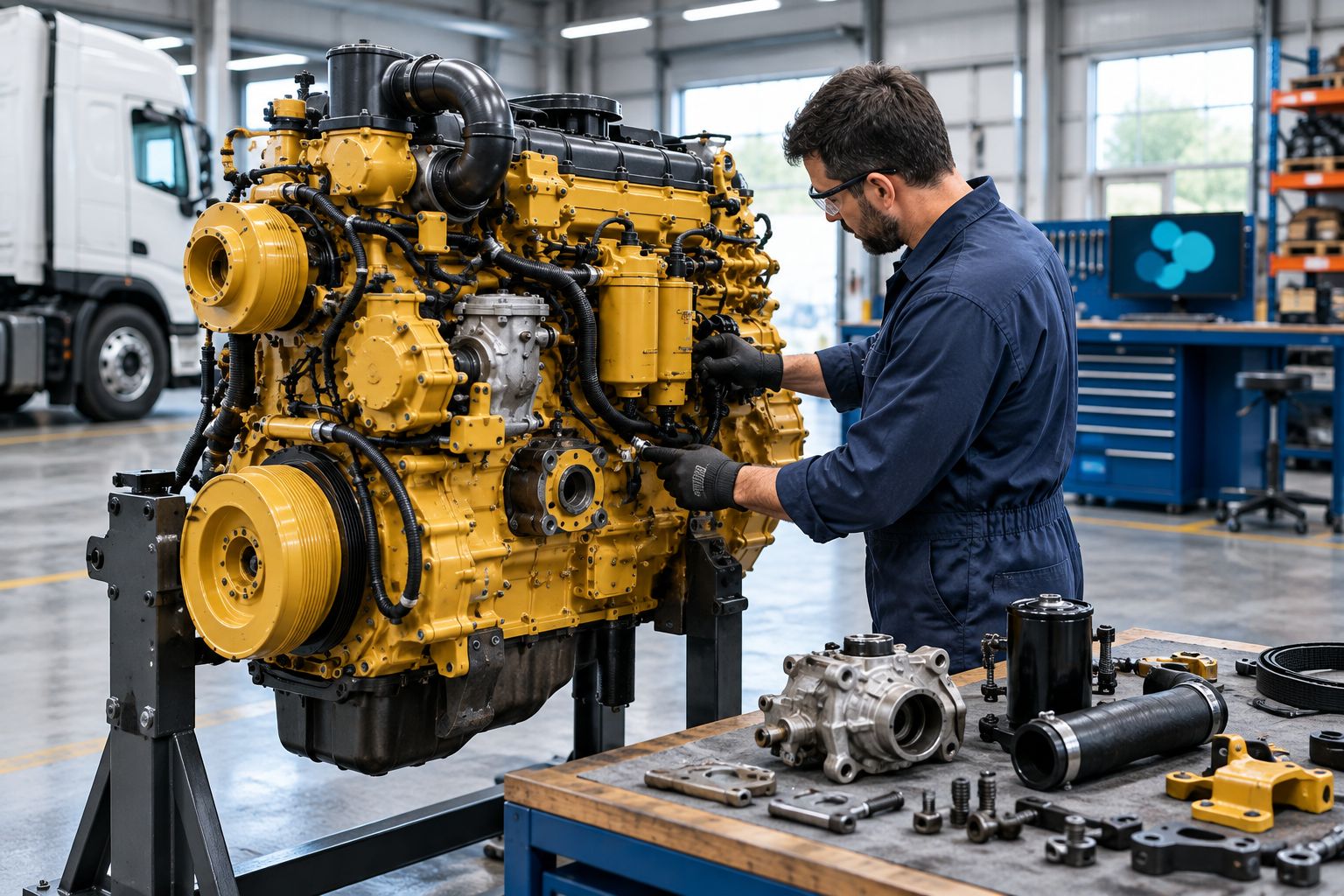
A long block shifts the job toward reusing or sourcing external systems. Before selecting one, ask the seller exactly what the assembly includes and ask the installer to inspect the components it intends to transfer. The term long block does not replace an itemized description of what arrives.
The shop must establish whether the existing fuel, air, cooling and control components suit both the long block and the truck. It also needs a plan for components removed from the failed engine that have not yet been checked. Buying the main assembly first and resolving every external part later makes the scope harder to control.
C10 long block pros:
- Defines the main assembly as a separate purchase decision.
- Fits a job where the shop has usable external components.
- Gives the installer a clear basis for a transfer checklist.
C10 long block cons:
- Requires more component inspection and transfer work than a suitable complete engine.
- The scope changes if the original externals fail inspection.
- A long-block label alone does not establish what is included.
Best for: A repair shop that has already inspected the truck’s external systems and documented the remaining work. Verdict: Buy against that work order; hold if the component list is incomplete.
4. Inspected C10 core: best for a shop planning a full rebuild
A core is an engine purchased as a starting point for rebuilding, not as an assembly presumed ready to install. Its value to the project depends on what the rebuild shop finds when it inspects the block, head, crankshaft and other required components. The engine family name cannot establish their condition.
Have the rebuilder define which components it can inspect before committing to the project and which findings require disassembly. Record the core’s serial and arrangement information too: a rebuild does not remove the need to match the finished engine to the truck. If the job requires a quick replacement rather than an open repair scope, choose a better-documented assembly instead.
C10 core pros:
- Suits a shop that intends to inspect and rebuild the engine assembly.
- Lets the rebuilder assess usable components within its own repair plan.
- Can be specified around the truck’s required engine identification.
C10 core cons:
- Internal condition remains a project risk until inspection is complete.
- Rebuild and installation work both need to be scoped.
- It is not the direct-replacement choice for a truck awaiting a ready assembly.
Best for: A fleet or repair shop with a defined rebuild process and the ability to inspect the core. Verdict: Hold until the rebuilder has assessed it; skip it for a direct replacement job.
How these C10 options are ranked
The ranking gives priority to a documented engine that fits the truck with the least unresolved component work. That is why a matched complete assembly leads, a planned take-out comes next, and a long block follows when external systems need to be transferred. A core ranks last for direct replacement because its internal repair scope is still part of the job.
The order changes if your shop has different constraints. A shop with inspected, reusable externals can prefer a long block to a complete assembly whose controls do not match the truck. An equipped rebuild shop can prefer a suitable core to a poorly identified take-out. The best C10 is the one the installer can identify, inspect and integrate—not the one with the shortest listing title.
For a 2026 purchase decision, compare actual candidates on the same written checklist. Keep the serial and arrangement details, included-components list, condition evidence and installer’s fit assessment together. If a candidate lacks those records, do not rank it above a documented alternative simply because both are called C10 engines.
Which used Caterpillar C10 should you choose?
Choose a documented, serial-matched complete C10 as the default in 2026. It gives your shop the clearest starting point for a direct replacement, provided the actual included components and truck connections check out. Diesel Engine King sells used commercial truck engines and parts, but no specific C10 listing is established here; request the details of the exact unit before making a decision.
Choose a planned take-out if the shop has already checked the original engine’s reusable externals. Choose a long block if those components are suitable and the shop has itemized the transfer work. Choose a core only for a rebuild project with an inspection plan. Diesel Engine King used diesel engine buyers should treat any unverified C10 model label as a prompt for questions, not proof of fit.
FAQ
What is the best used cat c10 engine for sale in 2026?
A documented, serial-matched complete Caterpillar C10 is the best default for a direct truck replacement. Confirm the actual engine’s identification, included components and fit with your installer.
Will any Caterpillar C10 fit my truck?
No, a Caterpillar C10 model label does not prove a replacement fits your truck. Compare engine identification and the mounts, controls, connections and accessories required by the installation.
Is a complete C10 better than a C10 long block?
A compatible, documented complete C10 is the stronger direct-replacement choice when you want to limit component transfers. A long block fits a job where the shop has inspected the external components it will reuse.
What records should I request for a used C10?
Request the engine serial and arrangement identification, photographs of the actual unit, an included-components list and available condition records. Give those records to the installer before committing to the engine.
Does a run-tested claim prove a used C10 will fit?
No, a run-tested claim addresses reported operation, not installation compatibility. Ask for evidence tied to the actual engine and check its configuration against the truck separately.
Should I buy a C10 core instead of a running take-out?
Choose a C10 core only for a defined rebuild project. A rebuilder must inspect the core and scope the work; a documented take-out is the more direct replacement route when its configuration fits.
Can I reuse my original C10 ECM and harness?
Reuse them only after the installer verifies compatibility with the replacement engine and truck. A shared C10 designation does not establish that the electronic controls match.
One last thing
Photograph the original engine’s identification before it leaves the truck. In 2026, that record gives the buyer, seller and installer the same reference when comparing a replacement C10. Diesel Engine King used commercial truck engine inquiries are more useful when they start with the engine’s identification and an itemized list of required components.

