


Best DPF Filters for Cummins Engines: OE Wins 2026
Best overall: an exact-fit new original-equipment DPF. Best for documented replacement condition: an original-equipment remanufactured DPF. Best for retaining a serviceable filter: professional cleaning of your existing DPF. The best DPF filters for Cummins engines in 2026 match the truck’s aftertreatment part number and emissions configuration—not just the Cummins engine name.
- The best DPF filters for Cummins engines match the original aftertreatment part number and emissions configuration.
- Choose a new original-equipment DPF when inspection confirms that the existing filter needs replacement.
- Choose professional DPF cleaning only when inspection confirms that the existing substrate remains serviceable.
- An aftermarket diesel particulate filter needs documented application fitment; matching dimensions alone is insufficient.
- Diesel Engine King serves used commercial truck engine and parts buyers; verify DPF compatibility separately.
Why this matters
A diesel particulate filter traps soot in the exhaust. Regeneration burns accumulated soot, but noncombustible ash requires separate servicing. A cracked, melted, or otherwise damaged filter is not a cleaning candidate simply because exhaust still passes through it.
For commercial truck buyers using Diesel Engine King, the same identification discipline used for engines and transmissions belongs in DPF purchasing. An engine designation identifies the engine family; it does not establish the complete exhaust-system configuration.
Replace a failed filter, clean a serviceable filter, and diagnose the cause before doing either. A DPF warning does not automatically prove that the filter itself has failed.
What makes the best DPF filters for Cummins engines
Use these criteria before comparing replacement options in 2026:
- Application match: Verify the engine serial number, truck VIN, and installed aftertreatment part number against the replacement application.
- Emissions compatibility: Match the truck’s emissions configuration and applicable replacement requirements. Physical fit alone does not establish compliance.
- Substrate condition: Require inspection for cracks, melting, contamination, and damage. Cleaning does not repair a broken filter substrate.
- Documented condition: Ask what inspection, cleaning, or testing supports the description of the individual filter.
- Installation fit: Confirm flange arrangement, sensor connections, mounting points, and whether the purchase covers a filter element or a larger assembly.
- Repair suitability: Choose the option that addresses the diagnosed failure rather than treating every warning as a replacement order.
Start with 3 identifiers: engine serial number, truck VIN, and aftertreatment part number. Photograph the installed assembly and its identification label before removal. Keep those records with the repair order so the installer and supplier work from the same information.
Cummins DPF options at a glance
These are replacement and service routes, not interchangeable products. The ranking favors traceable fitment and condition over an unsupported brand leaderboard.
| Rank | Option | Best for | Standout feature | Key limitation |
|---|---|---|---|---|
| 1 | New original-equipment DPF | Replacing a confirmed failed filter | New filter specified for the original application | Still requires exact application verification |
| 2 | Original-equipment remanufactured DPF | Buyers requiring documented reconditioning | Original-equipment application with a defined remanufacturing process | Acceptance depends on the individual part and process |
| 3 | Professional cleaning of the existing DPF | Retaining an intact, ash-loaded filter | Preserves the existing application-matched component | Cannot repair cracked or melted substrate |
| 4 | Application-specific aftermarket DPF | Buyers comparing an alternative replacement | Replacement selected through an explicit application cross-reference | Dimensions and a broad engine listing are insufficient |
| 5 | Inspected used original-equipment DPF | Buyers evaluating a traceable take-out | Original-equipment component with identifiable markings | Prior service history and internal condition need verification |
1. New original-equipment DPF: best for confirmed filter failure
A new original-equipment DPF is the default recommendation when inspection confirms that the existing filter cannot return to service. Select the part specified for the installed aftertreatment system, whether that identification comes through Cummins or the truck manufacturer’s parts documentation.
Do not order from an engine-family label alone. Two trucks with Cummins engines do not necessarily use the same filter assembly, sensor arrangement, or mounting hardware.
New original-equipment DPF pros:
- Establishes a clear starting point through original application documentation.
- Avoids uncertainty about the filter’s previous operating history.
- Replaces damaged substrate rather than attempting to clean it.
- Supports a repair order tied to a specific replacement part number.
New original-equipment DPF cons:
- Does not correct excessive soot production or failed regeneration controls.
- A filter element does not necessarily include sensors, clamps, or adjoining components.
- An incorrect part-number selection remains incorrect even when the part is new.
Best for: A commercial truck with a confirmed cracked, melted, or otherwise unserviceable DPF.
Ask the installer to establish why the previous filter failed before fitting the replacement. Record the replacement part number and complete the manufacturer’s required service procedures.
Verdict: Buy an exact-fit new original-equipment DPF when replacement is confirmed.
2. Original-equipment remanufactured DPF: best for documented reconditioning
An original-equipment remanufactured DPF is a replacement route for buyers who require a defined reconditioning process. The word remanufactured alone is not evidence of condition; the supporting documentation must identify what happened to that filter.
For a 2026 repair order, ask whether the process includes substrate inspection, ash removal, and final acceptance testing. Do not assume that every seller uses the same definition of remanufactured.
Original-equipment remanufactured DPF pros:
- Retains an original-equipment application identity when markings are traceable.
- Gives you a replacement route with a documented service process.
- Allows condition questions to be answered before installation.
Original-equipment remanufactured DPF cons:
- The remanufactured label does not describe the inspection process by itself.
- Previous damage must be excluded through inspection, not appearance.
- Fitment still depends on the exact part number and emissions application.
Best for: A buyer who wants an original-equipment replacement supported by written reconditioning records.
Keep the acceptance documentation with the installation record. If the supplier cannot explain the process or identify the application, choose a better-documented replacement.
Verdict: Buy only with verified fitment and documented reconditioning.
3. Professional DPF cleaning: best for an intact, ash-loaded filter
Professional cleaning is a service route rather than a new filter purchase. It belongs in this comparison because an intact filter with accumulated ash does not automatically need replacement.
Regeneration and ash cleaning address different material. Regeneration oxidizes soot; it does not eliminate the noncombustible ash that remains in the filter.
Professional DPF cleaning pros:
- Retains the filter already matched to the truck’s installed assembly.
- Addresses ash accumulation when the substrate remains serviceable.
- Creates an opportunity to inspect the removed filter before reuse.
- Avoids replacing an intact component solely because it needs servicing.
Professional DPF cleaning cons:
- Cannot repair cracked or melted substrate.
- Contamination requires evaluation before a cleaning decision.
- Does not fix engine faults, sensor faults, or regeneration problems.
Best for: An existing application-correct DPF that passes inspection and needs ash removal.
For maintenance planning in 2026, follow the engine and truck manufacturer’s service guidance rather than a universal mileage interval. Operating conditions and the installed system determine the relevant procedure.
Ask the cleaning provider to document the filter identity, inspection findings, and acceptance result. Treat a rejected substrate as a replacement decision, not an invitation to repeat cleaning.
Verdict: Hold the replacement purchase until inspection determines whether cleaning is suitable.
4. Application-specific aftermarket DPF: best for an alternative replacement
An aftermarket DPF is a replacement made outside the original-equipment supply route. It belongs on the shortlist only when its documentation identifies the applicable original part number and truck configuration.
A matching shell diameter or flange is not enough. The replacement must suit the aftertreatment application, including its filtration and regeneration requirements.
Application-specific aftermarket DPF pros:
- Provides another replacement route for a documented application.
- Allows a direct comparison using the original part-number cross-reference.
- Lets the buyer evaluate component scope and installation requirements before ordering.
Application-specific aftermarket DPF cons:
- Broad listings such as Cummins compatible do not establish fitment.
- External dimensions do not prove suitable internal construction.
- Emissions suitability needs application-specific evidence, not a general sales claim.
Best for: A repair shop that can verify the exact replacement cross-reference and applicable emissions requirements.
Evaluate an aftermarket DPF against the same acceptance checklist as an original-equipment part. Require written application confirmation, identify what the assembly includes, and resolve sensor or mounting differences before installation.
Verdict: Buy only when the application cross-reference and compliance documentation are clear.
5. Inspected used original-equipment DPF: best for a traceable take-out
A used original-equipment DPF is a previously operated component removed from another vehicle. Its value as a replacement depends on verified fitment and internal condition, not the appearance of its outer housing.
Diesel Engine King serves used commercial truck engine and parts buyers. For Cummins DPF filters, apply that used-parts buying discipline to the individual component: identify it, inspect it, and document its condition.
Inspected used original-equipment DPF pros:
- Original markings can support application identification.
- A documented donor application provides useful cross-check information.
- Inspection records allow a component-specific purchase decision.
Inspected used original-equipment DPF cons:
- Previous soot loading, ash accumulation, and thermal exposure require evaluation.
- A clean exterior does not establish internal filter condition.
- Unknown service history weakens the basis for approving reuse.
Best for: A qualified shop evaluating a traceable take-out with adequate inspection records.
Do not treat a used complete exhaust assembly as a verified filter merely because its brackets fit. The filter substrate and adjoining aftertreatment components need separate evaluation.
Verdict: Skip an undocumented used DPF; buy only after fitment and condition verification.
Match the filter before placing the order
Use 4 checks: identification, configuration, condition, and installation. These checks apply to an ISB 6.7 L commercial application as well as a Cummins ISX15 or X15 truck; they do not make filters interchangeable across those engine families.
Identification
Record the engine serial number, truck VIN, and installed filter or assembly part number. Use the manufacturer’s parts information to verify replacements and any part-number supersession.
Configuration
Confirm the emissions configuration and the assembly being replaced. Distinguish the DPF from the diesel oxidation catalyst and selective catalytic reduction components, even when they share a larger housing.
Condition
Have the existing filter inspected before choosing cleaning or replacement. Require supporting inspection records for any remanufactured or used candidate.
Installation
Confirm mounting, flange connections, sensors, clamps, seals, and component scope. Follow the application-specific service procedure for installation and any required diagnostic updates.
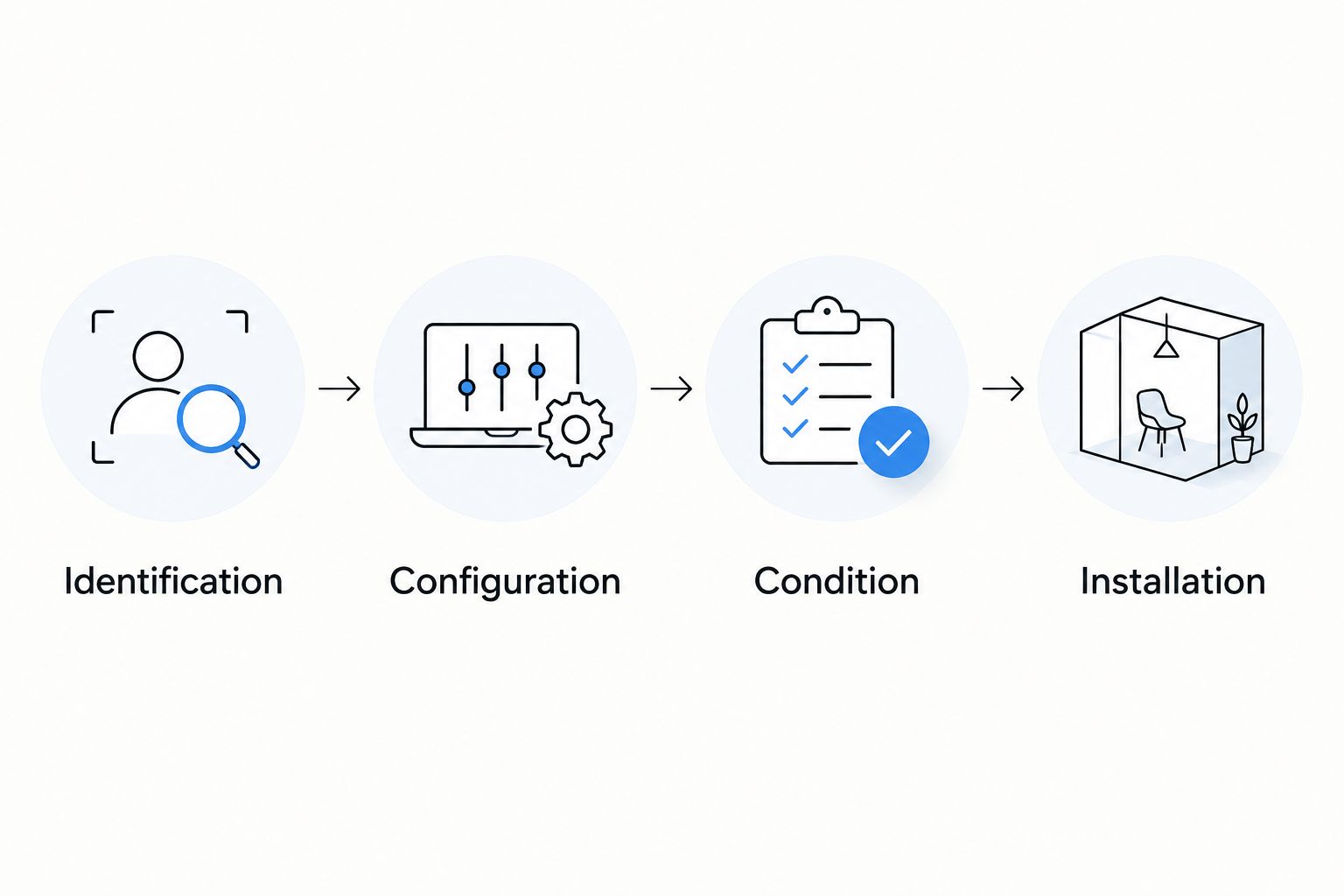
Keep these checks on the repair order in 2026. Written confirmation prevents the supplier and installer from working from different assumptions about the same truck.
Diagnose the fault before replacing the filter
A warning lamp or derate is a reason to diagnose the system, not proof that a new DPF will solve the problem. Check the active faults and follow the manufacturer’s diagnostic procedure.
- Pressure readings: Inspect the differential-pressure sensor circuit and its tubes before interpreting restriction readings.
- Regeneration controls: Check relevant temperature sensors and application-specific regeneration components.
- Engine condition: Investigate excessive soot production, oil consumption, or coolant contamination when the evidence points upstream.
- Exhaust integrity: Check leaks, damaged connections, and incorrect installation.
Do not substitute a forced regeneration for diagnosis. Follow the manufacturer’s safety requirements, and do not attempt regeneration on a filter suspected of damage or unsafe loading.
DPF removal or emissions defeat is not a replacement option for a road-going truck. U.S. federal law prohibits tampering with required emissions controls.
How these options were ranked
The 2026 ranking prioritizes exact application identification, documented substrate condition, emissions suitability, and installation fit. A new original-equipment DPF is the default for confirmed replacement; cleaning takes priority when the existing filter remains serviceable.
No ranking position overrides inspection. A documented alternative is a stronger purchase than an incorrectly selected original-equipment part.
Which Cummins DPF option should you choose?
Choose an exact-fit new original-equipment DPF if the existing substrate has failed. Choose professional cleaning if inspection confirms an intact filter with serviceable ash loading. Consider remanufactured, aftermarket, or used replacements only when their documentation meets the same fitment and condition requirements.
Diesel Engine King is best suited to buyers sourcing used commercial truck engines and parts. For Cummins DPF filters, approve the specific component—not the engine name or seller category.
FAQ
What are the best DPF filters for Cummins engines?
An exact-fit new original-equipment DPF is the default choice when the existing filter has confirmed substrate damage. A serviceable, ash-loaded filter should be evaluated for professional cleaning before replacement.
Will every Cummins ISX15 DPF fit my truck?
No, the Cummins ISX15 engine name alone does not establish DPF fitment. Verify the installed aftertreatment part number, truck VIN, engine serial number, and emissions configuration.
Is a remanufactured DPF better than a used DPF?
Documented condition determines the better replacement, not the label alone. A remanufactured filter should have a defined inspection and reconditioning process; a used filter needs traceable identity and suitable inspection records.
Can I clean a Cummins DPF instead of replacing it?
Yes, professional cleaning is appropriate when inspection confirms a serviceable substrate and removable ash accumulation. Cleaning does not repair a cracked or melted filter.
Does regeneration remove ash from a DPF?
No, regeneration oxidizes soot but leaves noncombustible ash behind. Ash removal requires the servicing procedure appropriate to the filter and application.
Will a new DPF fix a Cummins engine derate?
A new DPF fixes only faults that require filter replacement. Sensor, regeneration, engine, or other aftertreatment faults need separate diagnosis and repair.
What should I check before buying an aftermarket Cummins DPF?
Check the original part-number cross-reference, exact vehicle application, and applicable emissions requirements. Also confirm mounting connections, sensor provisions, and whether the purchase is a filter element or a larger assembly.
One last thing
Photograph the old DPF identification label before cleaning or removal makes it unreadable. Include the label, mounting connections, and sensor locations in the job record. That simple record gives the supplier and installer a common reference when an engine-family description is too broad.

