


7 Diesel Emissions Compatibility Checks by Model Year
Last Updated: November 15, 2026
Quick Summary
Diesel emissions compatibility requires the part to match the certification the engine was built to, since federal rules tie emission limits to model year. Four things must line up: the engine model year, the emissions tier or standard it was certified to, the engine family code, and the exact part number on the aftertreatment assembly.
- The 2007 standard cut particulate matter 90% and made diesel particulate filters standard on highway engines.
- Tier 4 Final required about a 90% cut in NOx versus Tier 3 and generally added SCR and DEF dosing.
- The NOx idling standard drops from 10 g/hr to 5 g/hr for model year 2027 and later.
- A 2017 Detroit DD15 DPF assembly carries part number A0024901592 for the Freightliner Cascadia OneBox.
- Confirm on-road or off-road certification, model year, tier, family code, and part number before ordering.
Table of Contents
- Why Diesel Emissions Compatibility Depends on Model Year
- Diesel Engine Emissions Standards by Year: The Regulatory Timeline
- EPA Tier 4 Diesel Engine Standards and What Tier 4 Final Means for Fitment
- Diesel Engine Emissions Components: DPF, SCR, and DEF in the Compatibility Chain
- Diesel Engine CPL Number Identification and Engine Family Certification
- On-Road vs Off-Road Compatibility: A Decision Tree for Swaps and Retrofits
- Verify Your Emissions Configuration Before You Add to Cart
- Frequently Asked Questions
Why Diesel Emissions Compatibility Depends on Model Year
Diesel emissions compatibility by year starts with one rule: the part must match the certification the engine was built to.
A common mistake is ordering a DPF that looks right, bolting it on, and having the truck throw codes within a mile.
Here is what most guides miss: compatibility is not about the engine model alone. It is a chain of four things that must all line up.
- The model year of the engine
- The emissions tier or standard it was certified to
- The engine family code on the certification
- The exact part number on the aftertreatment assembly
Break any link and the system will not work as designed.
Diesel Engine Emissions Standards by Year: The Regulatory Timeline
Diesel engine emissions standards by year follow two separate tracks: on-road heavy-duty engines and off-road equipment. They tightened on different schedules, which is why a 2011 off-road engine and a 2011 truck engine are not held to the same limits. The timeline below is the backbone of compatibility, every part number on your engine traces back to one of these steps.
On-Road Heavy-Duty Milestones
On-road rules changed in steps, not all at once. The first big step was the 2004 standard, which cut particulate matter to 0.10 g/bhp-hr and introduced the phase-in that pushed refiners toward ultra-low-sulfur diesel by 2006.
The NOx idling standard is one clear example of a year break inside that timeline: it sits at 10 g/hr for model years 2024 through 2026, then drops to 5 g/hr for model year 2027 and later, according to DieselNet's heavy-duty on-road emission standards summary.
Diagnostics changed too. Starting with model year 2027, new engines must carry onboard diagnostic systems as described in 40 CFR Part 1036.
Off-Road and Heavy Equipment Milestones
Off-road engines ran on the Tier ladder, from Tier 1 through Tier 4 Final. Off-road engines followed a Tier ladder from Tier 1 through Tier 4 Final, with each tier tightening NOx and particulate limits. Confirm the applicable tier and dates against the official federal requirements for your equipment.
Certification is tied to both model year and tier. A USDA technical note shows a 2011 off-road engine certified in California to the 2011 Tier 3 standard. Same year, different tier than many on-road engines. That single fact explains a large share of swap failures.
What the Year Breaks Mean for Parts
Each step on that timeline can be a hardware break, not just a paperwork break. Engines from different years can share a block and still use different exhaust plumbing, sensor sets, and ECM calibrations. The same is true across Tier 3 and Tier 4 Interim off-road engines.
Model year is not necessarily the same as build date, and emissions hardware follows the certification rather than the calendar.
EPA Tier 4 Diesel Engine Standards and What Tier 4 Final Means for Fitment
EPA Tier 4 diesel engine standards set the tightest limits for off-road engines, and Tier 4 Final is the last step of that ladder. The rule was published in 2004 and phased in by horsepower category, not by a single nationwide date. Tier 4 Interim ran roughly 2008-2012 and required about a 50% cut in particulate matter versus Tier 3, which is when diesel particulate filters became standard on off-road machines. Tier 4 Final ran roughly 2014-2015 for most categories, with small-engine flexibilities extending later, and required about a 90% cut in NOx versus Tier 3. By full implementation in 2015, particulate matter and NOx emissions had dropped 99% compared with 1996 levels, per CrossCo's Tier 4 explainer.
That drop did not come from tuning. It came from hardware: diesel particulate filters, selective catalytic reduction, and cooled exhaust gas recirculation. Each of those parts is matched to the engine's calibration, and the calibration is matched to the tier the engine was certified to. A Tier 4 Interim engine and a Tier 4 Final engine from the same manufacturer and similar displacement can use different DPF substrates, different SCR catalysts, and different dosing strategies.
Why the Tier, Not Just the Year, Drives Fitment
The horsepower-category phase-in is the part buyers miss. A 2012 machine in one horsepower band may still be Tier 4 Interim while a 2012 machine in another band is already Tier 4 Final. Two engines with the same model year can therefore sit on different rungs of the ladder, and the aftertreatment hardware follows the rung. A part lookup that asks only for the year may get you close but not correct, so the tier and engine family code are also needed.
So Tier 4 Final fitment is not a label you can swap between years. A 2017 Detroit DD15 DPF assembly, for example, carries part number A0024901592 and is listed for the 2017 Freightliner Cascadia OneBox configuration. Put it on a different year and the calibration will not agree with it. The same logic applies off-road: a Tier 4 Final DPF sized for one machine's exhaust flow and regeneration strategy will not behave correctly on a Tier 4 Interim engine, even if the flanges line up.
What Changes Between Interim and Final
The practical differences between Tier 4 Interim and Tier 4 Final hardware are the ones that break swaps:
- NOx strategy. Interim engines often met the limit with advanced EGR and a DPF alone. Final engines generally added SCR and DEF dosing, which means extra tanks, pumps, sensors, and a dosing module the Interim engine never had.
- DPF substrate and ash capacity. Final engines run higher exhaust temperatures and different regeneration schedules, so the filter substrate and sensor set differ from Interim units.
- Sensor and module count. Final engines carry more temperature and pressure sensors around the aftertreatment, and the ECM expects all of them to report.
- Calibration lock. The ECM calibration is written for one tier and one engine family. A part from the other tier will bolt on and then throw codes, derate, or fail to complete a regeneration.
Watch out: a Tier 4 Final aftertreatment assembly that physically fits a Tier 4 Interim machine is still the wrong part if the engine family code and calibration do not match. Verify the tier from the engine family label before you order, not from the machine's model year alone.
Diesel Engine Emissions Components: DPF, SCR, and DEF in the Compatibility Chain
Diesel engine emissions components DPF SCR DEF form a chain, and each link depends on the others. The diesel particulate filter traps soot.
Here is the part buyers underestimate: these parts talk to the engine computer. Sensor readings, dosing rates, and regeneration cycles are all calibrated to a specific engine family and year.
A DPF that physically bolts up can still be wrong. If the filter substrate, sensor bungs, or housing volume differ from the original, the engine will run a regeneration cycle it cannot finish.
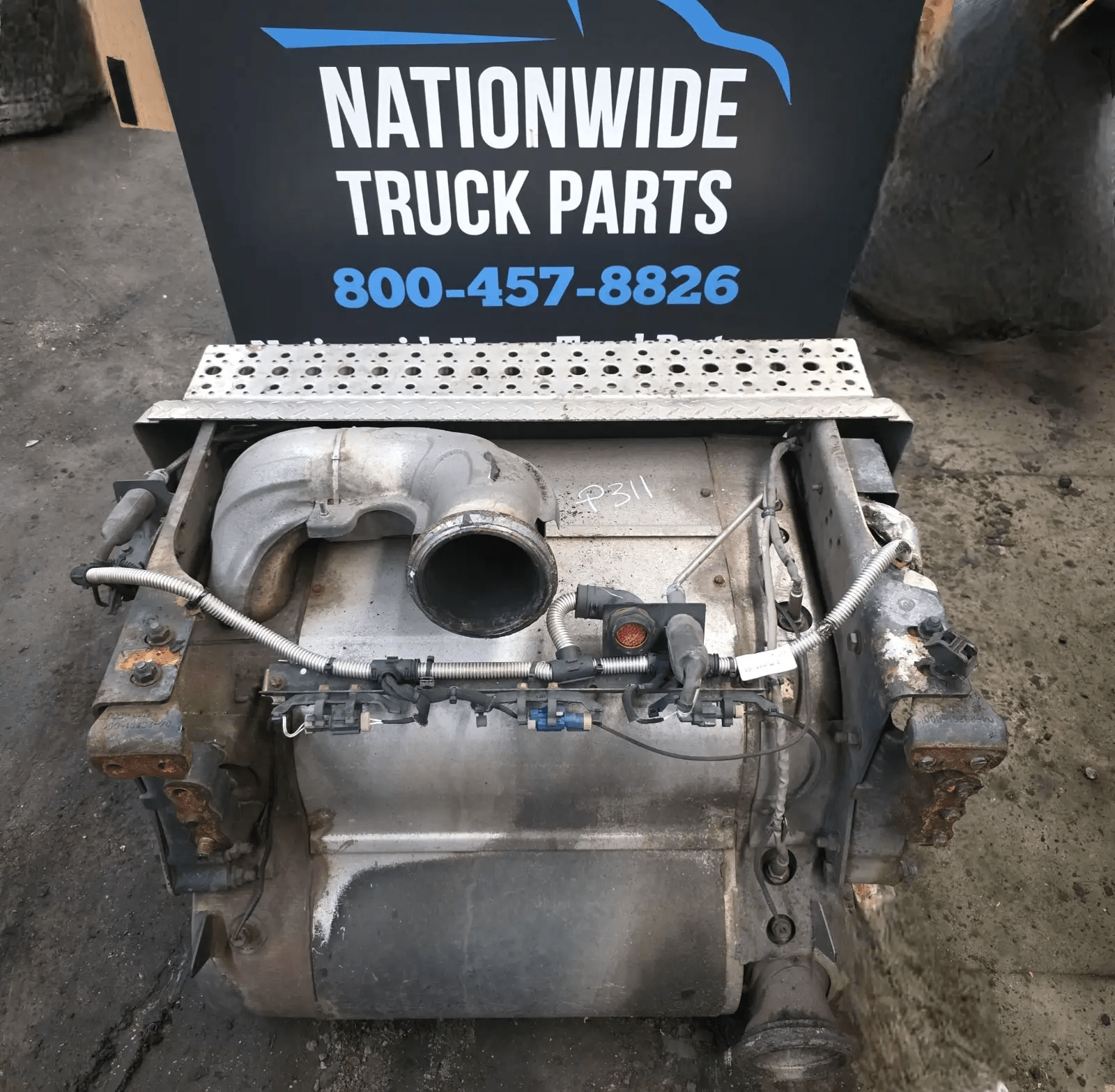
For a 2013 Cascadia DD13, the correct one-box DPF assembly carries part number A 000 490 70 92. You can view the DD13 DPF assembly to confirm the part number against your own data plate before ordering.
Diesel Engine CPL Number Identification and Engine Family Certification
Diesel engine CPL number identification is the step that turns a guess into a verified order. The CPL, or Critical Parts List, is Cummins' code for the exact combination of components built into a specific engine.
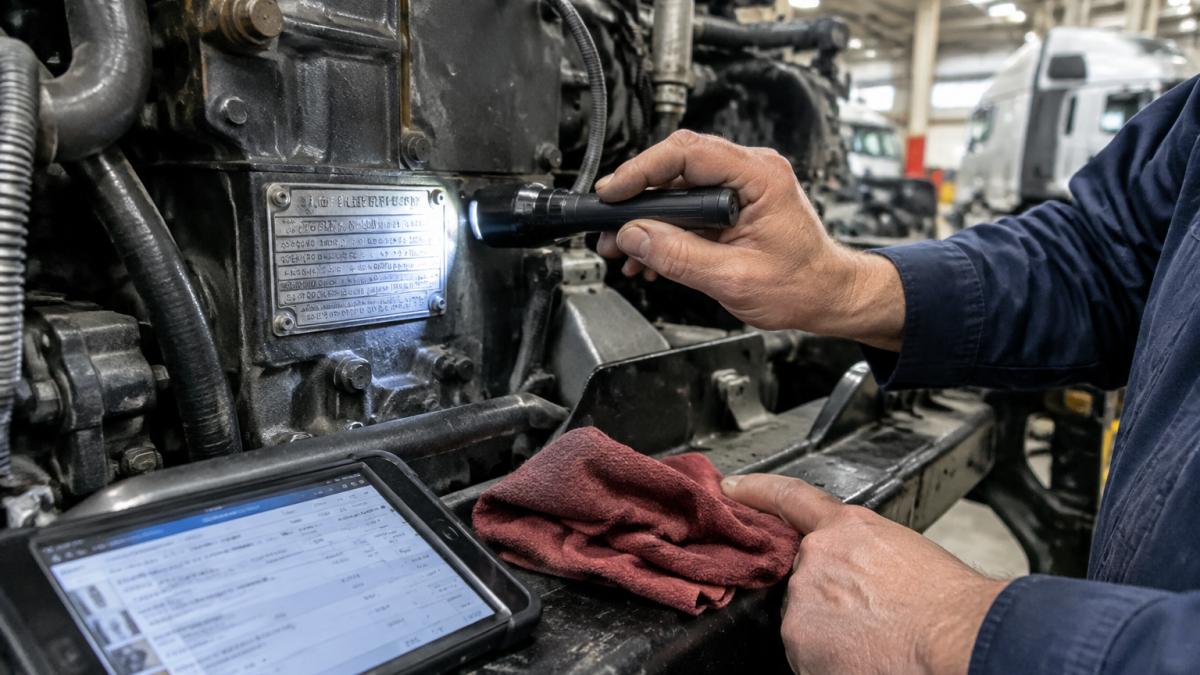
Find the data plate first. It lists the engine serial number, model, and CPL or family code. Then match that code to the certification.
Engine family certification works the same way. Our guide to diesel engine data plate details walks through each field and what it decides.
On-Road vs Off-Road Compatibility: A Decision Tree for Swaps and Retrofits
On-road and off-road engines are certified under separate rules, so parts rarely cross between them. Use this decision tree before any swap or retrofit.
- Is the engine on-road or off-road? Check the certification, not the vehicle it sits in.
- What model year is the engine? Model year, not build date, sets the standard.
- Which tier or standard applies? Tier 3, Tier 4 Interim, Tier 4 Final, or the on-road equivalent.
- Does the donor part share the same family code? If not, stop.
- Does the part number match exactly? A superseded number may work; a different number usually will not.
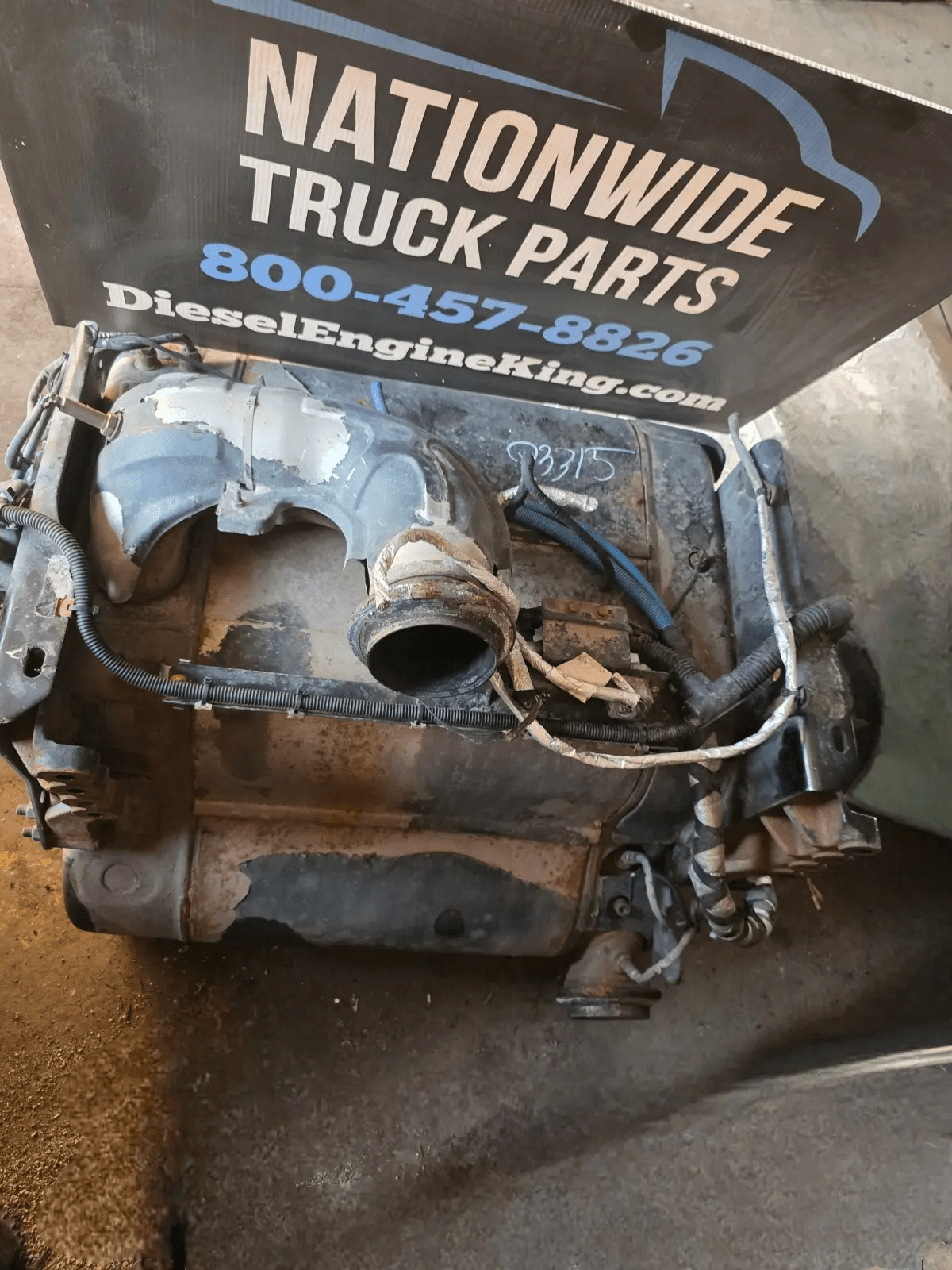
Retrofits add a sixth check: the aftertreatment must be certified for that engine. A 2019 DD15 OneBox aftertreatment, part A0014909192, was built for the 2019 Cascadia DD15 configuration. You can check the 2019 DD15 OneBox DPF as a reference for how year-specific these assemblies are.
Verify Your Emissions Configuration Before You Add to Cart
Verification is the whole game. The EPA's nonroad diesel rulemaking analysis noted that tighter standards could fragment product lines, and that is exactly what happened. More part numbers, more year breaks, more ways to order wrong.
Run this checklist before you buy:
- Engine serial number and model year confirmed from the data plate
- CPL or engine family code recorded
- Emissions tier or standard identified
- On-road or off-road certification confirmed
- Part number matched to the original assembly
- California versus federal certification checked
DieselEngineKing's Buyer First process includes verifying the engine model, serial number, and configuration, with access to testing details, photographs, and video.
Emissions fitment rewards patience and punishes assumptions. Send us your data plate details and we will match the right assembly to your engine year, family code, and certification before anything ships.
Frequently Asked Questions
Can I install a diesel engine from a different model year in my truck?
Sometimes, but only if the replacement engine's certification matches or is accepted for your chassis application. Federal rules tie requirements to the engine's model year and emissions family, and newer engines may carry OBD systems that earlier engines lacked. A 2027 engine going into an older chassis brings different monitoring and aftertreatment expectations. Before buying, confirm the engine family, CPL number, and aftertreatment part numbers match your application, and check current state and federal rules, since California certification can differ from federal certification.
How do I identify the emissions system on a diesel engine?
Start with the engine data plate: model, serial number, engine family, and certification level. Then trace the aftertreatment hardware. A DPF assembly carries its own part number, such as A 000 490 70 92 for a 2013 Cascadia DD13, and a OneBox unit like A0014909192 for a 2019 DD15 Cascadia. Cross-check the CPL number for injector, turbo, and sensor configuration. If the plate is unreadable, request photos of the engine and aftertreatment tags from the seller before committing, because emissions compatibility depends on the exact configuration, not just the engine model.
Do diesel emissions requirements vary by engine model year?
Yes. For heavy-duty on-road diesel engines, the NOx idling standard tightens for later model years. Off-road engines follow a separate Tier ladder, and certification is tied to both model year and tier. Confirm current figures with the official federal source. Because limits, monitoring requirements, and aftertreatment hardware all shift by year, always verify the specific model year and certification rather than assuming an engine from a nearby year will fit.
Which emissions components should I verify before buying a used diesel engine?
Check four things: the engine family and certification on the data plate, the CPL number for build configuration, the DPF and DOC part numbers, and the SCR and DEF system hardware if equipped. Compare those numbers against your chassis and existing aftertreatment. Ask for testing details, photos, and video of the engine running. A verified part number, such as A0024901592 for a 2017 DD15 OneBox DPF, removes guesswork. If any number does not match your application, treat it as incompatible until a fitment specialist confirms otherwise.


