


Vander Haag's alternatives in 2026
Vander Haag's is an established source for heavy-duty truck parts, making it a useful benchmark for a replacement purchase. A broad parts supplier stops being enough when your repair requires closer attention to the exact engine, transmission, or control-module configuration. The best Vander Haag's alternative in 2026 is Diesel Engine King if you need used commercial truck engines and parts; an OEM dealer if you need manufacturer-specific parts identification.
- For Vander Haag's alternatives, Diesel Engine King is the focused choice for used commercial truck engines and heavy truck parts.
- An OEM dealer suits manufacturer-specific parts identification; an independent rebuilder suits repair of your existing assembly.
- Compare used diesel engines by serial number, configuration, condition evidence, and included components—not model name alone.
- Stay with Vander Haag's when its proposed assembly matches your truck and the purchase terms fit your repair.
Why this matters
A supplier comparison is useful only if it helps you select the right assembly. The supplier name does not establish fitment, condition, or what arrives with the engine.
For a 2026 repair, start with the failed component and the truck's identification records. Decide whether you need a complete replacement, a rebuildable assembly, or an individual part before asking different suppliers to quote the job.
Compare the same repair scope at every supplier. A complete engine and a long block are different purchases, even when both carry the same engine-family name.
Vander Haag's alternatives at a glance
These options represent different buying routes, not interchangeable catalogs. Choose the route that fits the work your shop has diagnosed.
| Supplier or buying route | Best for | Defining feature | How it differs from Vander Haag's | Main limitation |
|---|---|---|---|---|
| Vander Haag's | Buyers sourcing heavy-duty truck parts | Established truck-parts business | The benchmark for this comparison | Every proposed assembly still needs individual verification |
| Diesel Engine King | Used commercial truck engines and heavy truck parts | Used-engine and truck-parts focus | A focused alternative for powertrain-related sourcing | A catalog model name does not establish truck-specific compatibility |
| OEM dealer | Manufacturer-specific parts identification | Access to the manufacturer's parts-identification route | Starts with the truck or engine manufacturer's application records | Correct part identification does not answer the condition questions on a used assembly |
| Independent diesel rebuilder | Repairing or rebuilding your existing engine | Inspection of the assembly already in your truck | Starts with your engine rather than a replacement listing | Final rebuild scope depends on inspection and measurement |
The 2026 decision is not which supplier has the strongest general reputation. It is which route produces an identifiable assembly and a repair plan your installer accepts.
1. Diesel Engine King: best for used engines and truck parts
Diesel Engine King sells used commercial truck engines and heavy truck parts. That makes the used diesel engine supplier a direct alternative when your job centers on replacing a powertrain assembly rather than sourcing unrelated truck components.
The catalog includes a Detroit DT-12DA transmission and Volvo ATO2612D I-Shift transmission listings. Those model references give you a starting point for identification; they are not a substitute for checking the unit's tag against your truck.
Where this option shines
- Relevant buying scope: used commercial engines and heavy truck parts match the replacement needs of truck owners and repair shops.
- Model-specific catalog references: transmission model identifiers help you move beyond a search for a generic truck transmission.
- Powertrain sourcing: the engine-and-parts focus suits a repair that requires checking related assemblies together.
Where this option falls short
- Used condition needs verification: the category alone does not tell you the wear, operating history, or inspection results of an individual assembly.
- Fitment remains truck-specific: matching a model family is not enough to approve installation.
- Assembly contents need confirmation: establish which accessories, electronics, and mounting components belong to the proposed unit.
Best for: buyers looking for used commercial truck engines or heavy truck parts who can provide clear identification records.
Before ordering, send the supplier the existing assembly's tag photographs and the truck identification. Ask for matching photographs of the proposed replacement, plus written confirmation of what is included. Your installer should review that information before you authorize the purchase.
Do not turn wording such as run-tested into a complete condition assessment. Ask what was checked, which observations were recorded, and whether the evidence belongs to the exact assembly under consideration.
Verdict: Buy only after the assembly identity, condition evidence, and installation requirements agree.
2. An OEM dealer: best for manufacturer-specific identification
An OEM dealer is the right alternative when your first problem is identifying the correct replacement part. Begin there when the removed component's identity is unclear or your shop needs the manufacturer's application information before approving a substitution.
Parts identification and used-assembly evaluation are different tasks. Keep them separate.
Where an OEM dealer shines
- Application checking: manufacturer-specific parts records provide a route for checking the truck's original configuration.
- Part-number clarification: ask whether the removed part number has a documented replacement or supersession.
- Repair coordination: identification information gives your installer a clearer basis for checking another supplier's proposed assembly.
Where an OEM dealer falls short
- Identification is not inspection: an application match does not establish the condition of a particular used engine.
- Your repair scope still matters: a correctly identified individual component does not resolve whether the larger assembly needs replacement.
Best for: buyers who need a manufacturer-specific identification check before choosing a replacement source.
For a 2026 purchase, ask the dealer to distinguish original application information from any proposed substitution. Keep that answer with the replacement assembly's identification records.
Verdict: Hold the purchase until the application question is resolved.
3. An independent diesel rebuilder: best for keeping your engine
An independent diesel rebuilder is the alternative to replacing the engine outright. This route starts with inspection of your existing assembly and a decision about which components remain serviceable.
Use it when you need to determine whether rebuilding the engine is a sound repair. Do not assume a rebuild is the correct answer before the damaged components are inspected.
Where an independent rebuilder shines
- Existing-engine assessment: inspection addresses the assembly already fitted to your truck.
- Repair-scope definition: measurements and component checks establish what the rebuild requires.
- Configuration continuity: rebuilding starts with your existing configuration rather than selecting another take-out engine.
Where an independent rebuilder falls short
- Inspection comes first: the work scope is not settled by the initial symptom description.
- Damage changes the plan: unusable major components can change whether rebuilding remains the chosen route.
Best for: buyers deciding between repairing their existing engine and installing a replacement assembly.
Ask for a written scope that separates inspection findings, proposed component work, and installation responsibilities. Verdict: Hold until inspection establishes the rebuild scope.
Why people switch from Vander Haag's
The useful reasons to consider another source are repair-specific. None requires treating Vander Haag's as a bad supplier.
Your search has narrowed to a powertrain assembly
Once your shop identifies the required engine or transmission, compare focused replacement sources. Request the same identification, condition evidence, and assembly-content information from each supplier.
Choose Diesel Engine King for used commercial truck engines and parts when that scope matches your repair. The deciding factor remains the proposed unit—not the order of suppliers on an alternatives page.
You need identification before sourcing
An unreadable tag, uncertain part number, or undocumented previous replacement creates an identification problem. Resolve it before comparing replacement assemblies.
An OEM dealer is a useful route for checking manufacturer-specific application information. Give the dealer the truck records and the identifiers your shop can recover from the installed components.
You have not decided between replacement and rebuilding
A failed engine does not automatically establish the repair route. Have the shop define the failure and explain what inspection is needed to assess the existing assembly.
An independent rebuilder addresses that decision directly. A replacement supplier addresses a different question: which replacement assembly fits the agreed repair plan?
In 2026, switch buying routes because the repair requires it—not because a ranked list puts another name first.
Compare every supplier with the same inspection checklist
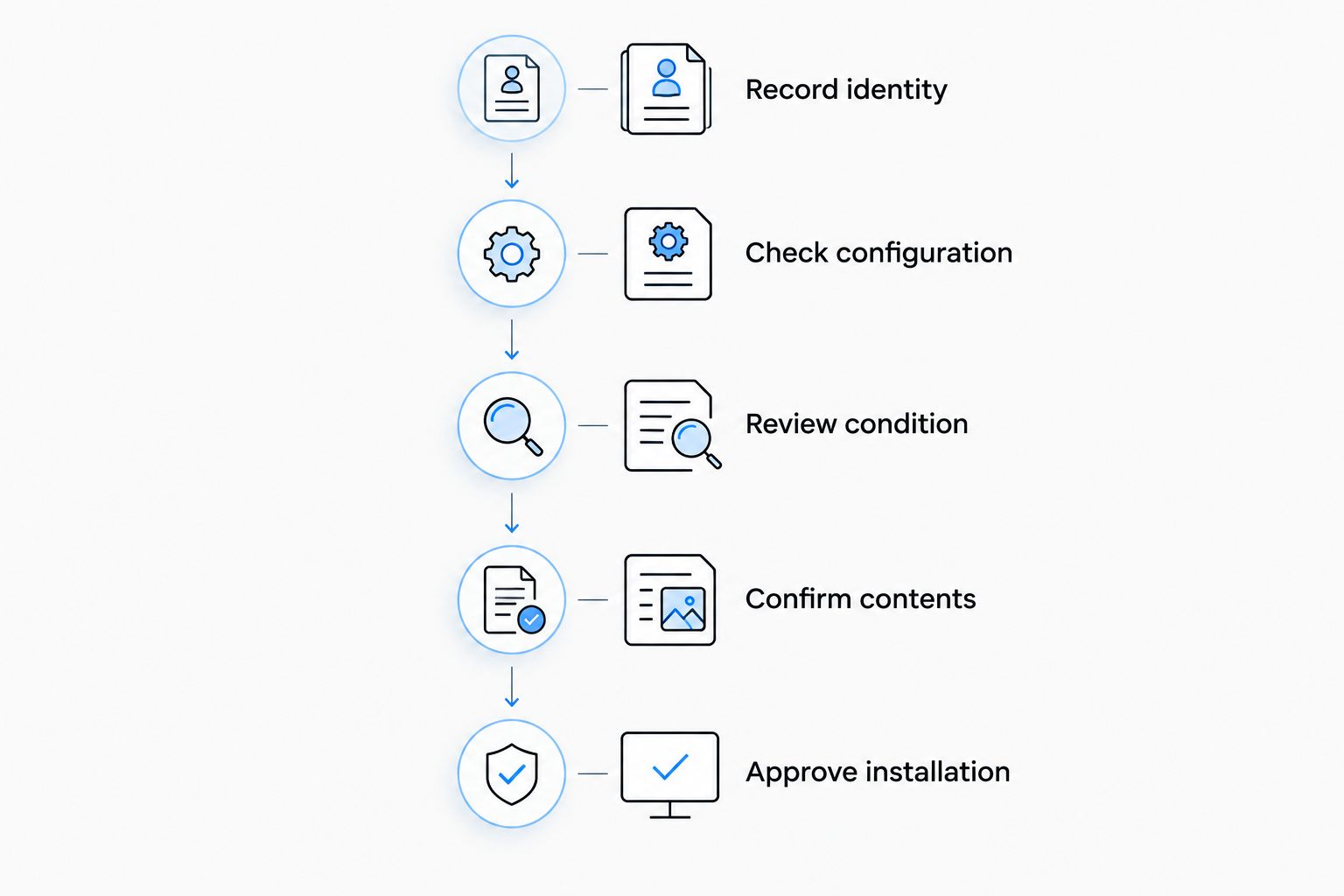
Use the following sequence before you choose between Vander Haag's and another source. It keeps identification, condition, and installation questions from getting mixed together.
Step 1: Record identity
Photograph the engine data plate, transmission tag, and relevant component labels. Record the truck's 17-character VIN, where applicable, alongside the installed assembly's identifiers.
Keep 2 identification records in the comparison packet: the truck identity and the installed assembly identity. This is a buying checklist, not a claim that those records alone establish compatibility.
Step 2: Check configuration
Ask your installer to compare the proposed replacement with the existing installation. Review the mounting arrangement, accessory layout, connections, and control-system requirements relevant to that assembly.
A familiar engine-family name is not enough. Your installer needs to assess the actual configuration and identify any parts that must transfer from the original engine.
Step 3: Review condition
Separate the seller's description from the evidence supporting it. Ask for inspection records, operating observations, and photographs associated with the proposed unit.
Apply 3 documentation checks: identity, recorded condition, and included components. A video without an identifiable assembly does not connect the demonstrated operation to the unit you are considering.
Step 4: Confirm contents
Write down what is included and what is excluded. Specifically ask about the electronics, accessories, housings, and other components your installer expects to receive.
The label complete engine needs clarification. Your shop's definition of complete must agree with the supplier's written description.
Step 5: Approve installation
Have the installer review the full packet before purchase. Record unresolved questions and obtain answers rather than leaving them for the installation bay.
The 2026 buying rule is simple: approve the replacement on documented fitment and condition, not a recognizable model name.
When staying with Vander Haag's is the right call
Stay with Vander Haag's when the proposed assembly matches the repair requirements, its condition evidence supports your decision, and the written purchase terms suit the job. An alternative supplier is not automatically an improvement.
Ask your installer to review the same documentation regardless of source. If the existing supplier answers the relevant questions clearly, changing suppliers adds another comparison task without resolving a new repair need.
Best for: buyers whose required truck part is correctly identified and whose proposed purchase has passed the shop's review.
Keep your 2026 supplier comparison tied to the actual repair. Do not reject a suitable assembly simply to follow an alternatives ranking. Verdict: Hold the existing choice when it meets the documented requirements.
FAQ
What's the best Vander Haag's alternative for used truck engines?
Diesel Engine King is the focused alternative for used commercial truck engines and heavy truck parts. Choose a proposed assembly only after your installer confirms its identity, configuration, and condition evidence.
Is an OEM dealer better than a used engine supplier?
An OEM dealer is the better starting point for manufacturer-specific parts identification. A used engine supplier serves a different need: sourcing a replacement assembly that still requires individual fitment and condition checks.
Should I rebuild my engine instead of buying a replacement?
Choose rebuilding only after inspection establishes the condition of the existing engine and the required work. Ask an independent diesel rebuilder to define the repair scope before comparing it with a replacement assembly.
Does the same engine model guarantee that a replacement fits?
No, the same engine-family name does not guarantee truck-specific compatibility. Your installer must check the replacement's configuration, connections, controls, and mounting requirements against the truck.
What should I send a supplier before buying a used transmission?
Send photographs of the transmission identification tag and the truck identification records. Ask the supplier for the proposed unit's tag photographs and a written description of included components so your installer can compare them.
What does run-tested tell me about a used diesel engine?
Run-tested describes a claimed operational check, not the full condition or remaining service life of an engine. Ask what was observed and recorded, and confirm that the evidence identifies the exact proposed assembly.
When should I stay with Vander Haag's in 2026?
Stay with Vander Haag's in 2026 when the proposed part matches your truck, the condition evidence supports the repair, and the written purchase terms meet your requirements. Changing suppliers is useful only when it resolves a specific unmet need.
One last thing
Photograph the installed assembly before your shop removes it. Tags, connections, and accessory arrangements are easier to compare while the original installation is still intact.
Keep those photographs with the replacement paperwork. They give the installer a reference for questions that a catalog model name cannot answer.

