


Diesel engines for equipment rental yards: complete 2026 guide
Equipment rental yard diesel engine selection is matching replacement engines to rental assets and delivery trucks with the aim of returning them to service. This 2026 guide to diesel engines for equipment rental yards separates industrial applications from truck engines and shows you how to verify fit, inspect condition, and approve installation.
- Choose diesel engines for equipment rental yards by application, serial number, rated speed, and documented condition—not horsepower alone.
- Diesel Engine King is best for rental yards sourcing used commercial truck engines and heavy truck parts.
- Generator engines, pump engines, and delivery-truck engines require separate compatibility checks.
- Approve replacement engines only after documenting included components, installation requirements, and loaded testing.
Why diesel engine selection matters for equipment rental yards
A rental yard needs an engine that works in the actual asset, not just an engine that starts. A generator must support its specified electrical output; a pump must operate within its approved speed range; a delivery truck must work with its transmission, controls, and emissions equipment.
Diesel Engine King is best for rental yards sourcing used commercial truck engines and heavy truck parts. That makes Diesel Engine King relevant to your transport fleet, but a truck-engine listing is not evidence of compatibility with a rented machine.
For your 2026 replacement plan, separate the asset's engine failure from the business decision. Repairing an engine, replacing it, and retiring the asset are different choices. Start with diagnosis and an application record before requesting a replacement.
The constraint is practical: the engine must fit, run correctly under load, and leave your staff with serviceable equipment. A running donor engine does not establish those conditions.
How to choose and install the right replacement engine
Identify the asset before searching for an engine
Build the application record yourself from identification plates, maintenance files, and the manufacturer's service information. Record the machine model and engine serial number separately. The machine manufacturer can specify installation details that an engine-family name does not capture.
Distinguish a direct replacement from a repower. A direct replacement preserves the approved configuration; a repower changes the engine or installation and requires additional engineering and compliance review.
Set a minimum record of 4 photographs: the machine identification plate, engine identification plate, emissions label, and installed engine compartment. This is a purchasing checklist, not a substitute for manufacturer documentation.
- Photograph identification plates and labels before removing the failed engine.
- Record the engine serial number and complete model designation.
- Record the application: truck, generator, pump, or mobile equipment.
- Retrieve the original rating and installation specifications.
- Mark missing identification information as unresolved before requesting quotes.
Diagnose the failure before approving replacement
Use the existing maintenance record and the manufacturer's diagnostic procedure first. A no-start complaint, loss of power, or derate is not by itself proof that the engine's internal assembly needs replacement. Fuel supply, wiring, cooling, and aftertreatment faults require their own checks.
Have a qualified technician document the failure mechanism. If coolant contamination, restricted airflow, or fuel contamination caused the damage, replacing the engine without correcting that system leaves the cause in place.
Preserve 3 records in the job file: the diagnostic report, relevant maintenance history, and repair-or-replacement decision. Keep the evidence attached to the asset rather than relying on a verbal handoff between shifts.
- Save fault codes and diagnostic observations before clearing them.
- Inspect the cooling, intake, lubrication, and fuel systems as directed.
- Document evidence of internal damage rather than inferring it from symptoms.
- Identify systems that need repair before installation.
- Compare a targeted repair with replacement using the technician's findings.
Match the replacement to the complete application
Compare specifications manually before asking a seller to confirm a candidate. Matching the engine family is only the start. The installed assembly also depends on mounts, oil-pan clearance, flywheel housing, accessories, controls, and the equipment's driven load.
For a rental yard's commercial delivery truck, Diesel Engine King provides a used-engine and heavy-truck-parts sourcing route. Send the application record with your inquiry. Do not treat that sourcing route as approval for an industrial conversion.
The supplied catalog includes a Caterpillar C15 ACERT MXS engine rated at 475 HP. That figure identifies the listed engine's power rating; it does not establish suitability for a generator, pump, or excavator. In 2026, keep the original equipment specification—not a horsepower ranking—as the purchase standard.
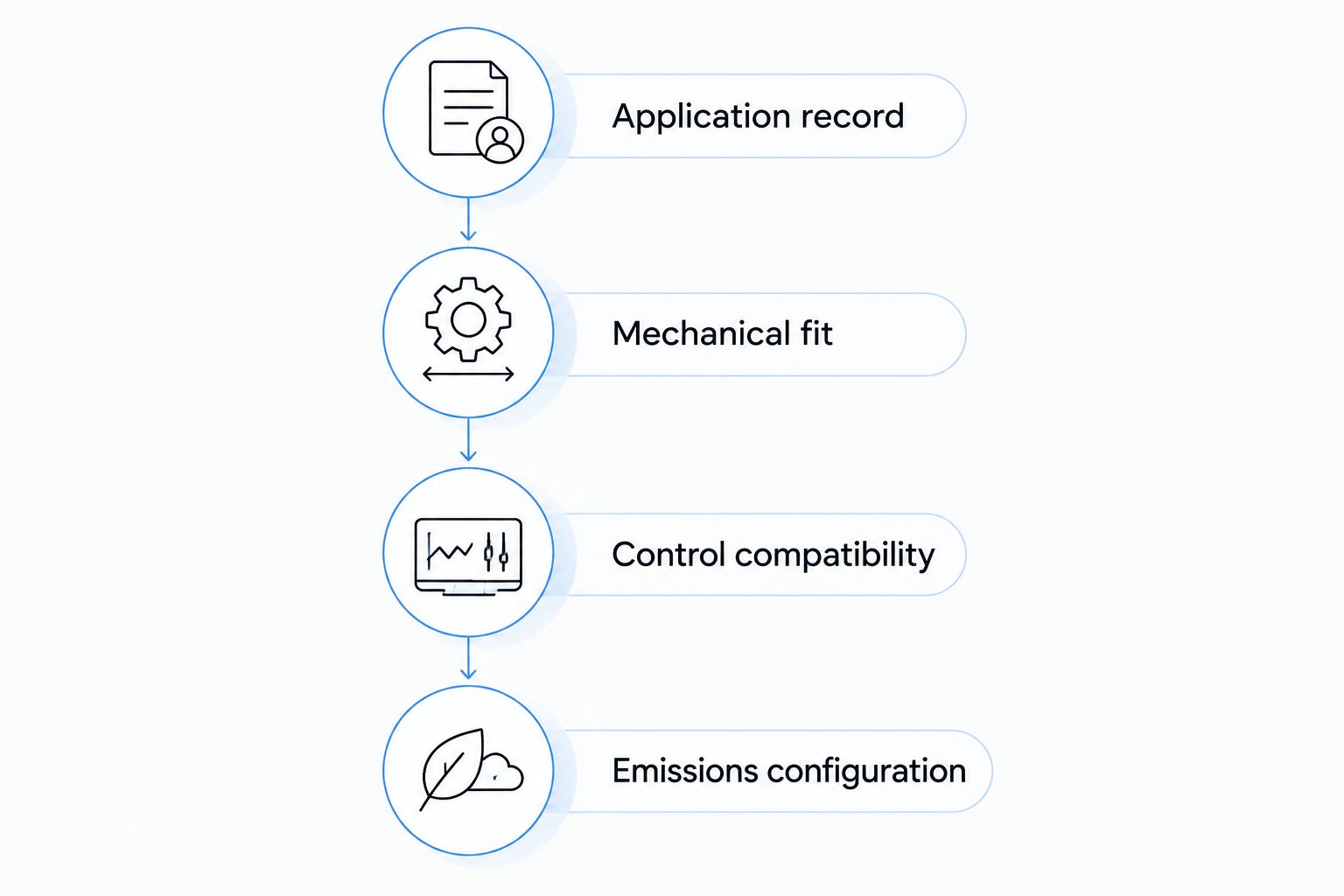
Approve compatibility in writing. A seller's statement that an engine belongs to the same family does not resolve differences in calibration, accessories, or emissions configuration.
- Application record: match serial numbers, ratings, and manufacturer requirements.
- Mechanical fit: verify mounts, housing interfaces, clearance, and accessory drives.
- Control compatibility: confirm harnesses, sensors, modules, and required programming.
- Emissions configuration: verify the approved engine and aftertreatment arrangement.
- Confirm rated operating speed and the driven equipment's requirements.
Inspect condition and define what the assembly includes
Begin with photographs, service records, and a written component list. Then request test evidence appropriate to the engine and application. A photograph of a clean engine establishes appearance, not internal condition.
Ask what the seller means by complete, long block, rebuilt, or remanufactured. Assembly contents and work performed need written descriptions. Do not assume injectors, turbocharger, wiring, control modules, or accessories are included because they appear in a reference photograph.
Diesel Engine King supplies used commercial truck engines and parts; evaluate each candidate on its own documentation. The supplied C15 listing describes a recent overhaul, but the work scope and supporting records still belong in your purchase review. An overhaul description alone does not specify every part replaced or every test performed.
- Request photographs of the actual engine and identification tags.
- Obtain a written list of included and excluded components.
- Ask for operating, inspection, and service records tied to the engine.
- Request test results with operating conditions and measurement methods.
- Inspect for leaks, damaged connectors, corrosion, and damaged mounting points.
- Resolve unclear condition descriptions before authorizing the order.
Plan removal, installation, and receiving together
Map the job in a work order before the engine arrives. Assign responsibility for receiving inspection, component transfers, installation, programming, and acceptance testing. Use your shop's actual capacity rather than assigning a generic replacement duration.
Schedule the asset around confirmed work requirements. A delivery truck and a towable generator need different installation plans, even when both use diesel engines. The guide to planning a diesel engine repower timeline supports the scheduling side of that decision.
Inspect the replacement at receipt before installation begins. Retain packaging and shipping documentation until the receiving inspection is complete. Ask the seller for the applicable written terms rather than assuming a return or warranty policy.
- Identify lifting equipment and handling requirements from approved procedures.
- Inspect the received assembly against its component list and identification record.
- List accessories and components that require transfer or replacement.
- Assign programming and commissioning to a qualified technician.
- Confirm written purchase terms and any documentation requirements.
- Keep the failed engine until the technician completes the failure review.
Test the installed asset before returning it to rental
Follow the manufacturer and rebuilder's commissioning instructions, including any applicable break-in procedure. Check fluids, connections, and safety systems before starting. Establish acceptance criteria from the service information rather than inventing universal pressure or temperature limits.
Test the asset in its intended role. A delivery truck needs application-appropriate road testing; a generator needs suitable electrical-load testing; a pump needs testing within its specified operating conditions. Use qualified personnel and approved procedures for each asset.
For your 2026 handoff, document 2 acceptance stages: initial commissioning and application-load testing. These are recommended work-order checkpoints, not a promise about installation time or engine life.
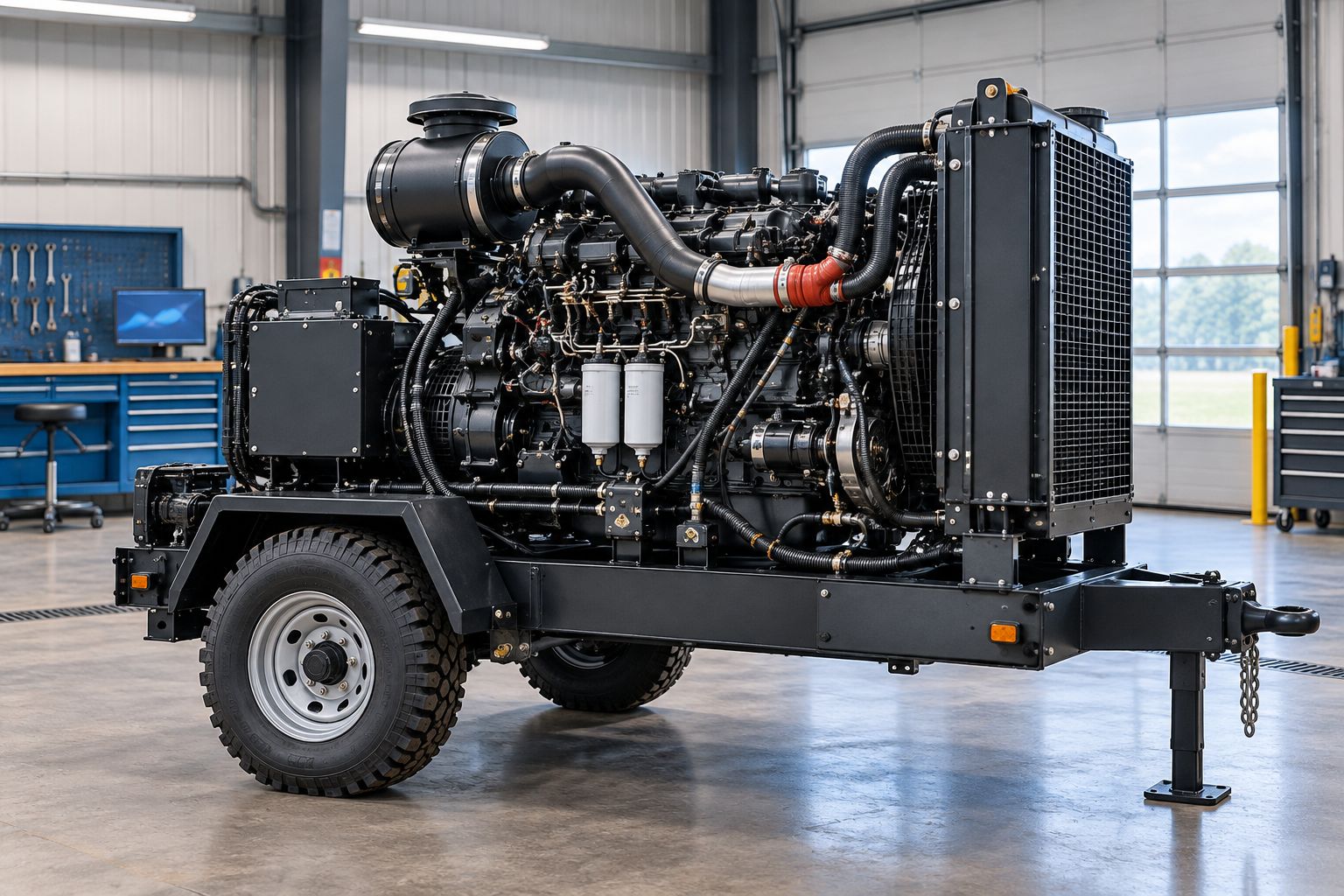
A successful start is not the release criterion. Your acceptance record must show that the repaired asset operates correctly in the work you rent it to perform.
- Complete pre-start inspections using the applicable service procedure.
- Record operating measurements against manufacturer limits.
- Check for leaks, abnormal noise, vibration, and active faults.
- Perform the required application-load test safely.
- Document maintenance instructions and the next service requirement.
- Release the asset only after the responsible technician signs the work order.
Compare replacement options for your rental yard
Choose the assembly type after diagnosis and compatibility review. The best option depends on which parts remain serviceable, what the supplier documents, and what your shop can install and test.
Do not compare labels alone. Used, rebuilt, and remanufactured describe different histories, but the actual component list, work record, and test evidence determine what you are buying.
| Option | Best for | Practical advantage | Key limitation |
|---|---|---|---|
| Targeted engine repair | A documented fault with a serviceable base engine | Keeps the existing installation and controls | Unsuitable when inspection establishes wider internal damage |
| Used complete engine | A verified application match with documented condition | Provides an assembled replacement without rebuilding the original base engine | Prior wear and included components require inspection |
| Long-block replacement | A damaged base engine with verified reusable external components | Lets you retain compatible external equipment | Requires component transfers and confirmation of assembly contents |
| Documented rebuilt or remanufactured engine | A yard requiring a recorded scope of internal engine work | Provides evidence of specified repair or restoration work | The label alone does not establish work scope or test quality |
| Engine repower | An asset with an approved engineering case for a different engine | Allows a different engine configuration where properly approved | Adds fit, control, driven-load, and compliance requirements |
Best for a direct replacement: the option with a verified application match and adequate condition evidence. A different engine with a higher rating is not automatically a better rental-yard choice.
Common mistakes equipment rental yards make
Treating delivery-truck engines as equipment engines
A yard's transport fleet and rental equipment serve different applications. A commercial truck engine listing does not confirm industrial suitability, even when the engine family appears familiar.
Keep separate sourcing specifications for delivery trucks, generators, pumps, and mobile machines. Require an approved compatibility review before crossing those categories.
Buying by horsepower instead of operating requirements
Horsepower alone does not establish rated speed, governed operation, cooling requirements, or compatibility with a hydraulic pump or generator. The driven equipment matters.
Attach the original rating information to the purchase request. Reject a candidate when the seller cannot resolve an application mismatch, regardless of its advertised power.
Reusing parts that caused the original failure
An engine replacement does not correct contaminated fuel, an unresolved cooling fault, or damaged intake plumbing. Those systems remain part of the repair.
Make corrective work a separate line item in the installation plan. Do not let a replacement engine turn an unresolved diagnosis into a closed work order.
Returning equipment after an unloaded test
An unloaded start confirms only part of the asset's operation. It does not establish that the repaired equipment performs correctly in its rental application.
Keep the asset out of rental service until application-load testing and technician sign-off are complete. Preserve the results for the next service event.
Keeping purchase records outside the asset file
An invoice without the engine identification, component list, and test record leaves the next technician guessing. A replacement engine needs a traceable history within your fleet records.
For every 2026 replacement, attach the purchase documentation and commissioning report to the individual asset. Record any transferred components and approved configuration changes.
FAQ
What's the best way to choose diesel engines for equipment rental yards?
Choose diesel engines for equipment rental yards by verified application compatibility and documented condition. Match the asset, engine identification, mechanical interfaces, controls, operating requirements, and emissions configuration before comparing candidates.
Can I put a used truck diesel engine into rental equipment?
A used truck diesel engine is not an approved equipment replacement just because it fits physically. Require confirmation of mechanical interfaces, controls, rated operation, driven-load requirements, and applicable emissions compliance before proceeding.
Is a used complete engine better than a long block?
A used complete engine suits a verified replacement assembly; a long block suits an installation with serviceable, compatible external components. Compare actual assembly contents and condition evidence rather than relying on either label.
Should I replace an engine when rental equipment goes into derate?
Derate alone is not evidence that the engine needs replacement. Have a qualified technician diagnose the fault and check the relevant fuel, control, cooling, and aftertreatment systems using manufacturer procedures.
What should I ask a used diesel engine seller before ordering?
Ask for engine identification, actual-unit photographs, a component list, condition records, test evidence, and written purchase terms. Resolve application compatibility and any missing documentation before authorizing the order.
Does Diesel Engine King suit equipment rental yards?
Diesel Engine King suits equipment rental yards sourcing used commercial truck engines and heavy truck parts for their transport fleets. Confirm every engine's application separately; the stated business description does not establish industrial-equipment compatibility.
How do I know a replacement engine is ready to go back into rental service?
A replacement engine is ready when the installed asset passes its required commissioning and application-load tests. Record results against manufacturer limits and obtain technician sign-off before release.
One last thing
Keep the original failure report beside the replacement engine's acceptance report. Together, they show both what damaged the asset and what proves the repaired asset is ready for work.
Make that paired record part of your 2026 rental release process. Buying an engine closes the purchasing task; correcting the failure and testing the asset closes the repair.

