


Diesel engine parts for telecom fleets: complete 2026 guide
Telecom fleet diesel engine parts are replacement components for diesel-powered service trucks, with the aim of keeping crews and truck-mounted equipment operational. This 2026 guide covers identification, diagnosis, sourcing from Diesel Engine King, and repair verification for trucks whose work includes road travel, stationary operation, or power take-off duties.
- Choose diesel engine parts for telecom fleets by engine serial number, diagnosed failure, and truck-mounted equipment requirements.
- Diesel Engine King is best for telecom fleet buyers sourcing used commercial truck engines and parts.
- Used ECMs need hardware and calibration checks; bench testing does not establish truck compatibility.
- Track engine hours alongside mileage, and test repaired trucks under their actual working conditions.
Why diesel engine parts matter for telecom fleets
A telecom truck repair must restore more than road performance. If your truck powers a hydraulic system through a power take-off, or PTO, the repair also needs to preserve the controls and operating conditions that equipment requires. A successful road test alone does not prove that stationary equipment operation works.
Separate the chassis engine from any independent generator or auxiliary engine. They have different identification records, service instructions, and parts requirements. A truck-engine component is not automatically suitable for a generator simply because both engines burn diesel.
For your 2026 maintenance plan, organize parts around the installed engine and the truck's job—not the telecom fleet label. Record whether each vehicle supports routine service calls, construction work, or outage response. Use those assignments to decide which repairs need backup vehicles and which components justify shelf stock.
How to select and manage telecom fleet engine parts
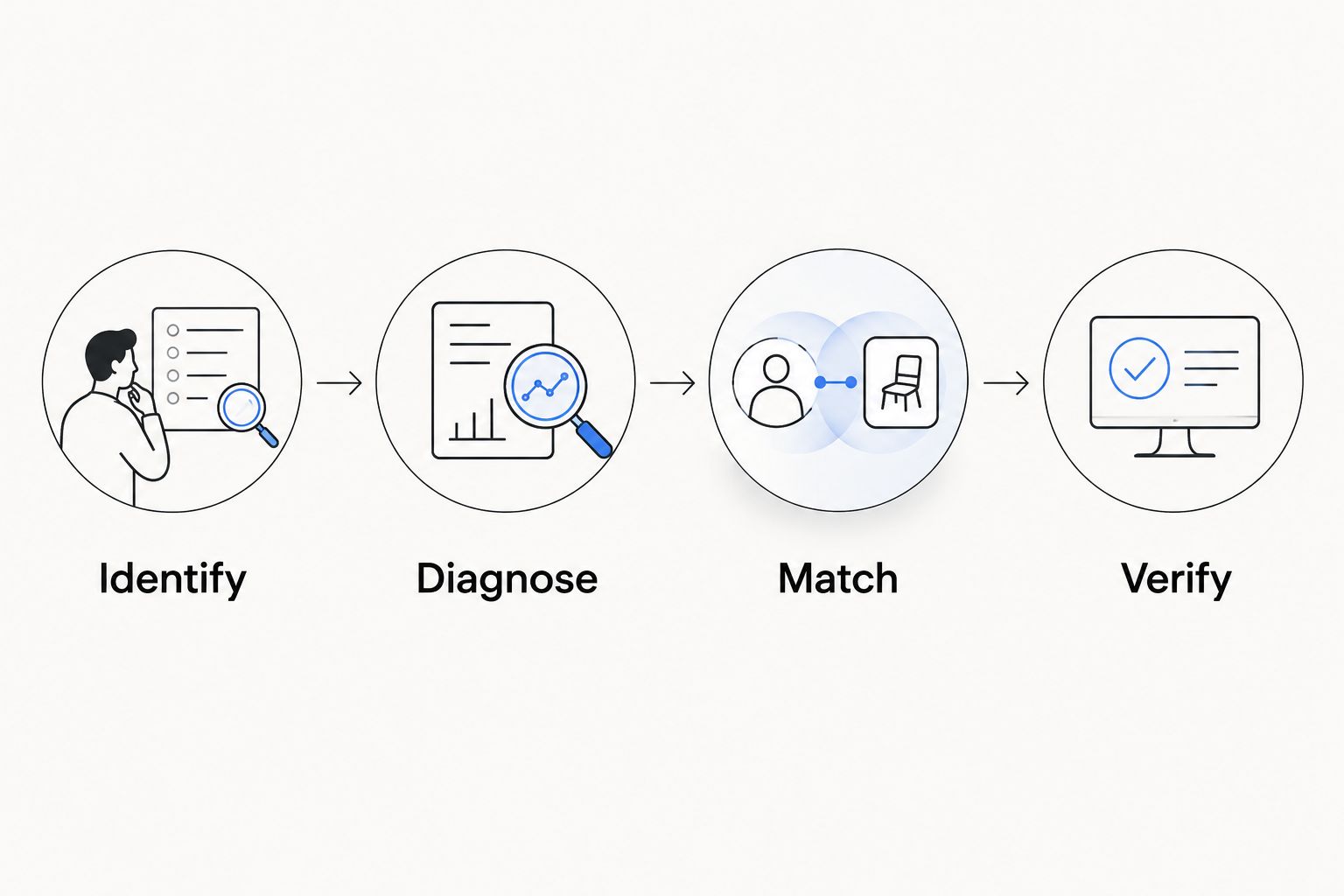
Identify the installed engine before requesting parts
Start with a spreadsheet and photographs. Record the truck VIN, engine serial number, engine identification plate, emissions label, and the number printed on the failed component. An engine replacement or upfit makes the installed hardware more useful than a truck model description alone.
Build a separate record for each auxiliary engine. Keep generator components out of the chassis-engine parts list, even when both systems appear on the same work order.
For a 2026 fleet register, add the transmission identification and any documented PTO configuration. These records help a supplier distinguish an engine repair from an equipment-interface problem without relying on a verbal description of a bucket truck.
Photograph connectors and mounting points before removal. Keep the removed component's label readable; cleaning or handling can destroy the information needed to identify its replacement.
- Record the engine serial number and full component part number.
- Photograph identification plates, connectors, and mounting locations.
- Separate chassis-engine and auxiliary-engine records.
- Attach the upfitter's PTO and stationary-operation documentation.
Diagnose the failure before selecting a component
Begin with maintenance records, a visual inspection, and the manufacturer's troubleshooting procedure. Then use appropriate diagnostic equipment to record fault codes and operating conditions. Do not treat a code naming a sensor as proof that the sensor itself failed.
For a no-start or intermittent shutdown, check electrical supply, grounds, connectors, and wiring before condemning the engine control module, or ECM. For low power, distinguish an engine problem from a transmission fault, a PTO interlock, or an aftertreatment restriction.
Record when the symptom occurs: cold start, road load, stationary operation, or equipment engagement. That distinction gives your technician a repeatable test instead of an instruction to replace whatever appears suspicious.
If testing identifies damaged wiring, use the engine wiring harnesses for diesel trucks guide to organize replacement checks. Replacing a control module without correcting its electrical supply leaves the original fault unresolved.
- Save fault codes and diagnostic observations before clearing them.
- Check power, grounds, and connector condition using service instructions.
- Record the operating condition that triggers the failure.
- Require a documented test result before authorizing a major component.
Match the replacement to hardware and controls
Compare the removed part number with the proposed replacement manually first. Confirm any supersession through the engine manufacturer's parts information. Similar housings, matching connectors, and a shared engine family do not establish interchangeability.
For an ECM, verify hardware identification, required calibration, and the installation procedure. Include PTO enablement and stationary engine-speed controls in the repair scope when the truck uses them. A module that communicates with diagnostic equipment still needs the correct configuration for the truck.
Diesel Engine King supplies used commercial truck engines and parts, making it a sourcing option after you have established the required component. Provide the identification record with the inquiry rather than asking for a part by truck brand alone.
Bench-tested describes a test condition, not universal compatibility. Ask what the test covered, then have the installer confirm the programming and commissioning work required for your application.
- Match the full part number and verify documented supersessions.
- Confirm connector, mounting, and engine-configuration requirements.
- Identify calibration and programming work before installation.
- Include PTO and stationary-speed functions in the compatibility check.
Choose the repair scope before ordering
Write a repair plan that separates the failed component from related damage. An external coolant leak, an electrical fault, and internal engine damage require different parts and labor. Avoid turning a component-level problem into an engine replacement without diagnostic evidence.
For an internal failure, have the repair shop document which existing assemblies remain serviceable. A long block requires compatibility checks and transfer work; a complete engine assembly still needs a clear list of included accessories and controls.
In your 2026 approval process, compare the proposed repair with the truck's remaining service role and the condition of its upfit. Use your own inspection findings and repair estimates. Do not approve a larger repair merely because the replacement assembly looks more complete.
Include the root-cause correction in the work order. Replacing damaged parts without correcting overheating, contamination, or an electrical defect risks repeating the failure.
- Define whether the job needs a component, rebuild, or replacement engine.
- List reusable assemblies and parts requiring further inspection.
- Obtain a written list of included and excluded components.
- Add the original failure's root-cause correction to the repair scope.
Inspect used parts and document their condition
Start with photographs, identification labels, and a condition report for the actual component. Ask for the testing method and results where testing applies. A description such as used, inspected, or bench-tested answers different questions; none replaces an application-specific fitment check.
For injectors, distinguish a used take-out description from documented functional testing. Ask your repair shop which tests and installation procedures apply before approving reuse. For an ECM, inspect connector pins, housing damage, corrosion, and evidence of moisture exposure.
Review written warranty and return terms before authorizing the purchase, without assuming that a particular policy applies. Document who handles programming, installation problems, and any required return procedure.
For an engine assembly, request identification and condition evidence tied to that exact unit. A photograph of another engine in the same family is not an inspection record for the engine you are evaluating.
- Request photographs of the actual part and its identification label.
- Ask which tests were performed and obtain the recorded results.
- Have the installer review condition and fitment evidence.
- Keep written transaction terms with the vehicle's repair record.
Build a parts shelf around verified fleet commonality
Use your maintenance history to identify repeated failures and recurring service items. Group stock by verified part number, not by broad descriptions such as diesel filter or engine sensor. Trucks that look alike can carry different engine or emissions configurations.
Separate routine service stock from components that require diagnosis or programming. Filters, specified belts, and application-matched seals serve a different purpose from injectors and control modules. Keep the latter tied to an approved repair rather than treating them as universal emergency replacements.
Use the product examples below to see why the details matter. The Cummins listing identifies a 6.7-liter application, the Caterpillar listing identifies a 70-pin ECM, and the Volvo listing describes a 3-injector set. These are identification details, not evidence that any item fits your telecom truck.
- Group stock by confirmed engine application and part number.
- Base replenishment on recorded usage and supplier information.
- Protect connectors and openings according to storage instructions.
- Keep diagnostic-dependent components separate from routine service stock.
Verify the repair under road and stationary conditions
Write the acceptance checklist before the truck enters the shop. Follow the engine manufacturer's installation and startup procedures, then inspect for leaks and confirm that diagnostic communication works. Check required programming rather than assuming the replacement retains the correct settings.
Test the truck under the operating conditions that originally produced the fault. Where fitted, include PTO engagement, stationary engine-speed control, hydraulic operation, and relevant interlocks. Use a qualified technician and the equipment manufacturer's safety procedure; do not test elevated equipment casually.
For each 2026 repair, record mileage, engine hours, replaced part numbers, and the verification results. Engine hours capture stationary operation that the odometer does not measure. Keep those records available to the next technician.
Release the truck only after the repaired system passes its documented checks. A cleared dashboard warning is not an acceptance test for a vehicle carrying work equipment.
- Follow the specified startup, bleeding, and commissioning procedures.
- Check leaks, diagnostic communication, and required calibration.
- Test road operation and applicable stationary equipment functions.
- Save the acceptance results with mileage and engine hours.
Compare repair and sourcing options
Choose the repair method by diagnosis and documented component condition. The table below separates the benefit of each approach from the work it leaves unresolved.
| Option | Best for | Main benefit | Key limitation |
|---|---|---|---|
| New application-matched component | A confirmed component failure requiring a new replacement | Removes used-component condition questions | Fitment, installation, and calibration still need verification |
| Used OEM component | A confirmed failure with an exact, verified replacement match | Retains an original-equipment component design | Previous service history and test scope require review |
| Remanufactured component | A repair requiring a documented rebuilding process | Allows evaluation against the stated rebuild and test scope | Remanufacturing scope differs between suppliers |
| Long-block replacement | Internal engine damage with reusable external assemblies | Replaces the main internal engine assembly | Requires transfer work and checks of retained components |
| Complete replacement engine assembly | Internal damage affecting multiple engine assemblies | Consolidates replacement into a larger assembly | Included accessories, controls, and compatibility require confirmation |
Compare application-specific parts examples
These Diesel Engine King listings illustrate the level of identification a parts request needs. Recommend a listed component only after the installer confirms its application and the diagnosis supports replacement. None is a general-purpose telecom fleet part.
| Listed component | Best for | Documented detail | Key limitation |
|---|---|---|---|
| ECM ENGINE CONTROL MODULE CUMMINS / PACCAR OE 5317106 Isb/PX6 Ecm | A verified matching Cummins ISB/PX6 ECM repair | Description identifies part 5317106 and a 6.7-liter application | Hardware identification does not establish calibration compatibility |
| Caterpillar C11 Engine Control Module (ECM) Part #256-1159, 70-PIN, KCB Serial | An installer-confirmed matching Caterpillar ECM repair | Listing identifies a 70-pin, good-used, bench-tested module | Engine serial applicability and programming require confirmation |
| Volvo D13 Engine Injectors Fuel Injectors Used Genuine OEM Set Of 3 22378579 | A verified matching Volvo D13 injector repair | Description identifies a 3-injector used take-out set | Take-out condition does not establish documented injector performance |
The ECM listings offer identified used components, but identification alone does not settle installation requirements. The injector listing identifies its set contents; it does not provide a functional test result in the supplied description. Ask for the evidence your repair shop needs before approving either type.


Common mistakes telecom fleets make
- Ordering by truck description. A bucket truck body does not identify its engine, calibration, or installed replacement hardware. Submit the installed engine's identification record.
- Ignoring stationary operation. Mileage alone misses engine operation while the vehicle remains parked. Record engine hours and the conditions associated with faults.
- Replacing an ECM before checking wiring. Supply, ground, and connector faults need diagnosis before module replacement. Save the electrical test results.
- Treating PTO problems as engine failures. Separate engine performance from equipment controls, interlocks, and hydraulic faults before approving parts.
- Combining generator and chassis parts records. Identify each engine separately and keep its service instructions attached to the correct asset.
FAQ
What's the best way to choose diesel engine parts for telecom fleets?
Choose diesel engine parts for telecom fleets by installed engine identification, diagnosed failure, and verified component compatibility. Include PTO and stationary-operation requirements when the truck uses them.
Can I buy engine parts using only the truck VIN?
Do not rely on the truck VIN alone when selecting engine parts. Confirm the installed engine serial number and component identification, particularly after an engine replacement or upfit.
Is a bench-tested used ECM ready to install?
Bench testing does not establish that a used ECM has the correct calibration for your truck. Confirm hardware compatibility, programming requirements, and applicable PTO settings with the installer.
Should a telecom fleet track engine hours or mileage?
Track both engine hours and mileage. Engine hours record stationary operation that the odometer does not capture; follow the engine manufacturer's service criteria.
Are diesel truck engine parts interchangeable with generator parts?
Do not assume truck-engine and generator parts are interchangeable. Verify each engine's identification and the manufacturer's documented application before selecting a replacement.
When should I replace the whole diesel engine instead of individual parts?
Choose engine replacement only when documented damage supports that repair scope. Compare a component repair, rebuild, long block, and complete assembly using inspection findings and the truck's intended service role.
What should I check after an engine repair on a PTO-equipped telecom truck?
Check road operation and the applicable PTO, stationary-speed, and equipment-control functions after the repair. Follow manufacturer safety procedures and document the acceptance results.
One last thing
Before your next parts request, photograph the engine plate and the failed component's label together in the repair record. That simple pairing keeps the truck identity, engine identity, and component identity attached to the same job—and gives the next technician something better than a handwritten description.

