


Diesel Engine King vs My Little Salesman: which is better in 2026
Choose Diesel Engine King if you need used diesel engines or heavy truck parts from a specialist seller; choose My Little Salesman if you need a marketplace to compare equipment and parts listings from different sellers. This 2026 comparison separates direct purchasing from broader sourcing, then explains what you must verify before ordering.
- Diesel Engine King vs My Little Salesman is a specialist-seller versus marketplace decision, not an engine-quality ranking.
- Diesel Engine King is best for buyers sourcing used commercial truck engines and heavy truck parts.
- My Little Salesman is best for buyers comparing equipment and parts listings across sellers.
- Neither purchasing route replaces serial-number matching, condition evidence, or written transaction terms.
Why this matters
A replacement-engine search and a replacement-engine purchase are different jobs. A marketplace helps you locate candidates. A specialist seller gives you a focused place to evaluate a particular engine or truck part.
For your 2026 purchase, choose the route that matches your buying stage. If your mechanic has already identified the required assembly, start with a relevant supplier. If you are still comparing an engine replacement against another truck or a different repair approach, start with broader listings.
Search breadth is not proof of fitment, and a specialist catalog is not proof of condition. You still need to connect the advertised item to your truck, your repair plan, and the seller's written description.
At a glance
| Dimension | Diesel Engine King | My Little Salesman |
|---|---|---|
| Best for | Buyers sourcing used commercial truck engines and heavy truck parts | Buyers comparing equipment and parts listings across sellers |
| Buying stage | A defined engine or component replacement | An open search for equipment, parts, or alternative sellers |
| Search scope | Focused commercial truck engine and parts offering | Broader equipment and truck marketplace |
| Standout feature | Component-level descriptions with model and part identifiers | A marketplace approach to discovering different sellers |
| Condition evidence | Check the exact product description and supporting records | Check the individual seller's description and supporting records |
| Compatibility | Match the specific engine or component to the application | Apply the same matching process to each candidate listing |
| Transaction responsibility | Evaluate the specialist seller's written terms | Identify the listing seller and evaluate that seller's written terms |
| Pricing model | Purchase a specific engine or component from the seller | Evaluate the transaction terms attached to the individual listing |
The specialist seller fits a defined repair better
Diesel Engine King is best for used diesel engine and heavy truck parts buyers with a defined replacement requirement. That is the clearest reason to start with the specialist rather than an open marketplace search.
A defined requirement means more than knowing the truck manufacturer. You should have the engine model, serial number, required assembly type, and your installer's compatibility requirements. For an electronic module, you also need the existing part number and a plan for any required programming.
The advantage is focus. You can evaluate relevant components without treating a complete truck, an engine core, and an electronic module as competing answers to the same repair.
The limitation is scope: a focused supplier is not a substitute for comparing broader equipment options. If your question is whether to repair the truck at all, expand the search before committing to a replacement assembly.
My Little Salesman fits an open sourcing search better
My Little Salesman is the better starting point when you have not settled on the purchasing route. Its marketplace role suits buyers who want to discover sellers and compare equipment or parts candidates.
That fits a fleet manager weighing a component replacement against a complete vehicle purchase, or a repair shop trying to locate another source for a particular assembly. The search begins with options rather than a single supplier relationship.
The tradeoff is seller-by-seller evaluation. Finding a listing does not answer who owns the item, who issues the invoice, or who handles a problem after delivery. Establish those details before treating a candidate as a purchase-ready replacement.
For a 2026 sourcing project, keep discovery and approval separate. Save promising listings first, then approve only the candidates that meet your technical and transaction requirements.
My Little Salesman wins on broader search scope
A marketplace and a specialist catalog serve different search boundaries. My Little Salesman is the stronger choice for looking beyond commercial truck engines and related parts into broader equipment listings.
That breadth matters when the repair decision is still open. You can compare different categories of solutions rather than assuming an engine purchase is already the answer.
The downside is relevance. A broader search requires you to distinguish a usable replacement from a rebuild candidate, a donor vehicle, or an assembly described without enough technical detail.
Use a written search specification to keep the comparison controlled:
- Application: Identify the truck and engine currently installed.
- Assembly: Define whether you need a complete engine, long block, core, or individual component.
- Condition: Specify the evidence required to support the advertised condition.
- Included parts: List the accessories and controls your installer expects.
- Transaction: Identify the documents required before approval.
Apply that specification to every seller. Breadth helps only when the candidates remain comparable.
The specialist catalog wins on component-level focus
The supplied product descriptions include electronic modules and fuel injectors identified by engine family and part number. Those identifiers give a parts buyer concrete information to check against the removed component.
Examples include a Caterpillar C11 ECM described with a 70-pin connector, a Volvo D13 injector listing described as a set of 3 injectors, and a Freightliner Cascadia DD15 listing described as a set of 6 injectors. Those are listing-specific details, not specifications for every part in those engine families.
This detail is useful when your repair is already diagnosed. Connector information, quantities, and part numbers help you reject an unsuitable candidate before discussing installation.
The limitation is equally important: an identifying detail does not establish complete compatibility. A matching connector does not establish the correct calibration, and an injector quantity does not establish the right injector specification.
Use these examples as catalog references, not interchangeable repair choices. Select a component only after your installer confirms its application and the exact item description.


Neither route wins on condition without item-specific evidence
Condition is an item-level decision, not a website-level verdict. A specialist seller and a marketplace seller both need to support the description of the exact assembly you intend to buy.
Some supplied electronic-module descriptions explicitly state bench testing. Keep that claim attached to those modules. Do not extend it to every engine, injector, transmission, or other component.
For a used engine, request evidence appropriate to the assembly and its advertised condition:
- Clear photographs of the engine identification and the actual unit.
- An explanation of what testing occurred and what the results establish.
- Donor-vehicle information and operating-history records when provided.
- Disclosure of damage, missing components, and known faults.
- A written distinction between a usable replacement and a rebuild core.
A bench-tested module and a running engine require different evidence. Ask what the test covered rather than accepting the word tested as a complete inspection report.
For your 2026 purchase file, retain the description and supporting records with the invoice. The buying route does not change that requirement.
Neither route replaces compatibility checks
An engine family name narrows the search; it does not finish the match. Your installer must verify the replacement assembly against the truck's mechanical, electrical, and emissions requirements.
For a complete engine, review the serial number, configuration, mounting arrangement, flywheel housing, accessories, controls, and aftertreatment requirements. For a module or injector, compare the exact part identification and any applicable replacement-number information.
Use this sequence before authorizing a purchase:
- Identify: Record the truck, existing engine, and removed component identifiers.
- Compare: Match those identifiers against the candidate's actual labels and description.
- Confirm: Have the installer resolve differences in configuration or programming.
- Document: Put the agreed assembly and included components into the order record.
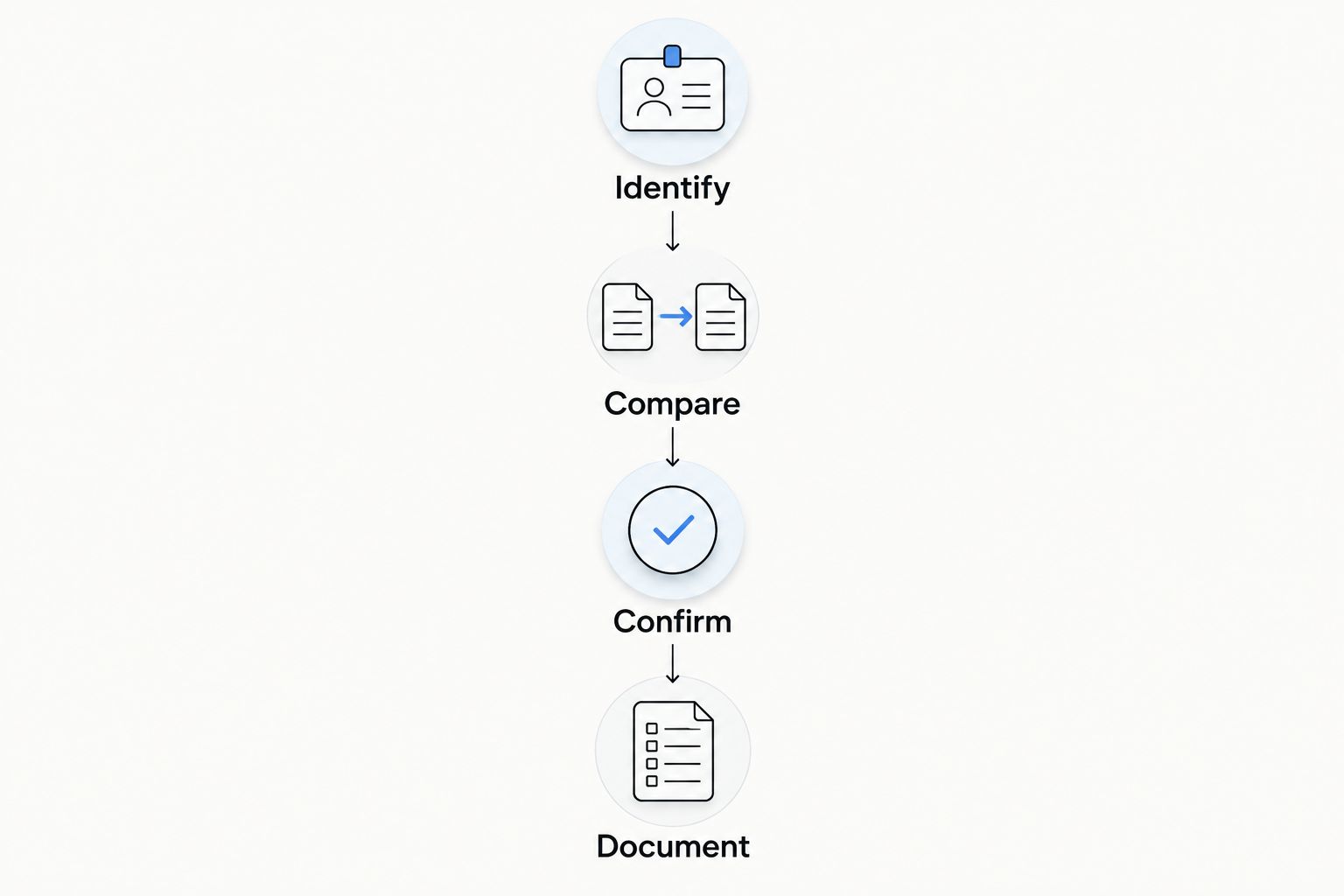
The same process applies to a direct supplier and every marketplace candidate. Reject an unresolved mismatch rather than relying on a familiar engine name. A seller's description should support the installer's decision, not replace it.
A direct seller gives you a simpler transaction structure
A direct-seller purchase keeps your evaluation centered on the business selling the component. A marketplace adds a discovery layer, so you must distinguish the platform from the individual listing seller.
This is a structural advantage for a focused purchase, not a claim about service quality. A clear seller identity helps you direct questions about the assembly, invoice, freight arrangements, and written terms to the responsible party.
On My Little Salesman, identify the seller before evaluating the transaction. Do not assume the marketplace itself supplies the engine or provides the listing seller's warranty.
For either route, confirm:
- The business named on the invoice.
- The exact assembly and identifying information being sold.
- The components included and excluded.
- The agreed delivery and receiving arrangements.
- The written process for damage, discrepancies, returns, and any applicable warranty.
A clear transaction record wins over an informal promise. Keep verbal explanations out of the approval process until the seller puts the relevant terms in writing.
Pricing models: compare the transaction, not the website
The specialist route is a purchase of a specific engine or component from a seller. The marketplace route is a search that leads to the individual listing's transaction terms. Neither structure establishes a universal payment arrangement or core policy.
The specialist model keeps the inquiry centered on a defined item. The marketplace model supports comparing different sellers, but you must normalize the scope before treating their proposals as comparable.
For a 2026 comparison, request the same assembly definition from each candidate. A bare engine, a long block, and an engine with specified accessories are different purchases even when their listings name the same engine family.
Separate the component transaction from the installation plan. Ask your installer to identify required transfers, programming, replacement consumables, and inspection work before approving the assembly.
Check any core requirement and return conditions in writing. Do not assume either route includes the same obligations. The better proposal is the one that matches the required repair scope with clear responsibilities.
Final verdict: choose by your buying stage
Choose Diesel Engine King if your repair requirement is defined
Best for: an owner-operator or repair shop sourcing a known used engine or heavy truck component. Start with the specialist when you already have the relevant identifiers and want to evaluate a specific replacement.
Approve the item only after fitment, condition evidence, included components, and transaction terms are resolved. The focused offering is the advantage; it is not permission to skip verification.
Choose My Little Salesman if you need to compare sourcing options
Best for: a fleet buyer comparing sellers, parts candidates, or broader equipment alternatives. Start with the marketplace when discovery is still part of the job.
Move from browsing to seller-specific evaluation before ordering. The broader search is the advantage; the additional seller comparisons are the work it creates.
One-glance scorecard
| Dimension | Winner |
|---|---|
| Best for a defined parts requirement | Specialist seller |
| Open sourcing stage | My Little Salesman |
| Broader search scope | My Little Salesman |
| Component-level catalog focus | Specialist seller |
| Proven condition | Tie: judge the actual item |
| Compatibility | Tie: installer verification required |
| Simpler transaction structure | Direct seller |
| Pricing-model suitability | Tie: compare the defined transaction |
FAQ
Is Diesel Engine King better than My Little Salesman for used engines?
Diesel Engine King is the better starting point for a defined used commercial truck engine or heavy truck parts requirement; My Little Salesman is better for a broader seller search. Neither route proves the condition or compatibility of a particular engine.
Does My Little Salesman sell the engine itself?
My Little Salesman is a marketplace, so identify the seller attached to the individual listing. Confirm who issues the invoice and who is responsible for the transaction before ordering.
Which option is better if I already know my engine model?
A specialist seller is the more focused starting point for a known replacement requirement. You still need the serial number, assembly configuration, and installer approval rather than the model name alone.
Does a bench-tested ECM mean it will work in my truck?
Bench testing does not establish complete vehicle compatibility. Match the module identification and confirm any programming or calibration requirements with your installer.
How should I compare engine purchases in 2026?
Compare the same assembly scope and written transaction responsibilities across candidates. Record included components, testing evidence, core obligations, and installation requirements separately.
Can I use a marketplace listing as proof of engine condition?
A listing is a description, not an inspection report. Request evidence for the actual engine and clarify exactly what any stated testing establishes.
What should I verify before ordering a used truck part?
Verify the exact part identification, application, condition description, and included items before ordering. Keep the seller's written terms and your installer's compatibility confirmation with the purchase record.
One last thing
Separate component identity from component suitability. A readable tag tells you what the part is; it does not tell you whether its configuration, condition, or programming meets your repair requirement.
Send the candidate's actual identification photos and description to your installer before authorizing payment. That turns a promising listing into a specific technical decision, regardless of where you found it.

