


Used Cummins N14 Engine for Sale: Best Pick 2026
Best overall: a complete Cummins N14 CELECT Plus matched to your truck’s engine serial number and CPL. Best for an existing CELECT installation: a complete N14 CELECT. Best for a repair that retains usable external components: an N14 long block. These are buying configurations, not verified listings. If you need a used Cummins N14 engine for sale in 2026, start with fit and inspection records, then check the current listings at Diesel Engine King.
- Best used Cummins N14 engine for sale: choose a complete CELECT Plus only when its serial number and CPL match your truck.
- A complete N14 CELECT is the better fit when you need to preserve a CELECT installation.
- An N14 long block works only when your existing external components are usable and compatible.
- Diesel Engine King is a source for used commercial truck engines and parts; verify the exact unit before ordering.
Why this matters
The Cummins N14 is a 14.0 L, six-cylinder, four-stroke diesel engine. Those shared basics do not make every N14 interchangeable. Fuel-system configuration, electronic controls, CPL and the parts included with a used engine determine whether a candidate is a practical replacement for your truck.
A low-mileage claim cannot resolve a mismatched CPL. A clean-looking engine cannot establish its internal condition. In 2026, ask for the engine serial number, CPL, component photos and available inspection records before you compare one used N14 with another. Have the installer identify what must transfer from the old engine and what the replacement must include.
Diesel Engine King is a fit for buyers sourcing used commercial truck engines and parts, but no specific N14 unit is verified by this guide. Treat each seller’s individual engine as its own purchase decision. The ranking below tells you which configuration to look for, not which unit is in stock.
What makes the best used Cummins N14 engine?
Use these criteria before reading the ranking. If a seller cannot identify the engine well enough to check fit, stop there; the remaining advantages do not fix an unidentified assembly.
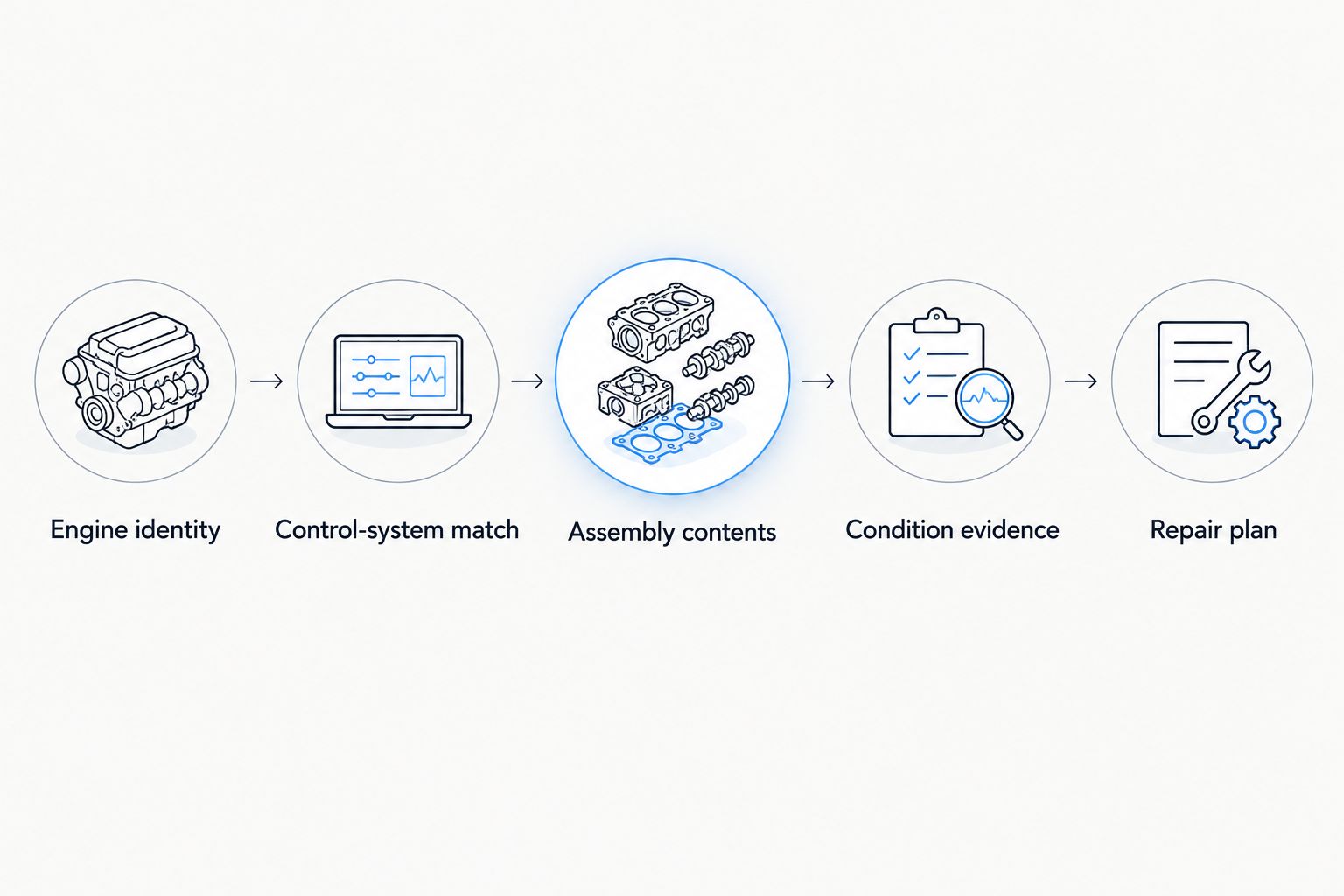
- Engine identity: Request a clear photo of the engine data plate and record the engine serial number and CPL. Ask your installer to check them against the truck and the intended repair.
- Control-system match: Identify whether the existing installation uses CELECT or CELECT Plus. Do not treat the names as interchangeable just because both engines carry an N14 designation.
- Assembly contents: Get a written list of included components. A complete take-out and a long block create different parts-transfer and installation work.
- Condition evidence: Ask what inspection or running documentation exists for the individual engine. Match every record to the unit being offered, not to a similar N14.
- Fit at installation: Confirm the components your truck needs, including mounting, cooling, intake, exhaust and electrical connections, with the shop doing the work.
- Total repair scope: Account for the parts and labor needed to turn the purchased assembly into a running truck. A smaller assembly is not automatically the simpler repair.
The decision runs in order: identify the truck, identify the candidate engine, confirm what comes with it, then assess condition. Reversing that order encourages a purchase based on an attractive listing that the installer cannot use.
Used Cummins N14 engines at a glance
| Configuration | Best for | Standout feature | Key limitation |
|---|---|---|---|
| Complete N14 CELECT Plus | A compatible CELECT Plus replacement | More of the engine assembly comes together | Controls and CPL still need confirmation |
| Complete N14 CELECT | An existing CELECT installation | Keeps the search focused on the installed control type | A complete assembly does not guarantee matching accessories |
| N14 long block | A repair reusing serviceable external components | Concentrates the purchase on the core engine assembly | Transfers and compatibility checks add work |
The table ranks replacement paths, not individual engines offered for sale. A documented CELECT that matches your truck beats an unidentified CELECT Plus, regardless of its position here. Read each listing against the same criteria rather than assuming the configuration name settles the purchase.
1. Complete Cummins N14 CELECT Plus: best for a matched replacement
A complete CELECT Plus engine is the default search target when your truck already uses that configuration and the candidate’s identifiers match. Buying a more complete assembly can reduce the number of external parts you need to source separately. It does not eliminate checks on the CPL, wiring, accessories or the condition of the engine itself.
In 2026, request photos of the data plate, every side of the assembly and any components described as included. Ask for the available running or inspection record for that exact serial number. If a component is not shown or listed, do not build the installation plan around it.
Cummins N14 CELECT Plus pros:
- Gives a CELECT Plus owner a clear like-for-like configuration to search.
- Can retain more components on one purchased assembly than a long block.
- Allows the installer to compare the visible assembly with the truck before removal work begins.
Cummins N14 CELECT Plus cons:
- A matching control-system name does not confirm the correct CPL or fit.
- Included accessories and their condition vary by individual unit.
- An undocumented assembly leaves important condition questions unanswered.
Best for: A buyer replacing an existing CELECT Plus N14 who can verify the candidate engine against the truck.
Verdict: Buy only after the serial number, CPL, included components and available condition evidence pass the installer’s review. Otherwise, hold the purchase.
2. Complete Cummins N14 CELECT: best for an existing CELECT truck
A complete CELECT engine is the focused choice when the truck’s existing N14 installation uses CELECT. The point is not that CELECT is better than CELECT Plus; it is that the replacement must work with the truck you have. Keep the search tied to the existing engine’s identifiers and control setup.
Do not use a general N14 listing title as proof of a match. Request a data-plate photo and a component list, then have the installer check the candidate against the truck. In 2026, that check matters more than which configuration appears first in a search result.
Cummins N14 CELECT pros:
- Directs the search toward the truck’s existing control type.
- A complete assembly can supply components that a long block does not include.
- Serial-number and CPL checks give the installer a defined basis for comparing candidates.
Cummins N14 CELECT cons:
- The CELECT label alone does not establish CPL compatibility.
- External components still need individual inspection.
- Records for another engine do not establish this unit’s condition.
Best for: A truck that already has an N14 CELECT installation and needs a verified replacement assembly.
Verdict: Buy a documented, compatible CELECT assembly for that truck. Skip any listing that cannot identify the engine well enough for a fit check.
3. Cummins N14 long block: best for reusing external components
An N14 long block is a different repair path from buying a complete take-out. It suits a job where the shop has assessed the existing external components and plans to transfer the serviceable ones. Before ordering, ask exactly what the long block includes; the term alone is not a component list.
The installer needs to check the candidate block against the truck’s required configuration and identify every transfer part. If the old engine’s external components are damaged, missing or unverified, the long-block plan changes. In 2026, write the transfer list before choosing this option, not after the replacement arrives.
Cummins N14 long block pros:
- Fits a repair plan built around reusing inspected external components.
- Makes the core engine assembly the focus of the purchase.
- Creates a defined component-transfer list for the installer to check.
Cummins N14 long block cons:
- Requires more transfer planning than a suitable complete assembly.
- Depends on the condition and compatibility of retained components.
- An incomplete contents description makes the repair scope unclear.
Best for: A shop with a confirmed N14 repair plan and usable external components to transfer.
Verdict: Buy only after the installer confirms the long block’s contents and the transfer plan. Hold if the old components have not been inspected.
How we ranked the N14 configurations
This is a fit-first ranking. A complete, correctly matched replacement comes before a long block because the long block requires a separate decision about retained components. Within complete assemblies, CELECT Plus takes the default slot only for a truck that already uses CELECT Plus; CELECT takes priority for a truck that already uses CELECT.
No individual engine receives a condition ranking here. The supplied information contains no N14 serial numbers, CPLs, inspection results or verified N14 product listings. Use the ranking to narrow the configuration, then make the final call on the documented unit offered to you.
Check the engine before you commit
Send the seller and installer the same short request. It prevents a listing description from becoming the only specification anyone checks:
- Identification: Photos showing the engine data plate, serial number and CPL.
- Contents: A written account of the components included with the assembly and anything removed.
- Condition: Available inspection or running records tied to that engine.
- Fit: Installer confirmation of the truck’s control system and required components.
- Repair plan: A list of parts to transfer, replace or obtain separately.
Compare the answers with the engine currently in the truck. If its identity is unclear, identify it before shopping by horsepower or appearance. Diesel Engine King sells used commercial truck engines and parts, but the exact engine and included components must be checked at the listing level.
A diagram helps keep the order straight: the engine’s identity governs the fit check, while its contents and condition govern the repair plan. Neither a good test record nor a complete-looking assembly corrects a configuration mismatch.
Which used Cummins N14 engine should you choose?
Choose a complete N14 that matches the control system, serial-number requirements and CPL your installer identifies for the truck. For a CELECT Plus installation, start with a complete CELECT Plus candidate. For a CELECT installation, start with a complete CELECT candidate. Choose a long block only when the shop has approved the parts-transfer plan.
Do not switch configurations to pursue an engine that merely looks cleaner or comes with more accessories. Ask for the specific records and component list, then compare that unit with the truck. If those checks cannot be completed, the right 2026 decision is to keep searching.
FAQ
What is the best used Cummins N14 engine for sale?
The best used Cummins N14 engine is a documented unit that matches your truck’s required control system and CPL. A complete CELECT Plus is the default only for a compatible CELECT Plus installation.
Is an N14 CELECT Plus better than an N14 CELECT?
Neither is a universal upgrade for a replacement purchase. Choose the configuration that matches the existing installation and have the installer verify the candidate engine’s identifiers.
What information should I request before buying a used N14?
Request the engine serial number, CPL, data-plate photos, included-component list and available condition records. Give those details to the installer for a truck-specific fit check.
Does a complete Cummins N14 include every part needed for installation?
No; complete is not a fixed inventory of included components. Get a written contents list and confirm the truck’s mounting, electrical and accessory requirements with the installer.
When does an N14 long block make sense?
An N14 long block makes sense when the shop has verified that the external components it plans to transfer are usable and compatible. Confirm exactly what the purchased assembly includes before ordering.
Can the N14 engine model alone confirm compatibility?
No; N14 identifies an engine family, not a complete truck-specific fit. Check the control system, CPL, engine identity and required installation components.
How do I compare the condition of two used N14 engines?
Compare records tied to each engine’s serial number, along with photos and the documented assembly contents. Do not treat a claim about a different unit as evidence for the engine offered.
One last thing
A documented engine that fits beats an unidentified engine with a longer component list. Before asking Diesel Engine King about a used Cummins N14 engine, put the existing engine’s serial number and CPL beside the candidate’s details. That single comparison gives the installer a useful starting point and can stop the wrong assembly from reaching the shop.

