


Used cat c9 engine for sale: Best choice in 2026
Best overall: a complete, run-tested Caterpillar C9 matched to your engine serial number and truck configuration. Best for a rebuild shop: a documented C9 long block. Best for a parts-supported rebuild: an inspected C9 core. If you need a used cat c9 engine for sale in 2026, rank the candidates by fit and evidence of condition before comparing listings.
- The best used cat c9 engine for sale is a complete, run-tested unit matched to your truck's engine serial number.
- Diesel Engine King sells used commercial truck engines and parts; confirm C9 fit and current listings before ordering.
- Choose a C9 long block when your shop can verify and transfer the required external components.
- Treat a C9 core as a rebuild project, not an installation-ready replacement.
Why this matters
A C9 label identifies an engine family, not a guaranteed drop-in match. For a replacement, you still need to check the engine serial number, arrangement, emissions equipment, controls and components included with the unit. The distinction matters more than a listing's short description: a complete engine and a bare long block create different work for your shop.
Diesel Engine King sells used commercial truck engines and parts. Its guide to Cat C9 engine parts covers the related parts decision; this guide focuses on choosing the replacement assembly. No specific C9 engine listing is supplied here, so these are purchase categories, not claims that a particular unit is in stock.
For 2026 buyers, start with your existing engine's identification plate and the truck's build information. Send both to the seller. If the replacement cannot be identified beyond a broad C9 description, stop there until the seller supplies the missing identification.
What makes the best used Caterpillar C9 engine?
Use these criteria before comparing candidates. A strong listing makes each answer specific to the engine being offered, rather than to Caterpillar C9 engines in general.
- Serial-number match: Record the serial number and arrangement of the existing engine and the proposed replacement. Confirm the intended application against both.
- Condition evidence: Ask for test documentation tied to that exact engine. A general statement that an engine runs is not a substitute for an identifiable test record.
- Included components: Get a written list of what stays with the assembly, including the turbocharger, fuel-system hardware, sensors, harness and control module where applicable.
- Controls and emissions fit: Have your installer check the truck's wiring, ECM requirements and emissions configuration before treating an engine as a direct replacement.
- Installation work: Separate the work required to install a complete engine from the additional transfer and verification work required by a long block or core.
- Identifiable history: Ask for the donor application and any available operating or repair records. Do not convert an unsupported mileage claim into a condition grade.
Fit comes before condition in the ranking. An exceptionally clean C9 with the wrong configuration is not the best replacement for your truck. Once fit is established, test records and included components determine how much uncertainty remains.
Used Cat C9 engines at a glance
| Rank and option | Best for | Standout feature | Key limitation |
|---|---|---|---|
| 1. Complete, run-tested C9 | Direct replacement planning | Test evidence and an itemized assembly | Fit still requires serial-number and controls checks |
| 2. Documented C9 take-out | Buyers who can inspect the removed unit | Donor information and visible installation context | Removal does not establish engine health |
| 3. Inspected C9 long block | Shops transferring known-good external parts | Focus on the main engine assembly | More transfer work and component checks |
| 4. Inspected C9 core | Shops planning a full rebuild | Starting point for a measured rebuild | Not an installation-ready engine |
The table ranks types of C9 purchase, not individual engines or sellers. A documented take-out can outrank a poorly documented unit advertised as run-tested. Apply the criteria to the actual serial-numbered engine before making that call in 2026.
1. Complete, run-tested C9: best for direct replacement planning
A complete, run-tested C9 is the default choice when your shop wants to evaluate an engine assembly with the required external parts identified. Diesel Engine King is a source of used commercial truck engines and parts, but you must confirm the current C9 offering and its exact contents rather than assume a complete assembly is available. Best for: a buyer replacing a failed C9 who wants condition evidence before scheduling installation.
Ask what the test actually covered and whether the record identifies the engine serial number. Compare the component list with what your truck needs; complete is a listing description, not a fixed inventory of parts. A run test also does not establish that the ECM, harness or emissions hardware will match your truck.
Complete C9 pros:
- Gives your installer one identified assembly to assess against the truck.
- Allows a test record to be checked against the engine offered.
- Makes included external components easier to list before removal of the existing engine.
Complete C9 cons:
- A passing run test does not prove installation compatibility.
- A missing or different external component can still require transfer work.
- Claims about testing are difficult to evaluate without unit-specific records.
Verdict: Buy only after the serial number, arrangement, test evidence and included components check out. If the seller cannot document those items, hold the installation schedule and inspect another candidate.
2. Documented C9 take-out: best for inspecting the removed unit
A take-out is an engine removed from an existing application. The useful distinction is traceability: donor information and removal records give your shop something concrete to check. A take-out is not automatically run-tested, and a truck that operated before removal does not prove the engine's present condition.
Best for: a buyer with an installer who can inspect the removed engine and assess the available donor records. Ask for the engine serial number, the donor application and clear identification of what was removed with the engine. Then request any test or operating records that actually belong to that unit.
Documented take-out pros:
- Donor information can support an application match.
- Removal records can clarify what components accompany the engine.
- Your shop can inspect the assembly before treating it as installation-ready.
Documented take-out cons:
- Removal history alone is not a condition test.
- Missing records leave operating claims unverified.
- External components from the donor can differ from those on your truck.
Verdict: Hold until your installer reviews the serial number and condition evidence. Buy the take-out over a nominally complete engine only when its documentation and fit are better established.
3. Inspected C9 long block: best for transferring known-good parts
A long block concentrates the purchase on the main engine assembly while leaving external component requirements to be confirmed with the seller. Do not assume every long-block listing includes the same hardware. Your shop needs an itemized scope before it can plan which components to retain from the existing engine.
Best for: a repair shop that has identified usable external components and can carry out the transfer. Compare the long block's serial and arrangement information with the original engine, then inspect the parts you intend to reuse. If the old engine failed in a way that damaged those parts, the long-block route requires a different repair plan.
Inspected C9 long-block pros:
- Lets the shop define a rebuild around the main assembly.
- Makes the reuse decision explicit for each external component.
- Keeps the condition inspection focused on the assembly being purchased.
Inspected C9 long-block cons:
- Transfer work adds tasks before installation is complete.
- Reused parts need their own inspection.
- An unclear included-parts list makes the job hard to scope.
Verdict: Buy when your shop has verified both the long block and the components it will reuse. Otherwise, hold for a complete, documented assembly.
The distinction is physical as well as contractual: put the seller's included-parts list beside your shop's transfer list. Every component should appear on one list or the other before work begins.
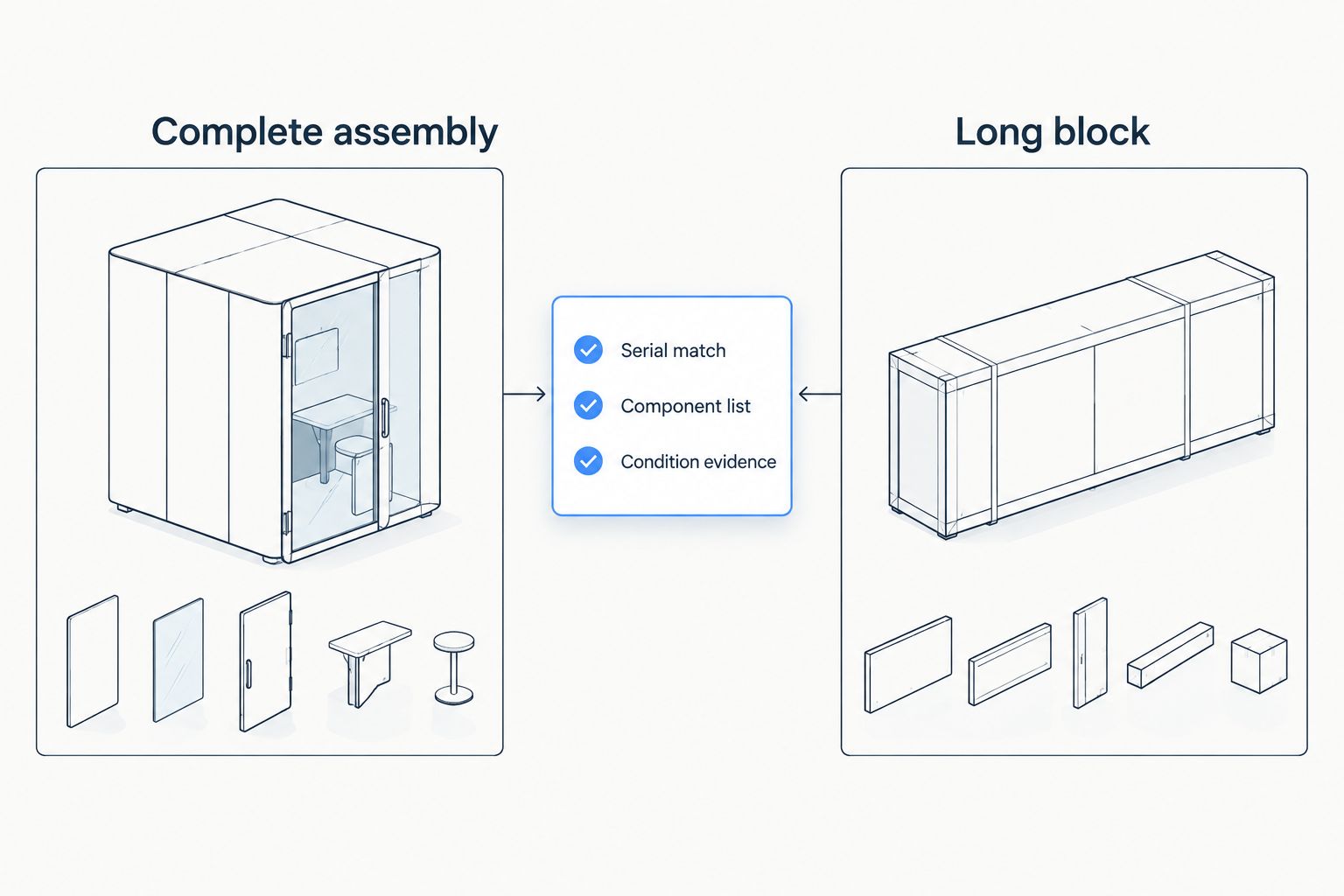
4. Inspected C9 core: best for a planned rebuild
A core is a rebuild starting point, not a substitute for a verified running engine. Its value to the project depends on what inspection reveals about the block, head and other parts your rebuilder intends to retain. Do not rank a core by its C9 label alone.
Best for: a shop already committed to disassembly, measurement and a defined rebuild scope. Ask the seller to identify the assembly and state what inspection has been performed. Have your rebuilder decide whether the core supports the intended work before treating it as the basis of the job.
Inspected C9-core pros:
- Fits a project with a planned teardown and rebuild.
- Allows the rebuilder to assess reusable components directly.
- Makes the required condition checks part of the initial work scope.
Inspected C9-core cons:
- Cannot be treated as installation-ready.
- Internal damage can change the rebuild scope after teardown.
- Limited identification or inspection records increase the work needed before approval.
Verdict: Wait for the rebuilder's inspection decision. Skip a core when the truck needs a verified replacement assembly rather than a rebuild project.
How these C9 options are ranked
The order follows the amount of work and uncertainty a truck buyer must resolve before installation: match the engine, verify its condition, identify included components and assign the remaining work to the shop. It is not a ranking of live inventory. In 2026, a particular engine moves up only when its own records support that move.
For a C9 purchase, keep three documents together: the existing engine's identification, the proposed engine's identification and the seller's included-components list. Add unit-specific test records when they exist. These documents give the installer a concrete basis for accepting or rejecting the candidate; a model-family match alone does not.
Which used Caterpillar C9 engine should you choose?
Choose a complete, run-tested C9 as the default, provided your installer confirms the serial-number and configuration match and the seller identifies the test and included components. If a documented take-out has clearer records, evaluate that unit instead. Choose a long block for a shop-led transfer of inspected external parts; choose a core only for a rebuild.
Diesel Engine King sells used commercial truck engines and parts, but the purchase decision must attach to a specific engine, not the store name. Request the identifying information for the C9 being considered. If it is unavailable, skip that listing and keep looking.
FAQ
What is the best used Cat C9 engine for sale in 2026?
The best used Cat C9 engine for sale in 2026 is a complete, run-tested unit that matches your engine serial number and truck configuration. Confirm the test record and included components for the specific engine.
Is a run-tested C9 better than a C9 take-out?
A run-tested C9 is the better default when its test record identifies the engine and its configuration matches your truck. A documented take-out can be the better choice if it has stronger unit-specific records.
Will any Caterpillar C9 fit my truck?
No. A C9 family name does not confirm that the arrangement, controls, emissions equipment and included components match your truck. Have your installer compare both engines' identifying information.
What should I ask before buying a used C9 engine?
Ask for the engine serial number, arrangement, condition evidence and a written included-components list. Give those details to your installer before accepting the engine as a replacement.
Is a C9 long block ready to install?
A C9 long block requires a component and installation plan. Confirm what the seller includes and have your shop inspect every external part it intends to transfer.
Is a used C9 core the same as a running engine?
No. A C9 core is a starting point for inspection and rebuilding, not a verified running replacement. Your rebuilder must assess its condition before defining the work.
Does Diesel Engine King have a specific C9 engine available?
This guide does not identify a current C9 engine listing. Ask Diesel Engine King for the identifying details and condition records of any C9 unit offered in 2026.
One last thing
A seller's test result and your shop's fit decision answer different questions. The test addresses the condition of the identified engine; the fit check addresses whether that engine belongs in your truck. Require both before you commit to a 2026 C9 replacement.

